Two seats change hands in one announcement
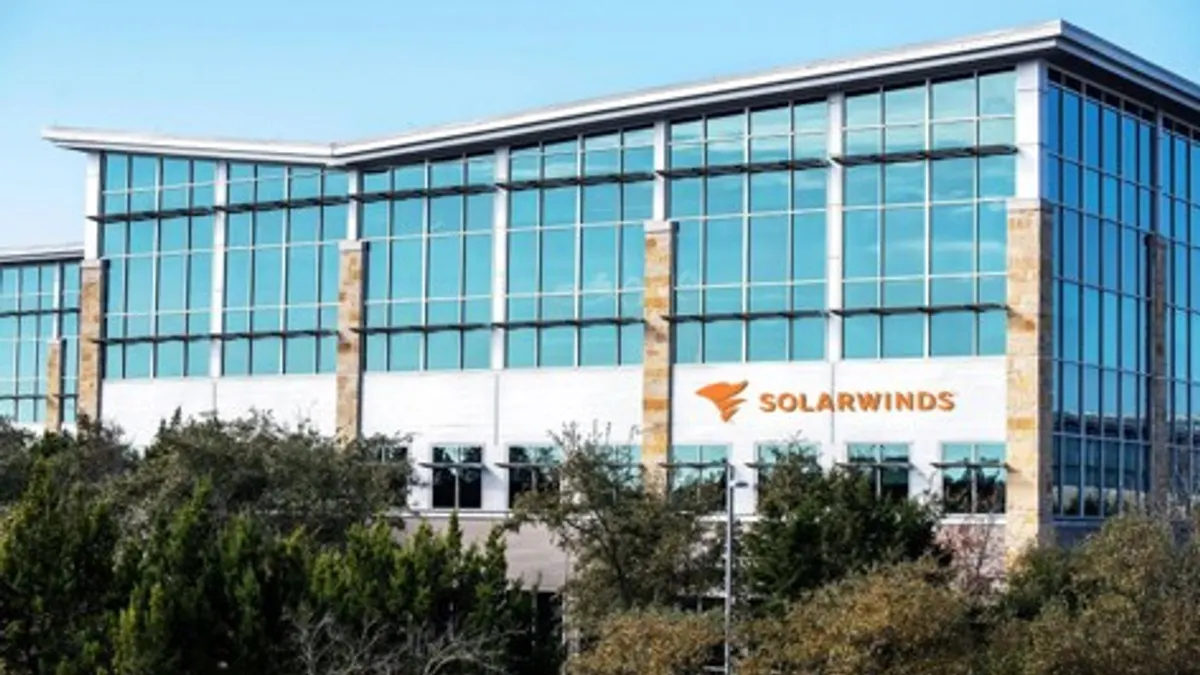
SolarWinds announced that CEO Sudhakara Ramakrishna is stepping down effective September 30, with Cullen Childress, the company's chief product officer and a five-year veteran, stepping in as interim CEO while the board runs a search for a permanent replacement over the coming weeks. Ramakrishna said of the CFO transition happening alongside his own departure, 'Sam is the right partner for this next chapter,' a line that reads more like a company trying hard to project stability to customers and investors than one actually explaining why two senior seats turned over at essentially the same moment.
CFO Tim Karaca, who had held the role for just over a year, is also leaving the company, with his formal tenure ending September 1 and an advisory period running through the close of 2026 to help smooth the handover for his successor. In a LinkedIn post announcing his own departure, Karaca said, 'I'm leaving with real confidence in SolarWinds with great leaders around Cullen Childress, Samuel Monti and many others,' effectively naming his own successor publicly before SolarWinds had fully introduced Monti through its own official channels and messaging.
Who Samuel Monti is and why that background fits
Monti joins from WP Engine, the WordPress hosting provider, where he most recently served as chief financial officer overseeing the company's finance function during a period of continued private equity ownership and growth. Before that, he was CFO of Epicor Software from 2020 to 2023 and of customer engagement platform Khoros from 2018 to 2020, giving him three consecutive stints as finance chief at privately held, private equity backed software companies in a row. He holds an accounting degree from Miami University and an MBA from Case Western Reserve University, and brings more than three decades of combined experience across both public and private software companies of varying size.
That pattern, three CFO roles back to back at PE owned software firms rather than a mix including public company experience, is not an accident worth glossing over. SolarWinds has been under Turn-River Capital ownership since June 2025, and a finance chief who already knows exactly how to run a software company's books and reporting cadence for a private equity owner needs considerably less ramp time to become effective than someone arriving fresh from a public company context with different reporting obligations and investor expectations altogether.
The cybersecurity backdrop nobody is saying out loud
This leadership change lands just after the SEC dropped its lawsuit alleging SolarWinds and its chief information security officer misrepresented the company's cybersecurity practices to investors, a case tied directly to the 2020 breach that remains the company's single defining moment in the eyes of most enterprise security buyers who have evaluated the vendor since. Legal observers still treat the episode as a cautionary tale worth citing in other contexts, and firms like McDermott Will & Schulte have noted the SEC's continued broader focus on cybersecurity disclosure rules even after this specific case against SolarWinds formally closed without further action.
Neither Ramakrishna's departure statement nor Karaca's own LinkedIn post ties the leadership change explicitly to the lawsuit's resolution, and SolarWinds has given no stated reason at all for why Ramakrishna is stepping down at this particular moment. But the sequencing here, a long running legal cloud finally lifting followed almost immediately by a full C-suite reshuffle touching both the CEO and CFO seats at once, is the kind of coincidence that enterprise buyers evaluating vendor risk should watch closely rather than simply dismiss outright as unrelated timing.
Why an internal promotion, not an outside hire
Childress becomes interim CEO from inside the company, stepping up as chief product officer and a five-year SolarWinds veteran, rather than through an external search landing someone unfamiliar in the top seat immediately during a sensitive transition period. SolarWinds says it expects to name a permanent CEO within weeks, which frames Childress's current role as a deliberate bridge rather than a long-term bet on his leadership specifically, but bridges set real direction too, and a product leader running the company even temporarily still shapes what gets prioritized and funded during the search for his eventual permanent successor.
For a company whose core product is IT management and monitoring software sold into enterprises that care deeply about vendor stability above almost everything else, an interim CEO drawn from inside the business is a meaningfully lower risk signal than an unfamiliar outside name parachuted in, even on a purely temporary basis while the search continues. Customers evaluating renewal decisions during this specific window should reasonably expect operational continuity in day to day priorities rather than any sudden strategy pivot that an outside interim leader might have been tempted to pursue immediately.
What this means for IT buyers mid-contract
Enterprises currently running SolarWinds tooling should treat the next few weeks as a genuine window to ask direct questions about the permanent CEO search timeline and whether that search affects any existing product roadmap commitments made under the previous leadership team. A company mid-search for a permanent chief executive while also simultaneously onboarding a brand new CFO is, for this short period, operating with meaningfully less executive bandwidth than usual to defend long-term product bets against short-term financial pressure coming from its private equity owner's own return expectations.
This is also a reasonable, well timed moment to revisit SolarWinds' current security posture and disclosure practices directly with your own account team, independent of whatever the now dropped SEC case actually concluded about past behavior. The legal resolution closes one chapter definitively, but it does not substitute for your own ongoing vendor risk review process, especially if your particular renewal cycle happens to overlap closely with this leadership transition and its associated uncertainty.
The broader signal for PE-owned software vendors
SolarWinds is a useful, concrete case study in how private equity ownership changes the underlying rhythm of leadership turnover compared to public company norms most enterprise buyers are more used to tracking. Just over a year after the Turn-River Capital deal closed, the company has now cycled through both its CEO and its CFO, a pace of change that would be genuinely unusual for a comparable public company but is becoming increasingly normal under financial sponsor ownership focused tightly on operational efficiency and return timelines.
CIOs and CTOs who rely on PE-backed vendors for critical infrastructure software should build this specific pattern into their own procurement risk models going forward rather than treating each leadership change as an isolated event. Leadership turnover at this cadence deserves a place in that risk model as a variable worth tracking explicitly over time, since the vendor relationship your organization originally signed up for may not stay staffed by the same people who actually sold it to you in the first place.