A renewal, not a new deal, and that distinction matters
CDS Superstores, the UK home and furniture retail group, has agreed a multi-year extension to its fulfilment partnership with THG Fulfil, the outsourced logistics arm of THG. The relationship began in 2024, which means this is a renewal decision made with roughly two years of real operating data behind it, not a vendor pitch being taken on faith. Extensions tell you more than new signings do, because a retailer that was unhappy with service levels, cost, or flexibility has every incentive to re-bid rather than renew, and CDS chose not to. A multi-year commitment also tells the market something about pricing: THG was confident enough in its own cost structure and service levels to negotiate a longer term, and CDS was confident enough in the relationship to accept the reduced flexibility that a multi-year lock-in implies.
The headline detail from the renewed arrangement is that 95% of units now pass through automation at THG's facilities, including robotics from Geekplus. That is a high bar for any fulfilment operation, outsourced or in-house, and it signals that the original 2024 deal was a genuine shift toward automation-first fulfilment, rather than a limited pilot bolted onto a mostly-manual warehouse, and one that has now proven durable enough to extend. For context, many retailers that describe themselves publicly as having invested heavily in warehouse automation are still running automated handling on a minority of total unit volume, with the bulk of picking and packing remaining manual once you look past the flagship robotics showcase a site visit is built around.
What 95% automation actually requires
Reaching 95% automated unit handling requires far more than installing robots and letting them run. It requires the underlying catalog, packaging, and order profile to be consistent enough that robotic picking and sorting systems can handle the overwhelming majority of SKUs without manual exception handling eating the efficiency gains. For a home and furniture retailer, where product dimensions and packaging vary far more than, say, apparel or health and beauty, hitting 95% is a meaningfully harder engineering achievement than the same figure would represent for a more uniform catalog. Oversized items, fragile glass and ceramics, and flat-pack furniture with awkward dimensions are exactly the categories where robotic systems tuned on standard parcel sizes typically fall back to manual handling, so clearing 95% here is a stronger signal than the same number would be for a retailer selling mostly uniform boxed goods.
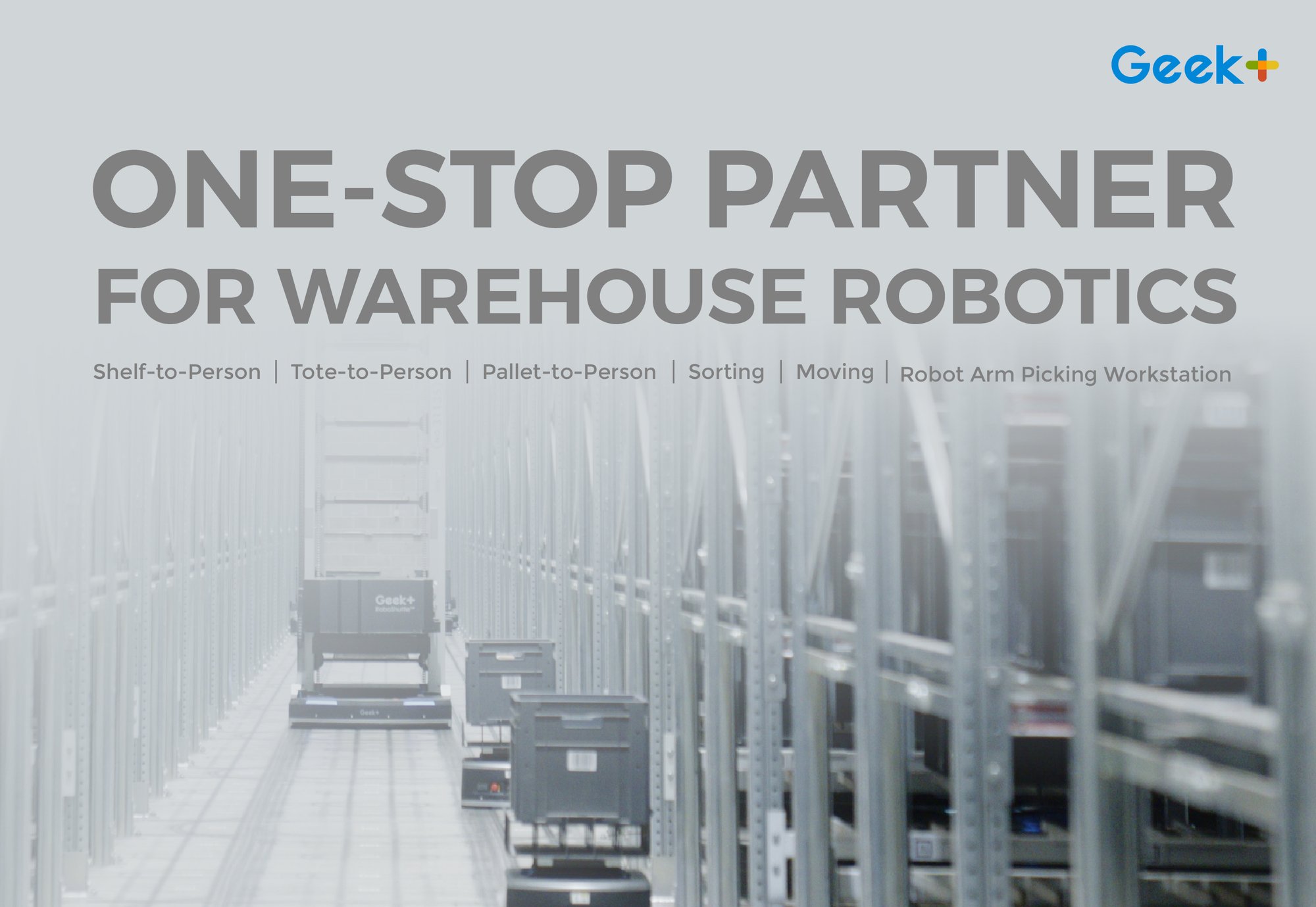
Geekplus robotics specifically specializes in goods-to-person automation, bringing inventory to fixed picking stations rather than sending workers roaming a warehouse floor. That architecture tends to scale well for retailers with high SKU counts and variable order profiles, which fits a home goods assortment better than fixed-conveyor systems designed around uniform parcel sizes. The fact that this architecture choice has sustained a 95% automation rate through a renewal cycle suggests THG and Geekplus solved the exception-handling problem well enough that it did not become the bottleneck that typically caps automation rates well below that level.
Google Cloud AI and Mirakl are doing the demand side of the work
Physical automation solves the warehouse execution problem, but it does not solve demand forecasting, inventory allocation, or marketplace operations, which is where Google Cloud AI and Mirakl come in as the layer running on top of the robotics. Mirakl is widely used for marketplace and dropship operations, suggesting CDS is using the partnership to support third-party seller or expanded online catalog growth, not just first-party fulfilment of its own inventory.
Pairing warehouse automation with AI-driven demand and marketplace tooling is the more complete version of what 'digital transformation' is supposed to mean in retail operations, and it is the combination most retailers struggle to execute well because it requires the physical operations team and the digital commerce team to actually coordinate on shared forecasting data. A single vendor relationship covering both the robotics and the AI layer, as THG Fulfil appears to provide here, removes one common source of that coordination failure: two separate vendors each optimizing their own layer without visibility into the other's constraints.
The build versus outsource question this renewal answers
Every retailer scaling e-commerce fulfilment eventually faces the question of whether to build automated warehouse capability in-house or outsource it to a specialist like THG Fulfil. Building in-house gives you full control and, eventually, lower marginal cost at sufficient scale, but it also means absorbing the capital expenditure, the integration risk, and the multi-year ramp-up curve that a company like THG has already climbed across multiple client deployments. That ramp-up curve is the part most internal business cases underestimate: the first eighteen months of any robotics deployment tend to be dominated by exception handling and tuning rather than the clean efficiency gains a vendor's case study shows, and a specialist operating across several retailers' catalogs has simply hit more of those exceptions already than a single retailer's first in-house attempt ever will.
CDS Superstores' decision to extend rather than insource after two years of production experience is a useful real-world answer to that question for a mid-size specialty retailer. The 95% automation figure would be a strong result for an in-house operation built from scratch; achieving it through an outsourced partner within roughly two years, and then choosing to extend rather than take the operation internal, suggests the outsourced model delivered results fast enough that the usual argument for insourcing, long-term cost control, didn't outweigh the switching risk and lost time a rebuild would have cost. It is also worth noting what CDS did not have to spend: the capital outlay for Geekplus hardware, the facilities to house it, and the specialist engineering headcount to keep a robotics fleet running sits entirely on THG's balance sheet and payroll, not CDS's, which is the part of the outsourcing math that rarely makes it into a build-versus-buy slide deck.
What this is worth to a retailer evaluating its own fulfilment stack
If your organization is running fulfilment largely in-house, 95% automated unit handling is a legitimate external benchmark to hold your own operation against, even if you have no intention of switching to an outsourced model. If a specialist operator can hit that number for a client with a varied catalog like home and furniture goods, a lower automation rate in your own warehouse is worth interrogating rather than assuming your product mix is simply harder to automate.
If your organization is evaluating outsourced fulfilment options, the detail worth asking any prospective partner for directly is this exact pairing: what automation rate do you actually run at today for a client with a comparable catalog, and what AI or marketplace tooling runs on top of the physical layer rather than requiring you to bolt on a separate vendor for demand forecasting. CDS Superstores' renewal, after two years of real production data, is as close to a reference customer answer to that question as you are likely to get without picking up the phone yourself.