A Lawsuit Over Who Carries the Risk
Oracle has taken Wisconsin's Public Service Commission to court, escalating a dispute over financial-security requirements imposed on data center developers. The lawsuit, reported on June 25 and filed in Ozaukee County Circuit Court, lands as Oracle and utility We Energies ask the PSC to reconsider credit-rating rules designed to shield ratepayers from data center financial risk. We see this as a watershed moment, because it is one of the first cases where a hyperscaler-class buyer has gone to court over the terms of being welcomed into a state, rather than over zoning or tax.
The core question is deceptively simple: when a multibillion-dollar AI campus connects to the grid, who guarantees the utility will be made whole if the project falters? Regulators worry that ordinary households could end up subsidizing infrastructure built for a single corporate tenant. Developers counter that excessive financial-security demands make projects uneconomic. Oracle's decision to litigate signals that the industry views these terms as material enough to fight over, not merely negotiate, and that posture will reverberate well beyond Wisconsin.
The Credit-Rating Trigger
At the center sits a credit-rating threshold. Wisconsin Electric proposed exempting customers from posting financial security if a parent company held an investment-grade rating of BBB from S&P or Baa2 from Moody's. The commissioners instead raised the bar to A- from S&P or A3 from Moody's, and stripped the utility of discretion to waive the requirement. Oracle carries a BBB rating, investment grade but below the new threshold, which is precisely why it is exposed. The company says the change could force it to provide more than 100 million dollars annually in letters of credit or cash deposits for its Lighthouse campus.
That detail is what makes the case generalizable. Plenty of credible enterprises sit at BBB, comfortably investment grade yet short of an A- mark. By drawing the line at A-, Wisconsin effectively narrowed the universe of developers who can avoid posting heavy security to a small club of the very highest-rated firms. Kent Chandler, a former Kentucky PSC chairman now at the R Street Institute, captured the regulatory instinct, noting that regulators are often more comfortable with cash-like assurances than corporate parent guarantees. The dispute is really about how much trust a credit rating buys.
What Lighthouse Represents
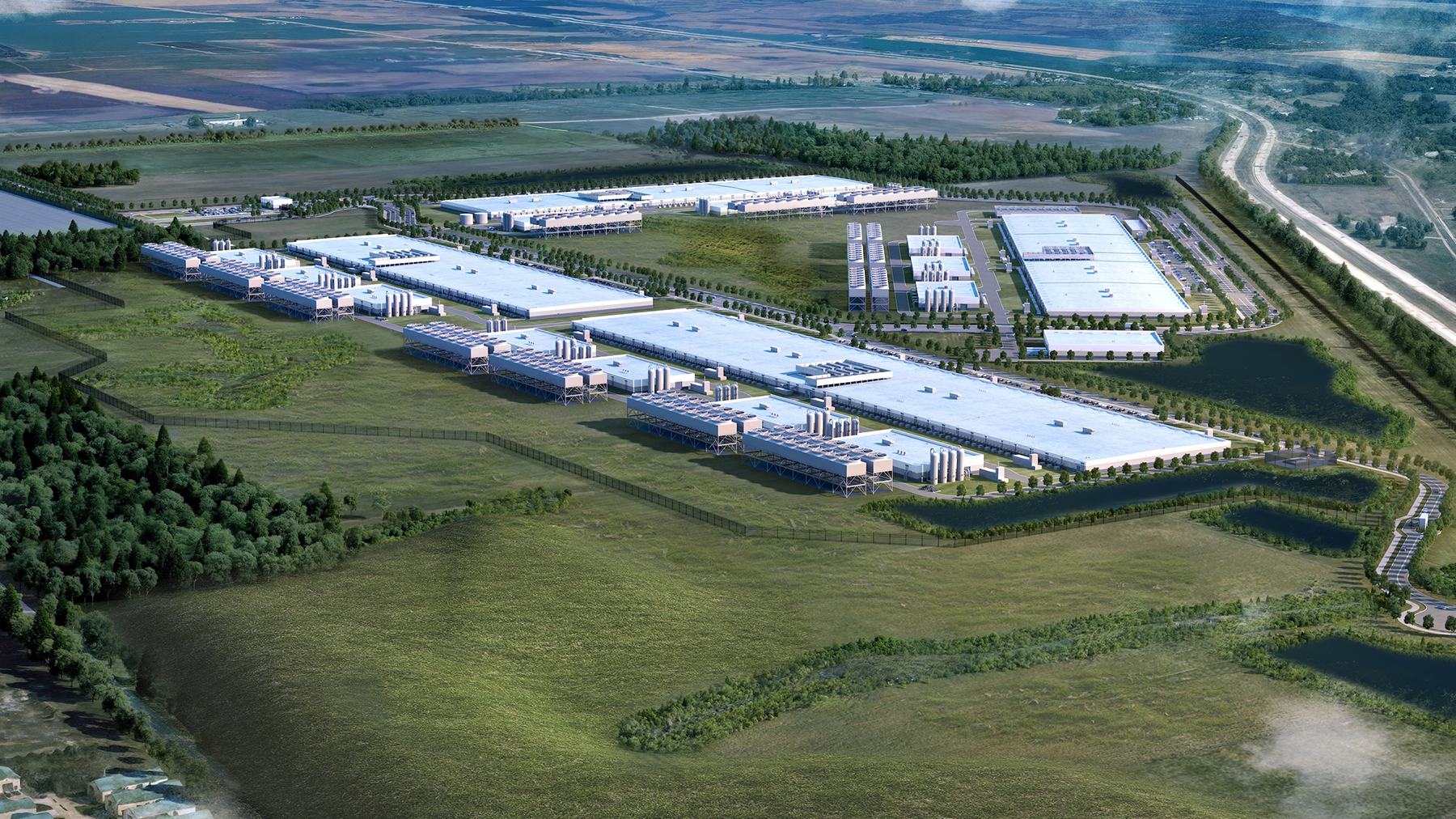
The campus at stake is not minor. Lighthouse, in Port Washington, is a nearly 1 gigawatt project representing roughly 15 billion dollars in planned investment, developed in concert with Vantage Data Centers and OpenAI to support Oracle's AI operations, including large language model training and inference. A project of that magnitude reshapes a regional grid, and the PSC's caution is understandable. But so is Oracle's frustration: a 100 million dollar annual security obligation is a real drag on a project's returns, and it sets a precedent the company would rather not see spread.
We think the scale is exactly why both sides are dug in. For Wisconsin, a 15 billion dollar campus is a generational investment, but a near-gigawatt load also concentrates enormous risk on a single counterparty. For Oracle, conceding here invites every other state utility commission to copy the A- threshold, multiplying its cost of expansion across the country. A rehearing petition reportedly proposes a graduated framework that would let a parent guaranty satisfy 90 percent of the obligation, a compromise that hints at where a settlement might land.
A Template Other States Are Watching
This case matters far beyond Port Washington because it is a template fight. As AI data centers proliferate, state regulators across the country are writing rules to protect ratepayers from stranded-asset risk, and they are watching how Wisconsin's approach holds up in court. If the A- threshold survives, expect it to propagate. If Oracle prevails or forces a graduated compromise, that softer model becomes the reference point. Either way, the financial-security question is moving from boilerplate to battleground.
For enterprise technology leaders, the read-through is about cost and certainty. The era of states rolling out the red carpet unconditionally for data centers is ending, and the terms of entry now include real financial guarantees that hit project economics. Companies planning large AI footprints should price regulatory friction into their site selection and assume that ratepayer-protection rules will tighten, not loosen. Oracle's willingness to litigate is a sign that the industry no longer treats these terms as a formality, and neither should anyone budgeting a gigawatt-scale build.
The Ratepayer Politics Behind the Rule
It is tempting to read this as a narrow corporate-finance dispute, but the force behind Wisconsin's A- threshold is political as much as technical. Regulators across the country are under growing pressure to ensure that ordinary households do not subsidize the grid upgrades, generation and transmission that a single hyperscale tenant requires. A near-gigawatt load like Lighthouse concentrates enormous risk on one counterparty, and a commission that waives financial security too easily owns the fallout if the project stalls. We see the PSC's move as a defensive crouch that other commissioners, watching their own ratepayer backlash, will be inclined to copy.
That political backdrop is why the credit-rating line is so contested. Drawing the bar at A- rather than BBB is not a neutral technical judgment, it is a decision about how much trust a corporate balance sheet earns versus cash-like collateral. Kent Chandler's observation that regulators prefer cash-like assurances over parent guarantees captures an instinct that will harden as AI loads grow. For Oracle, a BBB-rated firm with deep resources, being told its investment-grade standing is insufficient is both a financial cost and a signal that the era of regulators trusting hyperscalers on reputation alone is closing.
How Enterprises Should Price Regulatory Friction
The practical lesson for anyone planning large AI infrastructure is that the terms of entry now belong in the financial model from day one. A security obligation north of 100 million dollars a year is not a rounding error, it is a material drag on project returns that can swing site-selection decisions between states. We would advise technology and finance leaders to treat ratepayer-protection rules as a first-order variable alongside power price, land and tax incentives, and to assume the trend runs toward tighter, not looser, requirements as more campuses connect to strained grids.
There is also a hedging strategy buried in the graduated-framework compromise reportedly on the table, which would let a parent guaranty satisfy 90 percent of the obligation. Structures like that, blending corporate guarantees with partial cash security, are likely to become the negotiated norm, and developers who arrive with such proposals ready will move faster than those who litigate first. The competitive edge will go to operators who can navigate dozens of state commissions fluently, pre-modeling the cost of security across jurisdictions. Oracle's willingness to go to court is a signal that these terms are now strategic, and every gigawatt-scale buyer should budget accordingly.