A Gigawatt-Scale Bet on West Texas
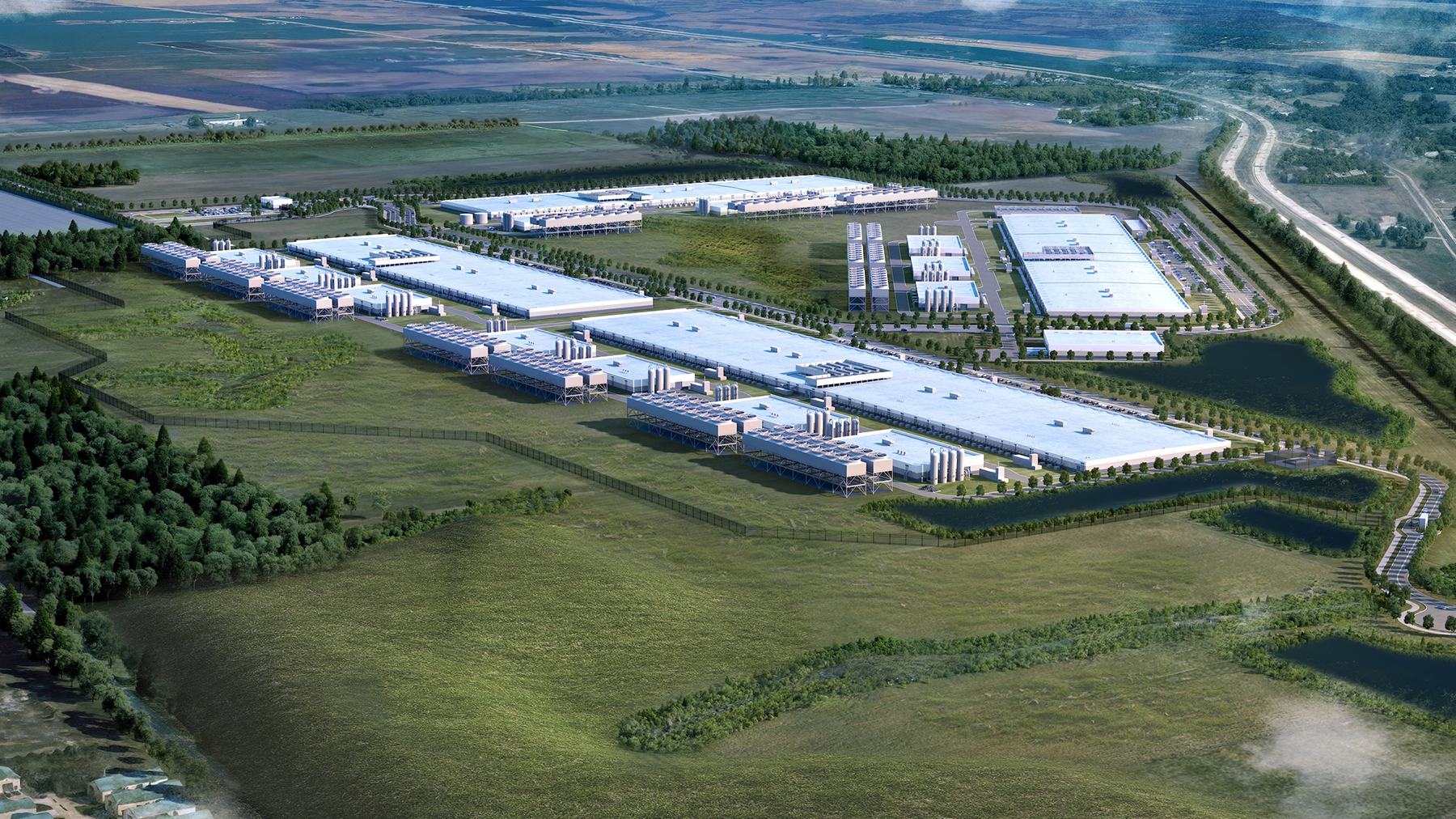
On June 22, Microsoft confirmed a new datacenter campus in Pecos, Texas, that will expand its global capacity by roughly 2 gigawatts. Noelle Walsh, President of Cloud Operations and Innovation, framed it as one of the largest single capacity additions in the company's history, a multibillion-dollar program planned across the next five to seven years. We read this as a deliberate move into the Permian Basin, a region known for energy abundance rather than dense population. The location choice matters more than the headline number, because it tells CIOs that the next wave of Azure capacity is being sited where electrons are cheap and plentiful, not where customers happen to cluster.
The figures are deliberately staged. Two gigawatts is enough to power a small city, and Microsoft is layering it onto a fleet that already spans dozens of regions. What strikes us is the candor about timeline: five to seven years for full build-out. That is not a press-release flourish, it is an admission that gigawatt-scale AI infrastructure now moves on the cadence of heavy industry, not software. Enterprises planning multi-year AI deployments should internalize that the capacity they will rent in 2029 is being poured into West Texas concrete today, and contention for it is already being priced in.
Power Came Before the Servers
Microsoft says it has already contracted 4.7 gigawatts of renewable electricity in Texas, a number that arrives before a single rack is energized in Pecos. That sequencing is the real story. In the old cloud playbook, you built the datacenter and sourced power as you scaled. In the AI era, the power contract is the gating asset, and the building follows. Texas, with its independent ERCOT grid and deregulated market, has become the venue of choice precisely because a hyperscaler can move faster on procurement there than almost anywhere else in the United States.
There is a regulatory wrinkle worth flagging. In June, the Public Utility Commission of Texas approved ERCOT's one-time Batch Zero study to evaluate very large new power users in a consistent way, prioritizing projects with evidence they will actually be built over speculative requests. Microsoft's 4.7 gigawatt position and a concrete campus give it exactly the kind of credibility that screening process rewards. For executives, the lesson is that grid access is becoming a competitive moat, and the hyperscalers with the deepest power balance sheets will win the interconnection queue.
Project Kilby and the Behind-the-Meter Turn
Pecos does not sit in isolation. Nearby, Project Kilby pairs a Microsoft-run AI campus with roughly 2.67 gigawatts of co-located power, a behind-the-meter arrangement that bypasses much of the public grid's interconnection bottleneck. This is the architecture we expect to dominate the next 24 months: generation built next to compute, grid-independent, dedicated to AI workloads. It is a hedge against transmission delays that have stretched to years in some regions, and it quietly turns hyperscalers into power developers.
For business technology leaders, the behind-the-meter turn has second-order effects. It decouples AI capacity growth from the pace of public grid expansion, which means the supply of Azure AI compute can scale faster than utility planning cycles would otherwise allow. It also concentrates capacity in a handful of energy-rich geographies, which raises real questions about latency and data residency for workloads that need to live closer to end users. We would advise architects to ask their cloud account teams precisely which regions these gigawatts land in, because the answer increasingly drives both cost and compliance.
Jobs, Water, and the Local Bargain
The campus is expected to support more than 6,000 construction jobs at peak and create hundreds of permanent operational roles. Microsoft also points to statewide commitments: more than 1,100 TechSpark jobs, over 20,000 Texans engaged in digital skilling, and 1,500-plus acres of Edwards Aquifer land protected. Reeves County Judge Leo Hung welcomed the investment, noting it will create new opportunities for local businesses. These are the terms of the modern local bargain, where a hyperscaler trades jobs and community investment for land, water access, and grid priority.
Water is the quiet variable. The Permian Basin is arid, and gigawatt-scale cooling is thirsty unless the design leans on closed-loop or air-cooled systems. Microsoft's emphasis on aquifer protection suggests it knows the optics, and likely the engineering, demand a water-frugal approach. We think the broader takeaway for the industry is that the social license to build at this scale is no longer automatic. Communities are negotiating harder, and the hyperscalers that pair capacity with credible local commitments will find the next site easier to permit than the rivals who do not.
What CIOs Should Take From Pecos
Strip away the civic framing and Pecos is a signal about capacity planning. Microsoft is pre-committing gigawatts and gigawatt-hours years ahead of demand, which tells us the company expects AI consumption to keep compounding well past the current cycle. For enterprises, that is reassuring on supply but sobering on geography: the capacity is going where power is, and that may not be where your users are. Negotiating reserved capacity and understanding regional roadmaps is now a board-level concern, not a procurement footnote.
We would also watch the competitive read-through. Microsoft is not building Pecos in a vacuum; AWS, Google, and Oracle are all racing for the same Texas power and land. The hyperscaler that secures the most generation, navigates ERCOT's screening fastest, and keeps communities onside will set the pace for AI capacity through the decade. Pecos is Microsoft planting a very large flag in that race, and the enterprises that depend on Azure should treat it as a leading indicator of where their workloads will physically live.