A Multi-Vendor Wind Power Push
Oracle has secured more than 1.7GW of wind energy across Texas through a cluster of agreements announced September 18, spreading its power sourcing across four separate suppliers instead of concentrating all of that risk with a single provider. RWE, Engie, Clearway Energy, and Scout Clean Energy each signed on to supply the ERCOT grid that feeds Oracle's Texas data center operations, a diversified approach that hedges against any one supplier falling behind on delivery. The scale here puts Oracle alongside the other hyperscalers racing to lock in renewable capacity before AI-driven demand outstrips what grid operators can reliably deliver in the coming years.
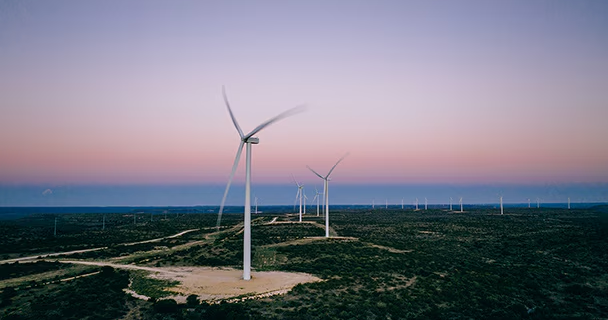
The RWE agreement, structured as a virtual power purchase agreement, covers 433MW from three West Texas wind farms: Panther Creek I at 142MW and Panther Creek II at 115.5MW, both operating since 2008, plus Panther Creek III, upgraded to 215MW after a 2021 repowering that extended the site's useful life. Engie North America is supplying a larger 568MW through a broader portfolio of wind resources, though Oracle has not disclosed which specific projects make up that allocation. Clearway and Scout Clean Energy round out the deal cluster with capacity that remains undisclosed, but the combined total pushes well past the 1.7GW mark.
Why ERCOT Specifically
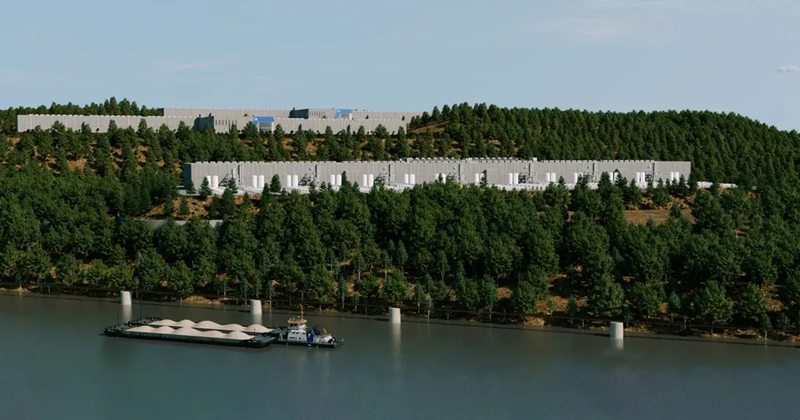
The Texas grid, run by ERCOT, has become one of the most contested pieces of infrastructure in the AI buildout because of its deregulated market structure and its existing wind and solar capacity built up over two decades. Oracle's Abilene data center campus sits squarely in this market, and securing dedicated renewable supply through long-term contracts gives the company price certainty and carbon accounting benefits that spot-market power purchases simply cannot match. Repowered older assets like Panther Creek III also show how buyers are tapping upgraded legacy wind infrastructure instead of waiting years for entirely new projects to clear permitting and construction.
This approach lets Oracle scale its Texas footprint without waiting on new grid-connected generation to clear interconnection queues that have become notoriously slow across most US markets. By contracting directly with generators that already have operating turbines, Oracle sidesteps some of the multi-year delays that have stalled other data center energy plans elsewhere in the country. For a company racing to keep pace with Microsoft, Google, and Amazon on AI infrastructure buildout, that speed advantage is arguably as valuable to the bottom line as the sustainability credentials attached to it.
Oracle's Carbon-Free Commitment
Mahesh Thiagarajan, executive vice president of Oracle Cloud Infrastructure, framed the deals as part of a commitment to "match 100 percent of AI data center electricity use with carbon-free electricity by 2035," describing the approach as building data centers responsibly. That is a specific, dated target, and this Texas cluster is a concrete step toward it, backed by signed contracts rather than a vague sustainability pledge with no delivery timeline attached. Whether Oracle hits that 2035 date will depend heavily on how quickly it can replicate deals like this one across every region where it operates AI infrastructure at scale.
Oracle is pushing well beyond Texas on this front. The company has a separate request for proposals out for 2GW of new renewable capacity in New Mexico, spanning solar, wind, and geothermal technologies across multiple project types. Taken together, the Texas wind deals and the New Mexico RFP show a deliberate multi-state energy sourcing strategy instead of opportunistic, one-off contracting whenever a deal happens to be available. For a cloud provider whose AI ambitions depend entirely on power availability, that kind of coordinated regional planning is quickly becoming table stakes for competing at the top of the market.
What This Means for Enterprise Cloud Buyers
Enterprises evaluating Oracle Cloud Infrastructure for AI workloads should read these deals as a capacity signal as much as a sustainability one. Locking in 1.7GW of dedicated power is a direct hedge against the grid congestion and interconnection delays that have started to slow AI infrastructure buildout across the industry this year. Customers with long-term AI compute commitments benefit indirectly from Oracle's ability to guarantee power availability in Texas, a factor that increasingly determines whether a given cloud region can actually deliver the GPU capacity it originally promised on paper.
The sustainability angle also matters for enterprise customers under their own emissions reporting obligations, which are only getting stricter across most regulated industries. Cloud buyers increasingly need to account for the carbon footprint of their compute usage, and a provider with verifiable carbon-free power agreements offers a cleaner story for scope 3 emissions reporting than one relying on an unspecified regional grid mix. As procurement teams weigh Oracle against AWS, Azure, and Google Cloud for AI workloads, deals like this Texas wind cluster are becoming a differentiator worth specifically asking vendors to disclose during the RFP process.
The Broader Race for Power
Oracle's Texas deals land in a broader industry context where power has overtaken chip supply as the binding constraint on AI data center growth. Every major cloud provider is now running parallel tracks: securing GPU supply from Nvidia and its rivals while simultaneously racing to lock in gigawatts of generation capacity years ahead of when facilities actually come online. The fact that Oracle needed four separate suppliers just to hit 1.7GW illustrates just how fragmented and competitive the renewable energy market has become as AI demand pulls in every available megawatt across the country.
We expect this pattern to accelerate through 2027 as more hyperscalers chase repowered legacy assets and new-build renewable projects at the same time, competing directly with utilities and other industrial buyers for the same finite pool of generation capacity. Enterprise technology leaders should expect power availability to increasingly dictate which cloud regions can actually scale AI workloads on schedule, ahead of compute pricing as the primary constraint. Oracle's willingness to stitch together deals with four different suppliers in one region is a preview of how contested that competition for power is about to get across every major market.