A trillion-dollar investor buys the pipeline, not the ground
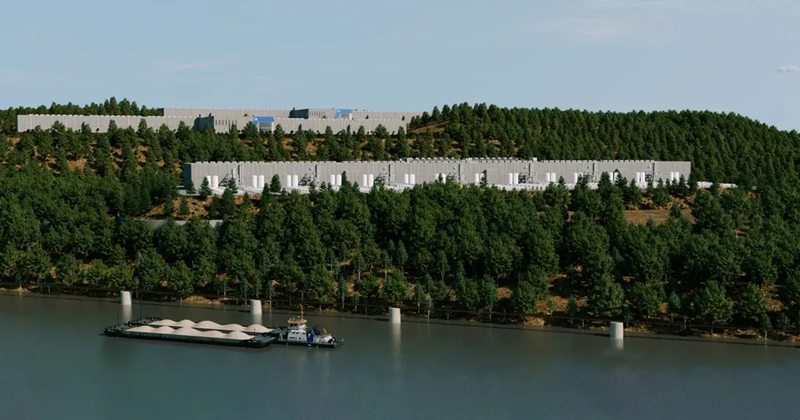
Brookfield Asset Management announced on September 14, 2026 that it would acquire a minority interest in American Real Estate Partners, the institutional real estate fund manager and developer behind the PowerHouse Data Centers platform. Deal terms were not disclosed, and closing is expected in the fourth quarter of 2026. What Brookfield is buying is access: AREP, founded in 2003, built PowerHouse in 2022 and has since assembled a development pipeline exceeding 8 gigawatts across nine states, including Virginia, Texas, North Carolina, Kentucky, Indiana, Illinois, Nevada and Pennsylvania. That is a meaningful chunk of near-term AI data center capacity already in some stage of site control, permitting or power negotiation.
Brian Katz, AREP's co-founder and president, framed the deal as a validation of the platform his firm has built: 'We have built AREP into a differentiated real estate investment and data center development platform, and we are excited to welcome Brookfield as a partner.' Ben Brown, co-president of Brookfield's Real Estate Group, was more explicit about the thesis behind the check: 'We are in the early stages of a multi-decade buildout of physical infrastructure required for AI. AREP is a strong, synergistic partner with institutional-quality data center development capabilities.' The multi-decade framing is doing real work there, signaling this is not a short-term financial position.
Why buy in rather than build
Brookfield is not a newcomer to data centers. It already holds positions in Compass, Csquare, 5C in the US, Data4 in Europe, Ascenty in Latin America, Digital Connexion in India and DCI in Australia, and it recently formed Radiant, its own AI cloud provider, alongside substantial direct investment in the energy infrastructure that feeds the sector. With that scale of existing exposure and expertise, Brookfield clearly has the internal capability to develop new data center capacity from scratch. It chose to buy into AREP anyway, and the reason is timing, not capability.
A greenfield data center platform takes years to assemble the site control, utility relationships, permitting track record and local government trust that AREP already has across nine states. In a market where the binding constraint on new AI capacity is land, power interconnection and permitting speed rather than capital availability, buying a stake in an established developer with an 8 gigawatt pipeline already in motion compresses that multi-year startup phase into a single transaction. For an investor sitting on more than a trillion dollars in assets under management, the capital was never the scarce resource. The pipeline was.
The sector's capital structure is shifting
This deal fits a broader pattern that has been building across 2026: capital providers are increasingly buying equity positions in data center developers and operators rather than simply financing individual projects or leasing capacity from hyperscalers. That shift matters because it changes who captures the value in the AI infrastructure buildout. A pure lender or lessor captures a fixed return tied to a specific project. An equity stake in a platform like AREP captures the value of the entire pipeline, including sites that have not yet broken ground, and gives the investor influence over how that pipeline gets prioritized and financed going forward.
It also signals confidence that the AI data center demand story has enough duration to justify platform-level bets rather than project-by-project underwriting. Brookfield's existing footprint across six other data center platforms globally shows this is a deliberate portfolio strategy, not an opportunistic one-off. The firm is positioning itself as an owner of data center development capability broadly, across geographies and operators, rather than betting on any single platform or region to capture the bulk of AI infrastructure demand over the next decade.
Brookfield is assembling a full infrastructure stack
The AREP deal does not stand alone in Brookfield's data center strategy, it sits inside a broader pattern of vertical integration. Brookfield already holds stakes in seven other data center platforms spanning the US, Europe, Latin America, India and Australia, including Compass, Data4 and Ascenty, and it recently launched Radiant, its own AI cloud provider, on top of substantial direct investment in the power and energy infrastructure that feeds all of it. Adding AREP's 8 gigawatt PowerHouse pipeline gives Brookfield exposure to real estate and site development to go with the compute layer it is building through Radiant and the power layer it already owns, across a portfolio spanning more than a trillion dollars in assets under management.
That structure matters more than the size of any single check. A firm with positions across power generation, land and site development, and cloud compute is positioning itself to capture value at every layer of the AI infrastructure buildout rather than competing for margin at just one. The deal also preserves AREP as an independently operated platform rather than folding it into Brookfield outright, a structure that lets AREP keep the developer relationships and local permitting track record that made it valuable in the first place while giving it Brookfield's balance sheet behind it. For competitors and capital partners alike, that full-stack posture is the more important signal than the AREP transaction on its own.
What this means if you are sourcing capacity or capital
For enterprise buyers negotiating capacity with colocation providers or regional data center operators, deals like this are worth tracking because a new institutional capital partner often accelerates a developer's ability to close power and permitting timelines, which directly affects how fast committed capacity actually comes online. A developer with fresh, patient capital behind it and a track record like AREP's is a materially different counterparty than one still raising project-level debt for each individual site, and that difference should factor into vendor risk assessment for any multi-year capacity commitment.
For anyone on the capital allocation side, the signal is that development pipelines with real site control and permitting progress are becoming the scarce, investable asset in this cycle, more so than raw capital or even power purchase agreements in isolation. If your organization is evaluating build versus buy for AI infrastructure exposure, whether as a direct capacity buyer or as an investor, the AREP deal suggests the smart money increasingly prefers backing proven developers with pipeline already in motion over standing up new platforms or writing checks for undifferentiated project debt.