Ground Breaks on Project Phoenix
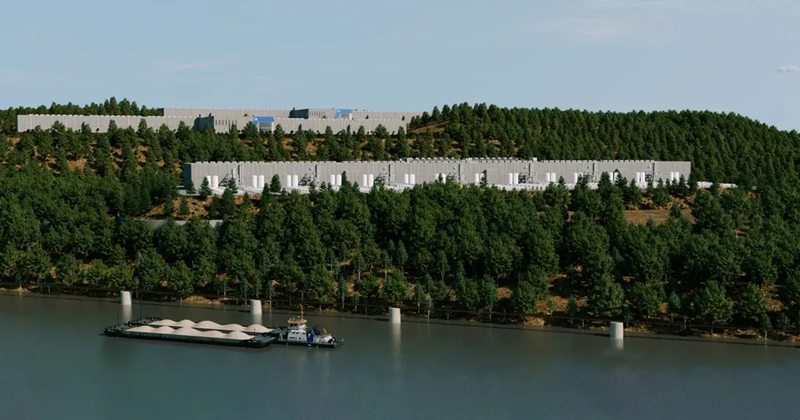
Aligned Data Centers has begun construction on Project Phoenix, a data center campus in Shippingport, Pennsylvania, roughly 30 miles northwest of Pittsburgh in Beaver County's industrial park. The campus is planned at 2GW of capacity spread across three separate facilities, placing it firmly in the gigawatt-scale tier that has become the new benchmark for hyperscale AI infrastructure projects nationwide. That scale alone puts Project Phoenix among the largest data center commitments announced in the region this year, and one of the largest Aligned itself has undertaken anywhere to date, according to the company's own construction announcement.
What sets this project apart from a typical campus announcement is the power strategy behind it. Instead of drawing capacity from the regional grid and competing with residential and industrial users for scarce transmission headroom, Aligned is building dedicated on-site power generation to serve the campus directly. That decision reflects a broader shift among data center developers toward behind-the-meter power as grid interconnection queues stretch into multi-year waits in many US markets, effectively forcing large-scale AI infrastructure projects to become their own standalone utilities in order to hit construction timelines.
A Site With Energy History
The choice of the Shippingport location looks deliberate rather than opportunistic. The campus sits adjacent to the Shippingport Power Station, a former coal-fired plant currently being converted into a natural gas energy facility, giving Aligned proximity to existing energy infrastructure and fuel supply logistics that would be far more expensive to build from scratch elsewhere. Shippingport's mayor, John Erickson, leaned into that legacy, noting that "for decades, Shippingport has been defined by powering the country as the birthplace of commercial nuclear energy," a reference to the site's history as home to the first full-scale commercial nuclear power plant in the United States.
That framing matters for how local communities are receiving these projects across the country right now. Data center developments increasingly face local pushback over water use, noise, and grid strain, and Aligned's choice of a site with a multi-generation energy identity, paired with local officials willing to publicly welcome the project, suggests the company is prioritizing locations where the community narrative already works in its favor. For developers chasing gigawatt-scale sites nationally, that kind of local alignment is becoming just as important as raw land availability or fiber connectivity when picking a site.
The Capital Behind the Buildout
Aligned's ability to fund a project of this scale traces back to its 2025 acquisition by a consortium that included the AI Infrastructure Partnership, MGX, and BlackRock's Global Infrastructure Partners, a deal valued at $40 billion. That level of institutional infrastructure capital, the same category of investor backing toll roads, airports, and power grids, signals how thoroughly data centers have been reclassified as core infrastructure over the past two years, on par with those established asset classes. Sovereign and pension-adjacent capital of that scale does not chase short-term returns, which helps explain why Aligned can commit to a multi-facility, multi-gigawatt buildout entirely upfront.
CEO Andrew Schaap described Project Phoenix as representing "the future of responsible data center development," a phrase that will only carry real weight once Aligned discloses concrete figures on emissions, water usage, and the fuel mix behind its on-site generation. Framing a natural-gas-adjacent, dedicated-generation campus as environmentally responsible is a claim that invites scrutiny, and enterprise customers evaluating Aligned as a colocation or capacity partner would do well to press for the underlying numbers instead of accepting the label at face value from a press release.
What Dedicated Generation Means for Customers
For enterprises leasing capacity at facilities like Project Phoenix, on-site generation is a meaningful operational difference from a standard grid-connected data center, not just a marketing point on a brochure. It insulates tenants from regional grid outages and the demand curtailment risk that has started affecting AI workloads in congested markets, giving large AI training and inference customers far more predictable uptime guarantees than they would otherwise get. It also means Aligned controls its own fuel and maintenance costs directly, which can translate into more stable, less grid-price-volatile billing for tenants over the full life of a lease agreement.
The tradeoff is that dedicated generation ties the facility's environmental footprint directly to whatever fuel source Aligned uses, in this case proximity to a natural gas conversion project, instead of to whatever mix the regional grid happens to be running at any given time. Enterprise customers with their own net-zero commitments will need to evaluate that fuel source specifically instead of relying on grid-average carbon figures, since a behind-the-meter natural gas plant produces a meaningfully different emissions profile than the wind and solar deals other cloud providers have been signing this year.
Part of a Bigger Pattern
Project Phoenix is one entry in a fast-growing list of gigawatt-scale campuses breaking ground across the US this year, as developers race to secure sites, power, and capital before the current wave of AI infrastructure demand eventually cools off. Aligned's approach, buying land next to convertible legacy power infrastructure and building dedicated generation instead of waiting years on grid upgrades, is likely to become a template other developers copy as interconnection queues remain the single biggest bottleneck facing the industry today.
For CIOs and infrastructure leaders assessing where to place large AI workloads, the emergence of projects like this one means capacity decisions increasingly hinge on a developer's power strategy as much as its real estate footprint or headline pricing. A campus with guaranteed, dedicated power is a genuinely different product from one dependent on grid capacity that may or may not materialize on schedule, and the two should not be priced the same way. Expect due diligence conversations with data center providers to spend considerably more time on power sourcing specifics going forward, and correspondingly less on square footage alone as the deciding factor in site selection.