The Backlog Becomes the Headline
Oracle closed its 2026 fiscal year on June 10 with numbers that did more than beat expectations: they reframed what kind of company Oracle has become. Record fourth quarter revenue reached 19.2 billion dollars, up 21 percent, and full year revenue hit 67.4 billion dollars. Yet the figure that stopped the market was not on the income statement. Remaining performance obligations, the contracted business Oracle has signed but not yet delivered, swelled to 638 billion dollars. That backlog is roughly ten times the company's annual revenue, and it recasts Oracle less as a database vendor and more as a multi-year AI infrastructure supplier with a waiting list.
Only days ago we wrote about Oracle's backlog as a promise the company still had to prove it could deliver. The fourth quarter is the first installment on that proof. The RPO did not just hold, it expanded sharply, which means demand is accelerating faster than Oracle is burning it down. For a business that spent much of the past two years absorbing skepticism about whether its cloud ambitions were real, a backlog of this scale is the most concrete possible rebuttal. The question has shifted from whether the demand exists to whether Oracle can physically build fast enough to satisfy it.
Infrastructure Growth Steals the Show
Within the cloud results, one line dominates the story. Cloud Infrastructure, the IaaS layer where AI training and inference workloads actually run, grew 93 percent in the quarter to 5.8 billion dollars, and 77 percent across the full year to 18.1 billion. That is the kind of growth rate normally reserved for early stage businesses, not a company Oracle's age. Total cloud revenue climbed 47 percent to 9.9 billion dollars in the quarter, with the slower-growing applications business, up 10 percent, increasingly looking like the steady ballast beneath a far more explosive infrastructure engine.
We see the IaaS number as the metric that matters most, because it is the clearest read on Oracle's position in the AI capacity race. Hyperscalers with far larger absolute scale are growing infrastructure revenue at a fraction of that pace, which suggests Oracle is winning a disproportionate share of the new AI workloads coming online. The company's multicloud strategy, making the Oracle database and OCI available inside the data centers of its largest cloud competitors, appears to be paying off. Ellison noted that the cloud database business grew 115 percent quarter over quarter, a sign that Oracle's bet on meeting customers wherever they run is converting into revenue.
Ellison's Unfiltered Read on Demand
Oracle's leadership did not reach for restraint in describing the environment. Larry Ellison characterized customer demand in language more often heard from a startup founder than a veteran technology chairman. He called it astronomical, said he had never seen anything like it, and admitted he really just did not know how to describe it. Stripped of the theatrics, the message is that Oracle's sales pipeline is constrained by supply, not by interest. When a company this large says demand is insatiable, the binding limit is its ability to deliver capacity, not its ability to find buyers for it.
That framing carries real weight because Ellison and chief executive Safra Catz have spent the year insisting that Oracle's aggressive capital spending would be vindicated by contracted demand. The fourth quarter gives them the evidence. Catz had guided that RPO would roughly double for the fiscal year and that cloud revenue would land near 35 billion dollars, and the actual results tracked that ambition. We are generally wary of superlatives on earnings calls, but the underlying numbers here lend the rhetoric unusual credibility. The backlog is not a forecast or a sentiment survey. It is signed business that Oracle is now obligated to fulfill.
The Capital Spending Question
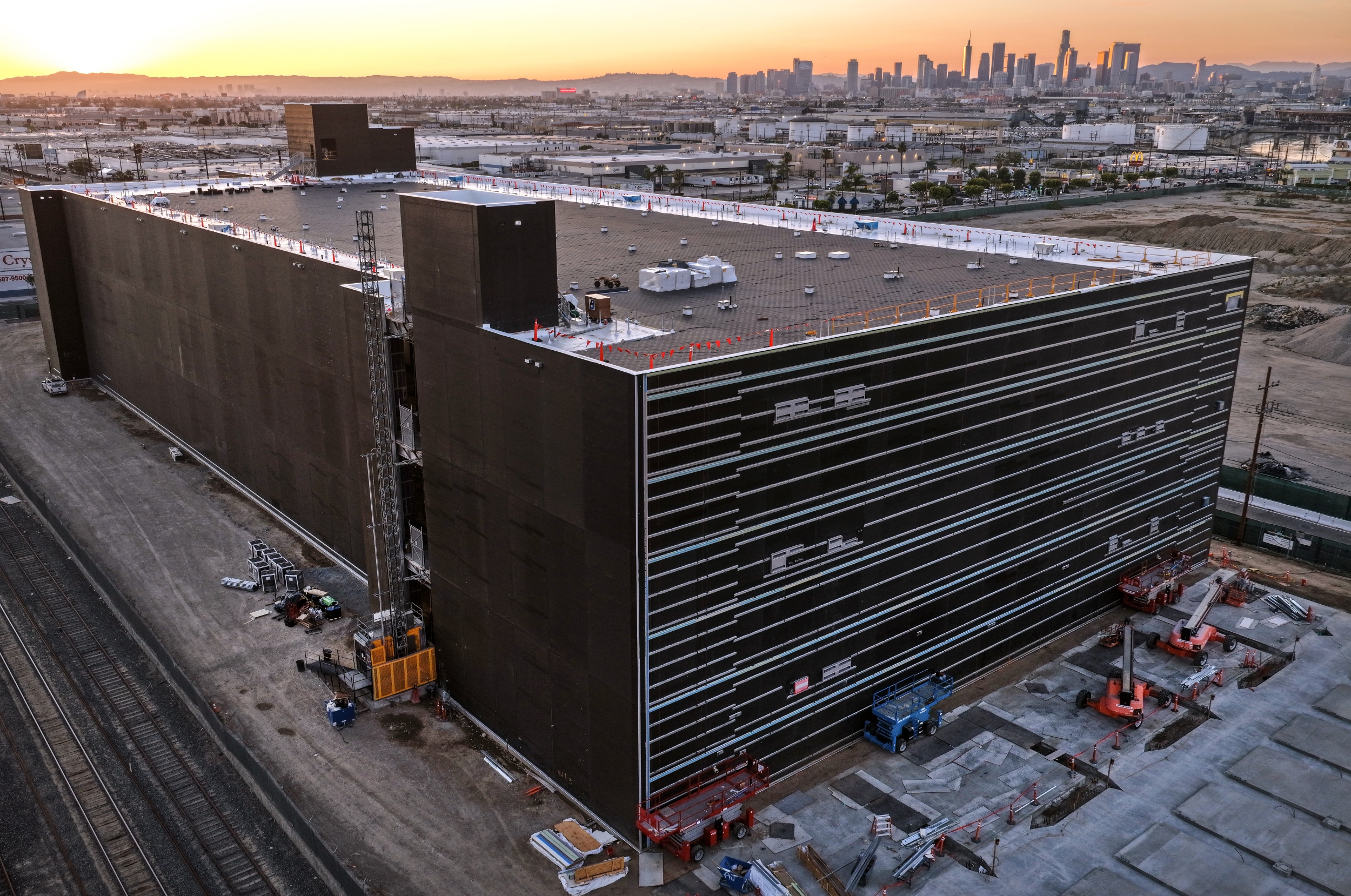
A backlog of 638 billion dollars is only valuable if Oracle can build the data centers to serve it, and that is where the story gets harder. Delivering AI infrastructure at this scale demands enormous upfront capital, gigawatts of power and a steady supply of advanced chips, all of which are scarce and expensive in 2026. Oracle's operating cash flow rose 54 percent to 32 billion dollars for the year, which helps fund the buildout, but the company is still committing to spending that compresses near-term margins in pursuit of long-term position. The bet is that locking in capacity now secures a durable lead later.
One detail softens the capital intensity in an interesting way. Roughly 75 billion dollars of the RPO reflects AI hardware that customers are prepaying for or supplying themselves, which reduces the capital Oracle must lay out to fulfill those contracts. That structure suggests the largest AI buyers are willing to fund infrastructure in advance to guarantee their place in line, a striking inversion of the usual cloud economics. We read it as further evidence that capacity, not demand, is the true currency of this market, and that customers will restructure deals creatively to secure it.
What the Results Mean for Enterprise Buyers
For the CIOs and infrastructure leaders watching these numbers, Oracle's quarter is more than a stock story. It is a data point about the state of AI capacity supply, and it is not reassuring for anyone still shopping. A 638 billion dollar backlog means the best capacity is being contracted years in advance by the largest buyers, and that the window to secure favorable terms on AI infrastructure is narrowing. Enterprises that assumed they could procure GPU capacity on demand when their projects matured may find the cupboard increasingly committed. The lesson is that capacity planning now has to extend over multi-year horizons.
We would also caution against reading the results as a settled outcome. A record backlog is a record obligation, and the risk in Oracle's story has migrated from demand to execution. Power constraints, construction timelines and chip availability are unglamorous variables, but they are the ones that will determine whether 638 billion dollars of promises become delivered revenue. Oracle has earned the benefit of the doubt with this quarter. The next several years will test whether a company can pour concrete and energize data centers as fast as it can sign contracts, and that is a very different kind of challenge.