Capacity Measured in Power Plants
There is a tell in how the AI infrastructure industry now talks about itself, and Crusoe's June 9 announcement is a clean example. The company did not lead with chips, racks, or square footage. It led with gigawatts, reporting 4.9 of them contracted across its data center projects and its Crusoe Cloud platform. A gigawatt is roughly the output of a large nuclear reactor, so a figure approaching five gigawatts means Crusoe has effectively committed to drawing the power of several major plants to feed AI workloads. When capacity is denominated in the same units as the electrical grid, the nature of the business has changed.
That shift reframes the entire competitive question. For most of the cloud era, the binding constraint was capital and silicon, and the winners were those who could buy and deploy servers fastest. In the current buildout the binding constraint is electricity, and increasingly the land, transmission, and cooling that surround it. Crusoe's headline number is impressive on its own terms, but its real significance is as a marker of how the bottleneck has migrated. The companies setting the pace are the ones that can secure power at scale, and Crusoe is positioning itself as one of them.
A Pipeline That Dwarfs the Contracts
If 4.9 gigawatts contracted is the headline, the more revealing figure is the development pipeline, which Crusoe puts at more than 40 gigawatts. The gap between what is signed and what is planned is enormous, and it tells you how the company sees the trajectory of demand. Building speculative capacity at this scale is not cheap or low risk, and a pipeline eight times larger than the contracted base is a statement of conviction that the orders will keep coming. Crusoe is spreading that ambition across five AI data center campuses in the United States, anchoring a national footprint rather than a single megasite.
We would temper the enthusiasm with the obvious caveat that a pipeline is a plan, not a guarantee. Forty gigawatts of intent has to clear a gauntlet of permitting, grid interconnection queues, equipment lead times, and financing before it becomes operational concrete and steel. McKinsey's projection of 156 gigawatts of global AI data center capacity by 2030 gives the pipeline a plausible market to grow into, but the history of infrastructure is littered with announced capacity that slipped or never arrived. The number signals direction and appetite. Execution against it, campus by campus and substation by substation, is where the story will actually be written.
Hyperscalers Behind the Leases
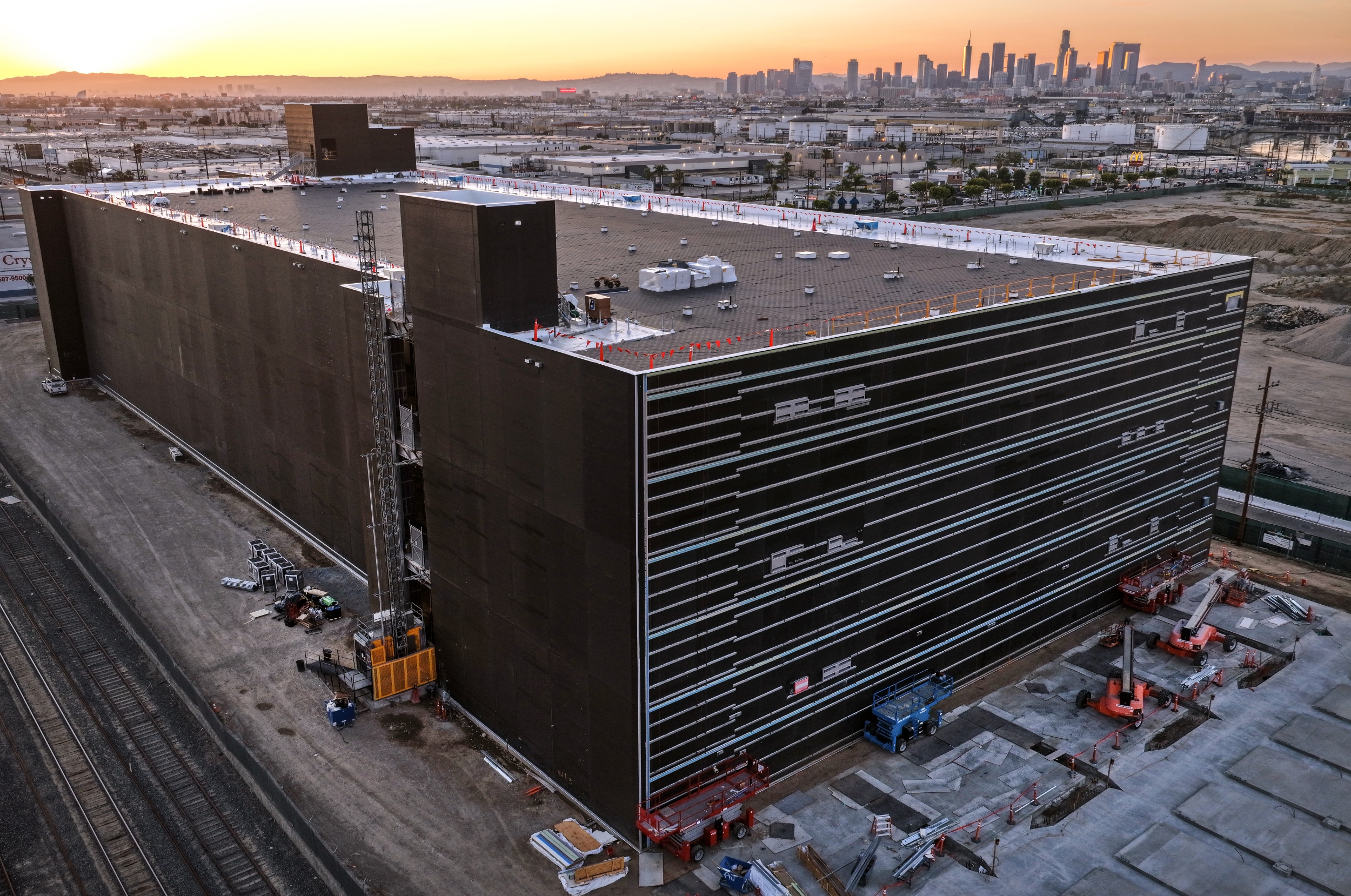
What gives the contracted figure its weight is who is on the other side of the agreements. Crusoe's flagship campus in Abilene, Texas is purpose built for Oracle and rated at 1.2 gigawatts, with eight buildings of which two are operational and six under construction. A second Abilene campus, sized at 900 megawatts, serves Microsoft. Additional large scale sites are advancing in Texas and Missouri. These are not anonymous tenants. They are among the largest technology companies on earth, and their willingness to anchor multi gigawatt campuses with a specialist developer reveals how the infrastructure supply chain is reorganizing around AI demand.
The pattern is worth dwelling on because it marks a change in how hyperscalers expand. Rather than building everything in house, the largest cloud and model companies are increasingly leasing purpose built capacity from partners who can move faster on power and land. CEO Chase Lochmiller captured the demand backdrop bluntly, saying the appetite from the world's leading technology companies for AI infrastructure, quickly and at scale, has never been greater. For a company like Crusoe, securing Oracle and Microsoft as named anchors is both validation and a hedge, converting speculative buildout risk into contracted revenue with counterparties that are unlikely to default.
The Constraint Nobody Can Engineer Around
Strip away the announcements and the same word keeps surfacing: power. The reason capacity is now quoted in gigawatts is that securing electricity has become the hardest part of building AI infrastructure, harder than acquiring GPUs and harder than raising capital. Grid interconnection timelines stretch for years in many regions, transmission is congested, and the sheer density of AI compute pushes against the limits of what local utilities can deliver. Crusoe's concentration in Texas is not incidental. The state's relatively independent grid and its abundance of power generation make it one of the few places where multi gigawatt campuses can realistically be energized on an AI relevant timeline.
This is where the boardroom conversation and the public policy conversation collide. We have already seen jurisdictions move to slow or freeze AI data center construction over concerns about electricity prices and grid strain, and that political friction is now a material variable in any buildout plan. The companies that win the next phase will be those that treat energy strategy as a core competency rather than a procurement afterthought, lining up generation, storage, and grid access alongside their compute roadmaps. Crusoe's numbers are a snapshot of a race whose finish line is defined less by silicon and more by the kilowatt.
Reading the Signal for Enterprise Buyers
For enterprise technology leaders who consume rather than build this capacity, Crusoe's milestone is a useful barometer of where the market is heading. The aggressive contracting and the outsized pipeline together suggest that AI compute will remain a seller's market for the foreseeable future, with supply expanding fast but demand expanding faster. That has direct implications for cost, availability, and the wisdom of locking in capacity through longer term commitments rather than assuming spot availability when a project needs it. Scarcity at the infrastructure layer eventually shows up as price and lead time at the application layer.
It also reinforces a strategic point about concentration and resilience. As AI capacity consolidates into a handful of enormous campuses operated by a small set of developers and anchored by a few hyperscalers, the dependency chain beneath enterprise AI grows both deeper and narrower. A single delayed substation or a regional power dispute can ripple outward to the workloads riding on top. We do not read that as a reason for alarm, but as a reason for diligence. Knowing where your AI actually runs, on whose power, and under what contracts is becoming part of sound technology governance rather than an esoteric infrastructure detail.