A Print That Has Become a Referendum
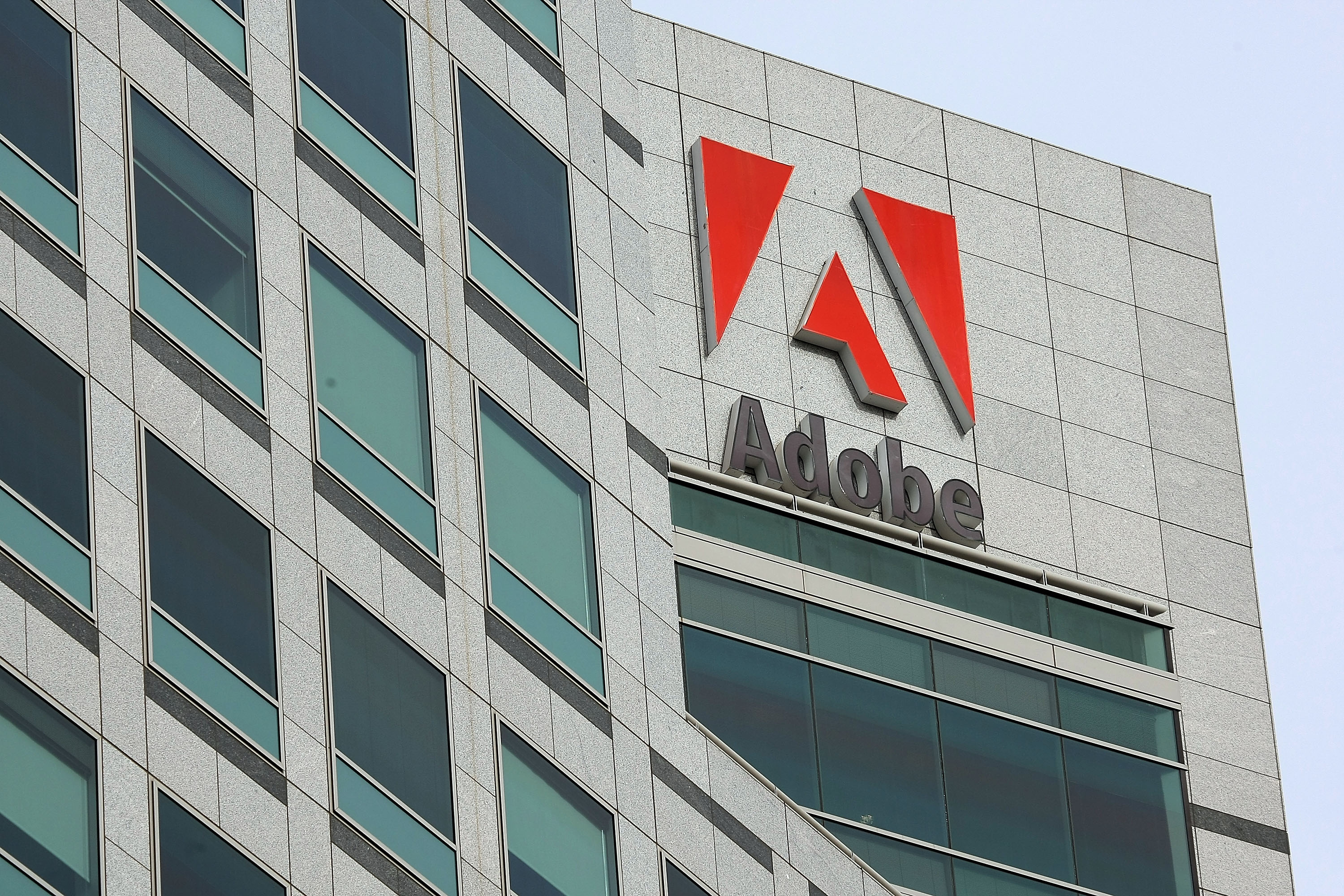
When Adobe reports fiscal second quarter results after the closing bell on June 11, the numbers themselves will matter less than the narrative they settle. For two years the company has insisted that generative AI is a tailwind for its franchise, a way to pull more users into Photoshop, Premiere and Acrobat and to charge them more for new capabilities. The market has spent most of 2026 betting the opposite. Adobe shares entered June down roughly 30 percent for the year, trading near a 52 week low around 224 dollars after touching 421 at their peak, and analyst price targets have been quietly marked down from 565 dollars in early 2025 to about 327 today.
That gap between management confidence and market skepticism is what makes this print a referendum rather than a routine update. Adobe guided revenue to between 6.43 and 6.48 billion dollars and non-GAAP earnings to between 5.80 and 5.85 per share, growth of roughly 10 percent on the top line and 15 percent on the bottom. Those are numbers most software companies would envy. Yet investors are no longer grading Adobe on whether it grows, but on whether the engine driving that growth is being slowly hollowed out by the same AI wave the company keeps celebrating from the stage.
The Firefly Math Investors Cannot Ignore
The single most scrutinized figure on Thursday will not appear in the headline. It is the trajectory of Firefly, Adobe's family of generative models, whose annualized recurring revenue crossed 250 million dollars in the first quarter with AI first ARR more than doubling year over year. On its own that is a credible start. Set against Adobe's total recurring revenue of roughly 26 billion dollars, however, Firefly still accounts for less than 2 percent of the business. The bull case requires that small number to compound fast enough to offset any erosion in the core.
The bear case is arithmetic of a different kind. If a meaningful share of Adobe's 850 million monthly active users can accomplish in a free or low cost AI tool what once required a Creative Cloud subscription, then even rapid Firefly growth becomes a rounding error against a shrinking base. The company will likely point to Digital Media net new ARR, the cleanest proxy for whether it is still adding paid demand, as evidence that the franchise is intact. A figure above the 450 million dollar threshold analysts are watching would reassure. A miss would confirm the fear that AI is substituting for Adobe rather than selling more of it.
Why the Market Stopped Believing the Growth Story
Adobe's predicament is instructive because the company did almost everything the playbook recommended. It shipped AI features early, priced them into premium tiers, and built its own models rather than depending entirely on a frontier lab. CFO Dan Durn has described an organic engine the company is pleased with and pointed to great innovation in flight. None of that has stopped the multiple compression, because the doubt is not about execution. It is about whether the category Adobe defined, professional creative software sold by the seat, survives a world where generation is cheap and abundant.
This is the uncomfortable lesson for every incumbent. Competence at adopting AI does not automatically translate into a defensible business, because the same technology that lets you add features also lowers the barrier for customers to leave. Adobe's brand, its file formats, its integration into enterprise workflows and its installed base remain real moats. But moats are priced in expectations, and the market has decided to wait for proof rather than extend the benefit of the doubt. Thursday is the first hard data point in that argument since the spring selloff.
The Anthropic and OpenAI Shadow Over Creative Tools
The proximate trigger for the year's anxiety was external. The arrival of high quality design and image capabilities from frontier labs, including Anthropic's spring move into creative tooling, made the substitution thesis feel concrete rather than theoretical. Suddenly a marketer or small business owner had a plausible path to a finished asset without ever opening a Creative Cloud app. The threat is less that these tools match Adobe feature for feature, and more that they are good enough for the long tail of casual creation that historically funneled users toward paid Adobe products.
Adobe's answer has been to position Firefly as the commercially safe, rights cleared option for enterprises that cannot risk training data ambiguity, and to weave generation into the surfaces professionals already use. That is a coherent strategy, and it plays to genuine enterprise concerns about provenance and liability. The question Thursday's call must begin to answer is whether safety and integration are enough to defend price, or whether they merely slow a migration toward cheaper, general purpose tools that improve every quarter.
What a Buyback Signals and What It Hides
Sitting behind the earnings is a 25 billion dollar share repurchase authorization, a statement of confidence in the durability of Adobe's cash generation. Buybacks of that scale tell investors that management believes the stock is undervalued and that free cash flow is secure enough to return capital aggressively. For a company throwing off the margins Adobe does, the logic is sound and the support for the share price is real. It is also, in a sense, the easy part of the response.
What a buyback cannot do is manufacture demand. Repurchasing shares lifts earnings per share by shrinking the denominator, but it says nothing about whether more customers will pay more for Adobe's tools next year. There is a risk that aggressive capital return becomes a way to flatter the optics of a business whose underlying unit growth is decelerating. Sophisticated investors know the difference, which is why the buyback, however large, will not substitute for a convincing ARR trajectory on Thursday's call.
The Read for Enterprise Technology Leaders
For CIOs and technology buyers, Adobe's moment is a preview of a question that will reach every seat based software contract in their portfolio. If generative AI compresses the time and skill needed to produce work, the per seat licensing model that underwrites much of enterprise software starts to wobble. Buyers should expect vendors to respond by bundling AI into higher tiers, shifting toward consumption pricing, and emphasizing governance, provenance and integration as the features that justify a premium. Adobe is simply the most visible test case.
Our read is that Adobe is more likely to prove resilient than the selloff implies, precisely because enterprise creative work carries compliance and brand risk that casual tools do not address. But resilience is not the same as the double digit growth the stock was once priced for. The signal worth watching on Thursday is not the beat or miss, but the quality of net new paid demand. That number, more than any Firefly milestone or buyback headline, will tell technology leaders whether the incumbent model bends or breaks under AI.