A Second Site, Not Just a Bigger One
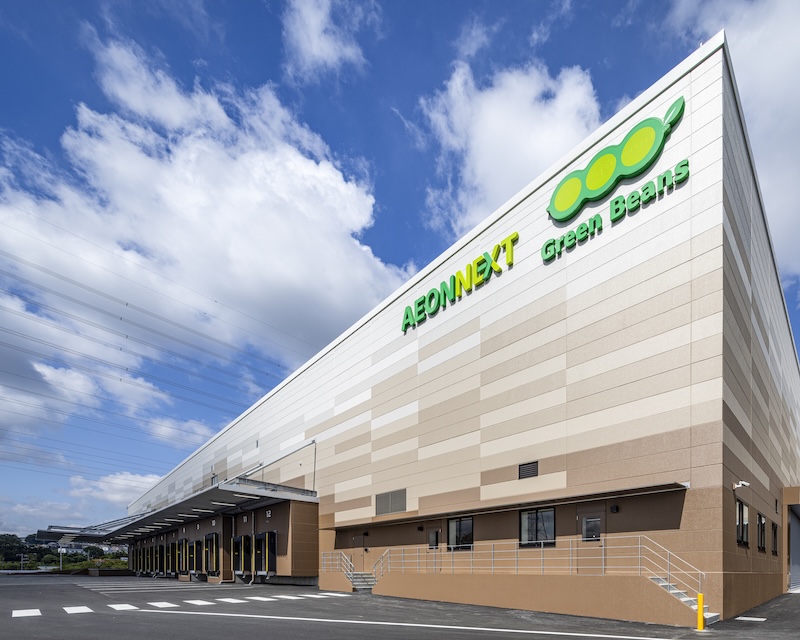
Ocado Group and AEON have opened a second customer fulfilment centre in Hachioji City, within the greater Tokyo region, adding meaningful capacity for AEON's Green Beans online grocery brand across one of the densest and most competitive retail markets anywhere in the world. The site spans four storeys and roughly 40,000 square meters of floor space, and AEON executives marked the opening with a formal on-site ceremony, signaling the real strategic weight the retailer is placing on expanding automated fulfilment rather than treating its first site in Chiba as sufficient capacity for the region going forward.
Nick de la Vega, Ocado Group's Chief Revenue Officer, said the company is pleased to build on its successful partnership with AEON through the opening of this second facility, describing it as one of Ocado's most advanced sites anywhere in the world today. That is a meaningful claim coming from a company operating fulfilment technology across several different countries simultaneously, and it points to Hachioji functioning as a genuine showcase site for Ocado's latest automation generation, rather than simply a straightforward capacity replica of the Chiba facility that preceded it three years earlier.
The Numbers That Matter Operationally
The most concrete figures in this announcement concern frozen order handling specifically, a category that is notoriously expensive to automate well because of the demanding physical conditions required to keep product safely below freezing throughout the entire picking process. Hachioji's Auto-Freezer system processes frozen orders 2.7 times faster than the equivalent manual-assisted process at AEON's first customer fulfilment centre in Chiba, while simultaneously increasing total freezer inventory capacity by 150% within essentially the same overall facility footprint as before.
Perhaps the most commercially significant number in the entire announcement is the 50% reduction in required storage footprint for frozen inventory specifically. Freezer space is consistently among the costliest square footage in any grocery fulfilment operation to build, insulate, and run continuously, given the refrigeration infrastructure and energy costs involved. Cutting that footprint in half while simultaneously increasing both capacity and throughput is precisely the kind of efficiency gain that changes the underlying economics of whether automated frozen fulfilment is viable at scale at all, rather than merely improving an already-acceptable operating margin incrementally.
The Labor Condition Angle Gets Overlooked
Buried within the technical specifications is a detail with direct relevance to labor policy and worker welfare, not simply throughput and cost: staff now spend less than 5% of their total working hours in freezer conditions at the Hachioji site. Working extended shifts inside sub-zero environments carries well-documented health and safety costs for warehouse staff over time, and automating that exposure down to a small fraction of a typical shift is a genuine labor condition improvement that automation advocates can now point to with actual measured data, rather than relying on a general efficiency argument alone to justify the investment.
For enterprise operators weighing automation investment partly on labor and workplace safety grounds, this is a genuinely useful reference point to cite internally. The business case for warehouse automation is usually framed almost entirely around cost reduction and processing speed. Ocado and AEON's own framing of this specific deployment, emphasizing reduced freezer exposure for staff, suggests retailers should be building worker condition improvements into their automation return-on-investment case explicitly from the start, rather than treating it as an unquantified side benefit worth only a passing mention.
Validating a Technology Beyond One Market
Hachioji is only the second Ocado fulfilment centre anywhere in the world to deploy Auto-Freezer technology, following its first production use at Lotte's customer fulfilment centre in Busan, South Korea. That sequencing matters considerably: Ocado is not introducing a brand-new, unproven system at Hachioji on a leap of faith, it is extending a technology that has already run successfully in production at a different retail partner in a genuinely different country and regulatory environment, which meaningfully de-risks AEON's own decision to adopt it at this scale.
This pattern, licensing a proven automation system to a second retail partner in a second market shortly after the first successful deployment, sits at the center of how Ocado's technology licensing business actually generates sustainable returns outside its home UK grocery operation. Each successful cross-market deployment, from Busan to Hachioji in this case, strengthens the case Ocado can credibly make to its next prospective retail partner that the underlying technology genuinely works outside the specific environment it was originally engineered for.
A Partnership With a Long Runway
Ocado and AEON's relationship dates back to 2019, when the two companies first began developing AEON NEXT's online grocery operations on top of the Ocado Smart Platform. AEON publicly revealed the Green Beans brand in April 2023, and the first fulfilment centre built on that platform opened in Chiba in July 2023, serving Greater Tokyo and the wider Kanto region from a single site. Hachioji, opening roughly three years after that first facility, represents the second major capital commitment in a partnership that has moved deliberately and cautiously rather than rushing straight to scale across the region.
That measured pacing is worth noting for any enterprise evaluating a similar multi-year automation partnership of its own. AEON spent three full years operating and presumably refining its first Ocado-powered site before committing to a second, considerably larger facility with a meaningfully upgraded freezer system attached. Retailers considering their own phased automation rollout now have a genuine real-world timeline here to use as a planning reference, rather than relying on an idealized deployment schedule supplied directly by a vendor with an obvious incentive to move faster.
What This Signals for Grocery Automation Broadly
The Hachioji opening also includes a customer-facing feature worth noting directly: a Pickup service that lets customers collect their own orders from the site in as little as three hours, pairing the back-end efficiency gains with a tangible delivery promise shoppers can actually notice. Pairing internal efficiency metrics with a clear customer-facing speed claim is a pattern other automated fulfilment operators should study closely, since internal gains only translate into real competitive advantage once they show up as a visible service-level improvement that shoppers actually experience and value.
For CTOs and supply chain leaders at grocery retailers still running largely manual fulfilment operations today, Hachioji offers a specific and credible benchmark to measure any competing proposal against: a 2.7 times throughput gain and a 50% footprint reduction in frozen handling, now validated successfully across two different countries before this latest deployment. Any automation vendor proposal that cannot point to comparable, genuinely cross-market proof points of its own should be weighed accordingly against what Ocado and AEON have now demonstrated twice in production.