A data center OpenAI cannot finance on its own
Nvidia is in advanced discussions to guarantee approximately $250 billion in financing so OpenAI can lease a 10-gigawatt data center campus being developed by SoftBank subsidiary SB Energy in Piketon, Ohio. The arrangement exists for a specific reason: OpenAI has no investment-grade credit rating, which makes it difficult for the company to raise traditional project debt on its own. Under the proposed structure, SB Energy would borrow against Nvidia's balance sheet rather than OpenAI's, letting the project secure debt at far better terms than OpenAI could get by itself.
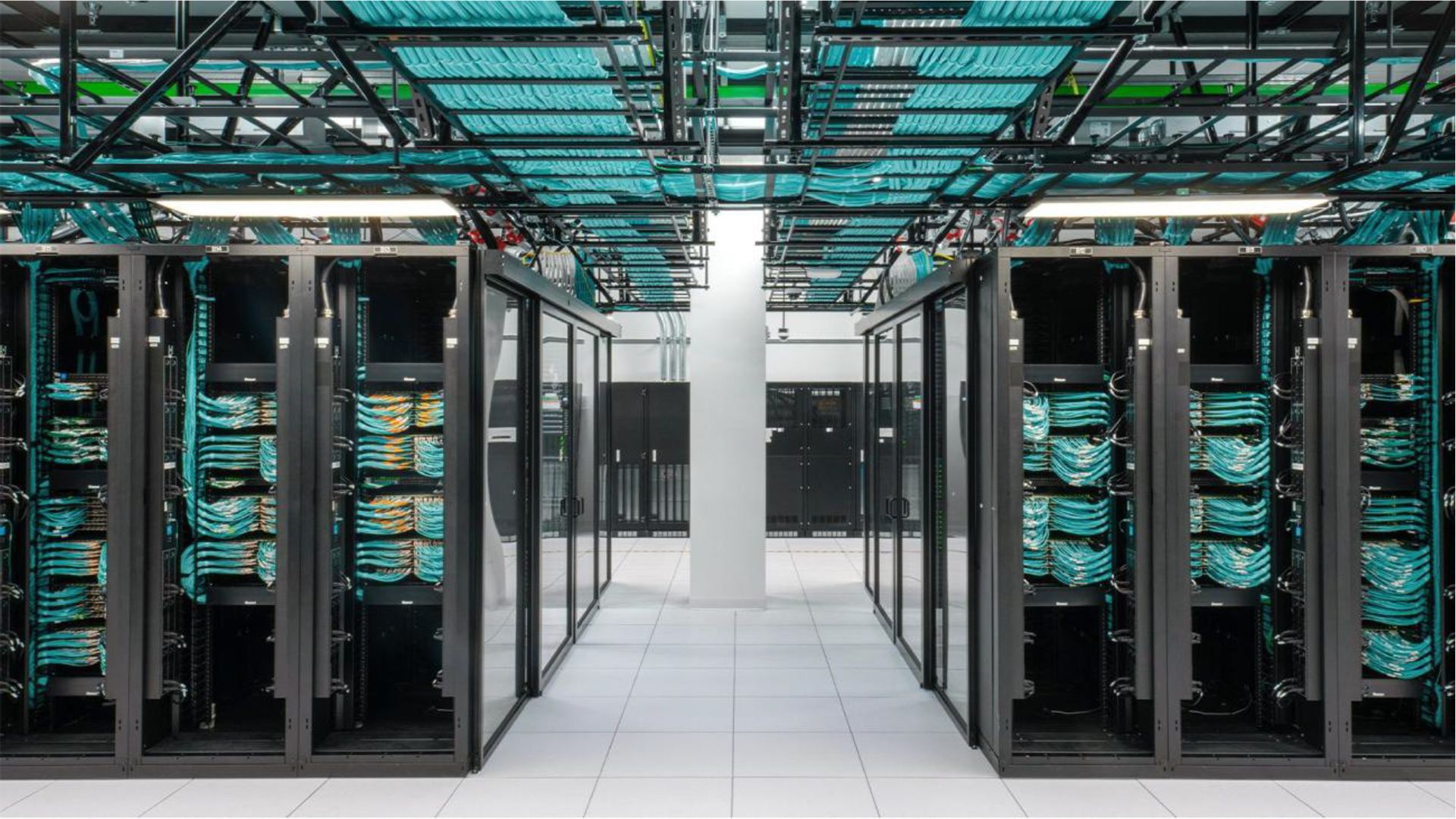
The site sits on a former Department of Energy uranium enrichment facility in southern Ohio and would become, by total cost, the largest data center ever built. SB Energy plans to construct 9.2 gigawatts of new natural gas generation on-site to power it, alongside $4.2 billion in transmission upgrades. Initial deployment is targeted for 2028 at roughly 800 megawatts, a fraction of the eventual 10-gigawatt buildout. This would mark OpenAI's first data center lease as a direct tenant, rather than as a compute customer of Microsoft, Amazon, or Oracle.
The financing structure, unpacked
The guarantee under discussion covers financing for the buildout and lease operations, and is structured separately from Nvidia's other major commitment tied to the same site: a proposed $350 billion deal to finance the GPUs that will fill it. Combined, the two arrangements would put Nvidia's balance sheet behind more than $600 billion tied to a single campus. Nvidia ended its fiscal 2026 year with $62.6 billion in cash, meaning the guarantee alone would run roughly four times its available liquidity, and would exceed its previously disclosed guarantee book by a wide margin.
This is not Nvidia's first foray into backstopping customer financing. The company has already committed $30 billion in equity to OpenAI and $10 billion to Anthropic, and has structured smaller lease-backed arrangements including an $860 million lease obligation and a $1.5 billion GPU lease-back deal with Lambda. What is new here is scale and mechanism: rather than writing equity checks, Nvidia is now positioned as the credit backstop for a customer's real estate and power infrastructure, a role usually filled by investment-grade utilities or insurers, not chipmakers.
Why the circularity matters
The pattern investors have flagged across Nvidia's recent deals is consistent: Nvidia funds or guarantees a customer's infrastructure, and that customer turns around and spends the proceeds on Nvidia silicon or Nvidia-powered cloud capacity. Investor Michael Burry summarized the dynamic bluntly: "around and around we go," describing it as a self-reinforcing loop where Nvidia's revenue growth becomes partly dependent on financing arrangements it originates itself. Jensen Huang suggested as recently as March 2026 that Nvidia's major equity commitments, including the OpenAI and Anthropic stakes, might be its last large checks as those companies approached potential IPOs. The Ohio talks suggest the opposite: Nvidia has shifted from writing equity checks to backstopping debt, a structurally larger and riskier commitment.
SoftBank, the other party central to this deal, already carries more than $130 billion in debt while funding data center buildouts across Ohio, France, and other markets, and leases rather than owns the underlying land in Piketon. That layering of obligations, OpenAI leasing from SB Energy, SB Energy borrowing against a Nvidia guarantee, SoftBank carrying its own debt load on top, concentrates risk across a small number of interlinked balance sheets. None of the parties involved has confirmed final terms, and reporting on the talks makes clear the arrangement could still collapse before signing.
What enterprise buyers should watch
For CTOs and CIOs whose product roadmaps depend on OpenAI's API availability or pricing stability, this financing structure is a direct proxy for OpenAI's underlying credit risk. A company that cannot secure investment-grade financing on its own, and needs its largest supplier to guarantee $250 billion in debt to build the infrastructure it depends on, is not a company whose capacity commitments should be treated as guaranteed. Any enterprise with meaningful OpenAI dependency in its architecture should be running the same vendor risk assessment it would apply to a financially strained cloud provider.
The deal also signals where compute scarcity pressure is heading next. If Nvidia is willing to guarantee financing at this scale to secure a single 10-gigawatt commitment, expect similar arrangements to surface for other frontier AI labs seeking capacity without balance sheets to match their ambitions. Procurement teams negotiating GPU-backed cloud contracts should ask vendors directly whether their capacity commitments rest on financing that is closed and funded, or merely under discussion, a distinction this Ohio deal makes clear can take months or years to resolve.
The power grid dimension
Beyond the financing mechanics, the Piketon project adds another 9.2 gigawatts of natural gas generation to a grid already straining under data center demand nationwide. That the site sits on decommissioned federal uranium enrichment land, rather than requiring new greenfield permitting from scratch, likely accelerated its path through Ohio's approval process relative to comparable projects elsewhere. Japan has reportedly committed $33 billion toward the associated natural gas power project, and the U.S. government is expected to compensate SB Energy for aspects of the operation, blurring the line between private infrastructure investment and public energy policy in ways enterprise leaders should watch closely.
For operators weighing where to site their own AI workloads or negotiate colocation capacity, deals like this one are reshaping the competitive landscape for power access in the Midwest. A single 10-gigawatt commitment absorbs generation capacity, transmission investment, and construction labor that would otherwise be available to other data center projects in the region. Enterprises planning multi-year infrastructure roadmaps in power-constrained markets should factor projects of this scale into their own timeline assumptions, since they compete directly for the same finite grid capacity.