A record quarter, driven almost entirely by AI
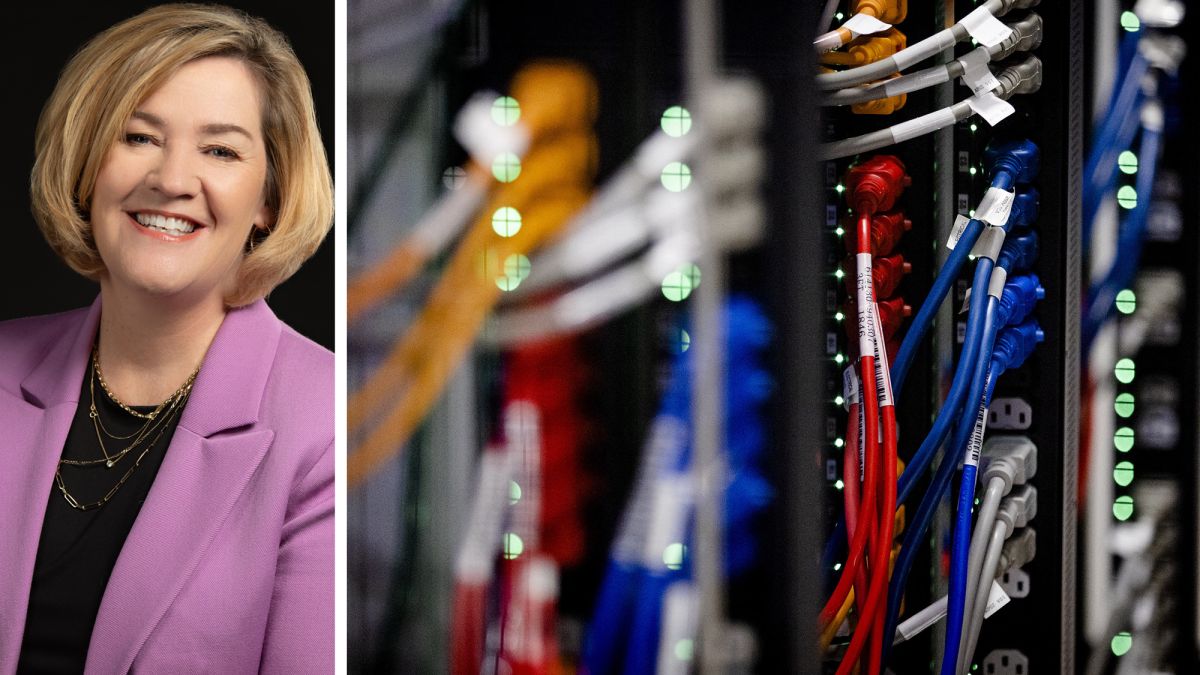
Equinix, the world's largest neutral colocation provider, posted second quarter 2026 revenue of $2.63 billion, up 7 percent sequentially and 16 percent year over year. Net income climbed to $477 million from $415 million in the first quarter and $367 million in the same quarter last year. Gross bookings hit $424 million, the highest second quarter on record for the company. CEO Adaire Fox-Martin did not hedge on the cause: "The vast majority of our largest deals were driven by AI workloads."
The scale of individual deals stood out as much as the aggregate numbers. The xScale hyperscale business, which builds and leases large-format facilities to the biggest cloud and AI providers, signed 134 megawatts of leasing in the Americas during the quarter, including one transaction that alone generated roughly $120 million in nonrecurring fees. That figure matters for a company whose business has historically run on smaller, more distributed enterprise deals. AI workloads are pulling Equinix's customer mix toward fewer, much larger commitments.
The biggest guidance raise in company history
Equinix raised its full-year 2026 revenue guidance to $10.21 billion to $10.29 billion, implying 11 to 12 percent annual growth, and lifted adjusted funds from operations guidance to $4.24 billion to $4.30 billion. The more striking number is capital expenditure: full-year capex guidance rose to $4.71 billion to $5.69 billion, up from roughly $3.8 billion previously, an increase of more than 40 percent in a single revision. Fox-Martin called it plainly: "This is the largest single guidance raise in the history of our company."
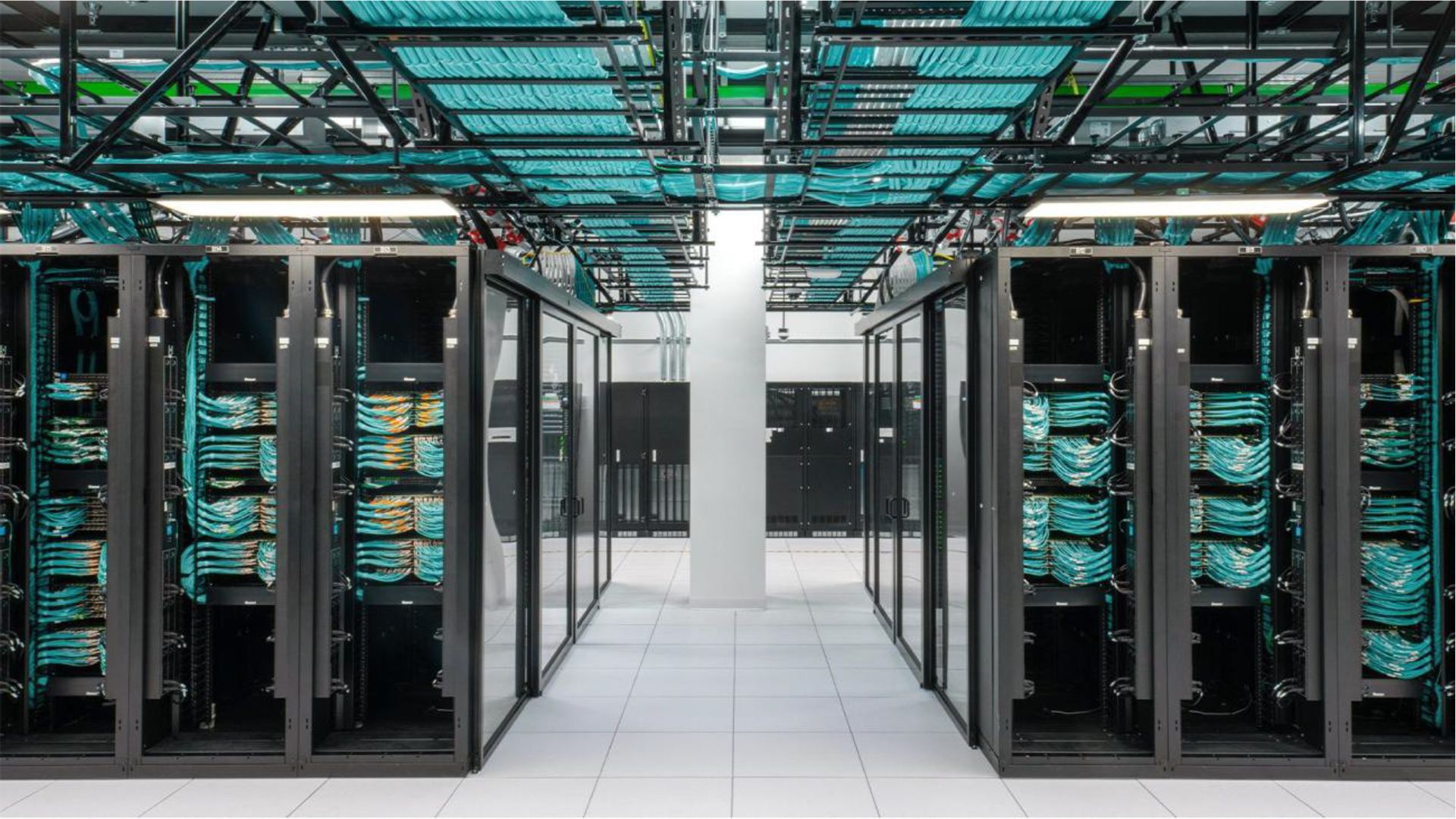
That capex is not going toward maintenance. Roughly 90 percent of it is directed at capacity expansion, with 52 projects currently underway across 33 markets globally. Equinix also extended its outlook through 2029, guiding to annual revenue growth of 10 to 13 percent and annual capex of $5 billion to $7 billion over that period, alongside funds-from-operations-per-share growth of 9 to 12 percent. For a REIT that has spent most of the last decade growing steadily rather than explosively, this is a structural change in the company's capital intensity, not a one-quarter blip.
Why colocation still matters in the hyperscaler era
It would be easy to assume that as AWS, Azure, and Google Cloud pour hundreds of billions into their own data centers, neutral colocation providers like Equinix would see demand shift away from them. The opposite happened this quarter. Equinix's stabilized portfolio utilization sits at roughly 82 percent, and the xScale business, purpose-built for hyperscaler and AI tenants, is where the largest deals are landing. Hyperscalers are still leasing meaningful capacity from third-party providers even as they build aggressively on their own, because construction timelines for owned facilities cannot keep pace with AI compute demand.
For enterprise buyers, this matters because it changes who has leverage in interconnection and hybrid cloud decisions. Equinix's core value proposition, direct network interconnection to every major cloud provider from a single facility, becomes more valuable as workloads span multiple hyperscalers for cost and capacity reasons. Companies running multi-cloud architectures for AI workloads specifically, training on one provider's GPUs while serving inference through another's regions, increasingly depend on colocation hubs like Equinix's to keep latency and egress costs manageable.
The capex commitment carries its own risk
A 40-plus percent single-quarter increase in capex guidance is a strong signal of confidence, but it is also a bet that current AI-driven demand holds through a multi-year build cycle rather than cooling once hyperscalers finish their own greenfield capacity. Equinix's 2027 to 2029 outlook assumes sustained double-digit revenue growth and elevated capex through the end of the decade, a forecast horizon that depends heavily on AI infrastructure spending continuing at something close to its current pace across the industry.
That is a reasonable bet given what Alphabet, Amazon, and Microsoft have all said about their own capacity constraints this earnings season, but it is still a bet. Enterprise customers signing long-term colocation agreements with Equinix now are effectively counting on the company's capex plan to deliver capacity on schedule, in the same way hyperscaler customers are counting on AWS, Azure, and Google Cloud to deliver theirs. The difference is that Equinix's business model, leasing space and power to others rather than running its own compute stack, gives it more flexibility to right-size commitments if AI demand growth slows.
What this means for build-versus-lease decisions
Equinix's results give CTOs and infrastructure leaders a useful data point for the ongoing build-versus-lease debate. When the largest neutral colocation provider in the world is posting record AI-driven bookings and its biggest guidance raise ever, it confirms that even well-capitalized enterprises are choosing to lease specialized AI infrastructure rather than build it themselves, at least for now. That preference reflects both the capital intensity of AI-ready facilities and the speed advantage colocation offers over ground-up construction in a market where power and cooling capacity are the binding constraints.
The practical implication for procurement teams: expect colocation pricing and lease terms to tighten as Equinix's own capacity fills faster than its 2026 capex plan can expand it. Utilization already sitting at 82 percent, combined with 134 megawatts leased in a single quarter in the Americas alone, suggests negotiating leverage is shifting toward providers faster than many enterprise buyers may have priced into their infrastructure budgets. Locking in colocation capacity commitments earlier in the planning cycle is becoming as important as it already is for hyperscaler compute contracts.