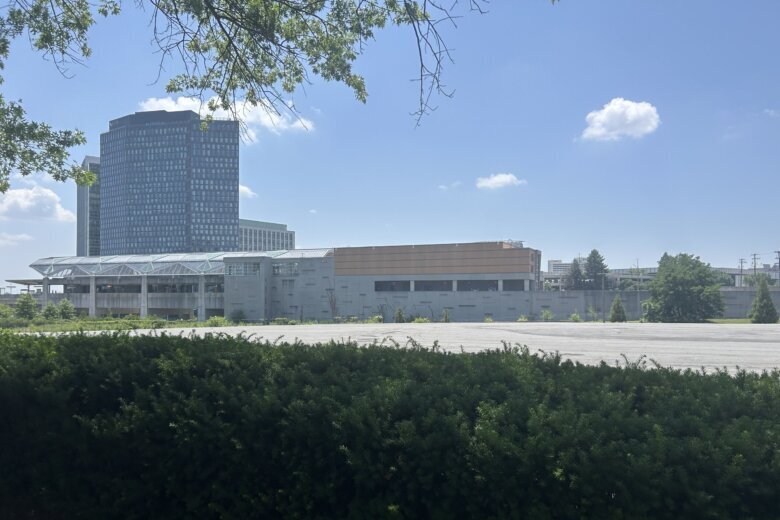
A retirement schedule for equipment that was never supposed to be permanent
The Mississippi Department of Environmental Quality announced a formal retirement schedule for the 69 temporary gas turbines powering xAI's Southaven data center operations, the cluster the company also refers to under its SpaceXAI branding. Retirement begins August 18, 2026, with most units required offline by April 2027 and the most recently installed turbines, added as late as July 2026, given until July 14, 2027 at the latest. The order is the first hard deadline regulators have attached to a fleet of generators that grew from 18 units at launch in August 2025 to 69 without the state being formally notified of the expansion.
That growth happened under a specific legal theory: xAI classified the turbines as temporary and mobile, a category that under the exemption MDEQ initially accepted does not require a Clean Air Act permit. The state's own finding was explicit that the exemption was contingent on the units staying both portable and temporary in practice, a condition that becomes harder to defend the longer a generator sits bolted to the same pad running around the clock for a data center that has no plans to power down.
Extensions built around a supply chain problem
Not every turbine gets the same deadline. Thirteen of the 69 units received extensions past the original 12 month retirement window, with three of those granted up to five additional months. xAI requested the extensions citing supply chain delays affecting the 41 permanent, properly air permitted turbines that are supposed to replace the temporary fleet once installed at the Southaven site. The staggered structure effectively ties the fate of the temporary fleet to a construction schedule xAI does not fully control, which is an unusual position for a regulator to accept but reflects how few alternatives existed short of ordering an immediate shutdown that would have cut power to an active data center.
The extension request is a tell on its own. A company racing to keep a data center powered through a chip and power constrained buildout is now also waiting on turbine manufacturers to deliver the permanent generation it needs to exit a legally contested interim arrangement, which means the same supply chain bottlenecks squeezing GPUs are now showing up in the power equipment meant to run them. Enterprises benchmarking their own data center power timelines against a hyperscale AI buildout should treat this as evidence that generator lead times have become a real constraint alongside utility interconnection queues, not a secondary concern behind them. Turbine manufacturers building for grid scale power plants, aviation, and data centers all at once do not have infinite backlog capacity, and xAI's own extension request is the clearest public admission yet that the queue is getting longer.
The legal argument regulators still have not settled
The NAACP and the Southern Environmental Law Center have argued from the start that MDEQ's reading of the temporary mobile exemption misapplies federal law, contending the Clean Air Act treats trailer mounted stationary turbines differently than genuinely portable nonroad engines. Their position is that once a generator is installed and operated continuously at one location for power generation rather than emergency backup, it should be permitted like any other stationary source, regardless of whether it sits on wheels.
That dispute has not gone away just because MDEQ issued a retirement schedule. The schedule resolves the timeline question, when the temporary turbines come offline, without resolving the underlying legal question of whether they should have required permits from the start. Both advocacy groups have signaled they intend to keep pressing the exemption issue, which means the retirement calendar itself could become evidence in a broader challenge to how states have let AI data centers add power capacity ahead of the permitting process rather than through it.
Community reaction is split, not uniformly hostile
Local reaction to the announcement has been more mixed than the environmental litigation might suggest. Southaven resident Jay White said the change could be a good thing depending on how the community is affected and whether the replacement infrastructure performs better, a cautiously optimistic read that is not uncommon among residents who also see the jobs and investment tied to the buildout. Neighbor Susan Broadway focused on the day to day nuisance instead, describing the noise from the turbines as having grown steadily more annoying over time.
That split matters for how xAI and other AI infrastructure operators manage the politics of power procurement going forward. A community that is frustrated by noise and uncertain about air quality but not categorically opposed to the facility is a community regulators can plausibly negotiate a phased fix with, which is closer to what MDEQ's staggered retirement schedule represents than an outright shutdown order would have been. That dynamic gives operators a real incentive to keep engaging residents directly rather than simply litigating with advocacy groups, since the residents living closest to the turbines are the ones whose complaints ultimately shape how much political room state regulators have to grant further extensions.
Expansion continues while the turbine fight plays out
Notably, xAI is not pausing its Memphis area buildout while the Southaven turbine issue works through regulators. Elon Musk announced on X in late July that xAI is constructing a fourth facility, called Minihard, alongside the existing Colossus 2 and Macro-harder sites on Tulane Road, describing a denser configuration built around 220,000 GB300 chips connected with 800 gigabit networking. The company has separately disclosed 659 million dollars for a new 312,000 square foot building at the same Memphis cluster.
Read together, the turbine settlement and the new facility announcement describe a company treating power procurement and compute buildout as parallel tracks rather than sequential ones. xAI is not waiting for the permanent power plant to come online before adding more compute demand behind it, which is exactly the pattern that produced the temporary turbine overhang MDEQ is now unwinding on a schedule that runs into mid 2027. Every additional facility announced before the permanent power plant is finished only adds to the load the interim turbine fleet has to carry, which is the core tension regulators, advocacy groups, and xAI are all navigating at the same time under the same deadline.
The lesson for enterprise AI infrastructure planning
For CIOs and infrastructure leaders evaluating dedicated AI capacity, whether through a hyperscaler, a neocloud, or a build it yourself approach, the Southaven case is a concrete illustration of the regulatory risk sitting underneath aggressive power procurement. xAI's temporary turbine strategy let it stand up gigawatt scale compute faster than the interconnection queue or the permanent permitting process would have allowed, but it also generated a multi year legal and regulatory overhang that now constrains how quickly it can retire the interim equipment.
Any enterprise underwriting a long term contract with a provider whose power comes from similarly aggressive interim arrangements should ask directly how much of that capacity sits behind permits still being contested. The Southaven schedule shows regulators are willing to let the buildout continue while working out the legality after the fact, but it also shows that arrangement has a shelf life measured in specific dates, not open ended tolerance.