The headline number: Azure crosses 100 billion
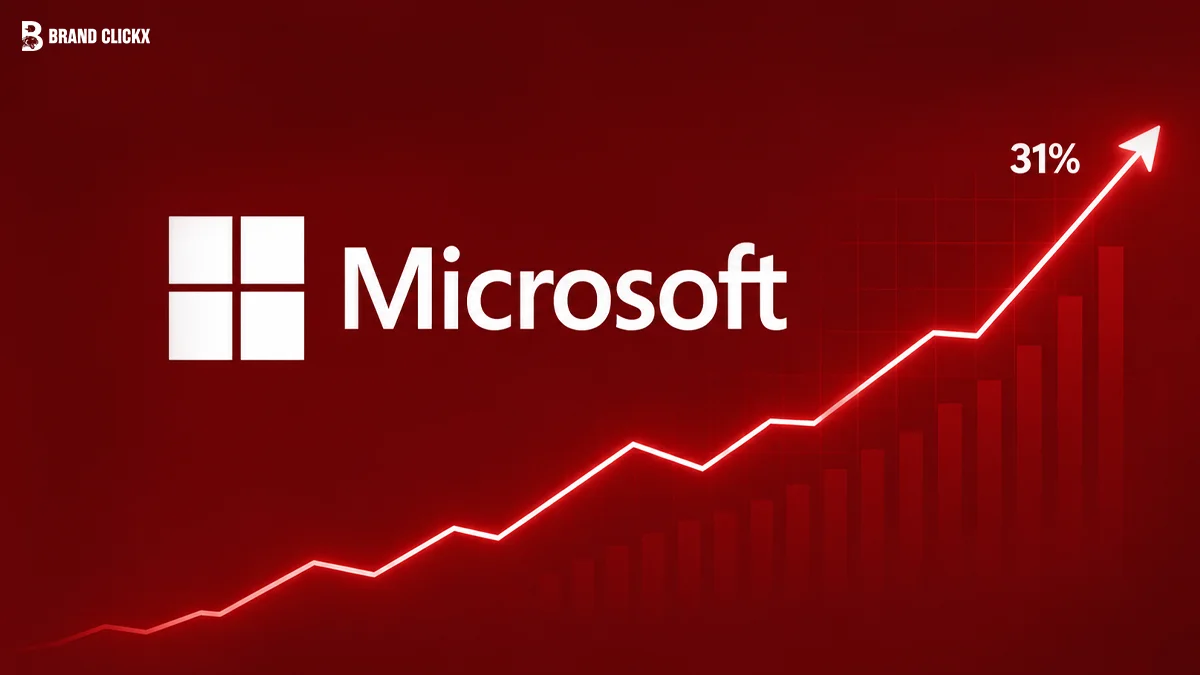
Microsoft closed its fiscal 2026 with the number it has spent two years building toward. Azure and cloud services revenue grew 43 percent in the fourth quarter, and on the earnings call Satya Nadella said plainly that Azure revenue surpassed 100 billion dollars for the full fiscal year for the first time. Total company revenue for the quarter came in at 90.0 billion dollars, up 18 percent year over year, with Microsoft Cloud revenue at 59.3 billion dollars, up 27 percent.
Full fiscal year figures tell the same story at a larger scale: 331.8 billion dollars in total revenue, 155.2 billion dollars in operating income, and net income of 133.7 billion dollars, each up double digits from the prior year. For a business that was still explaining Azure's growth deceleration to investors two years ago, an accelerating 43 percent print at this scale of revenue is the kind of number that resets the debate about how much further hyperscale cloud growth has to run.
Record capital spending, concentrated in short lived assets
Growth at this pace requires spending to match it. Microsoft's additions to property and equipment reached 35.8 billion dollars for the quarter and 115.9 billion dollars for the full fiscal year, both records for the company. Roughly two thirds of that capital is going toward short lived assets, principally the CPUs and GPUs that power Azure's compute fleet, with the remainder split across the buildings, power infrastructure, and networking that make up longer lived data center capacity.
That asset mix matters to how investors read the spending. Short lived compute assets can be redeployed or refreshed on a faster cycle than a building, which gives Microsoft more flexibility to adjust spending if AI demand growth slows than a capex bill weighted toward concrete and steel would allow. Executives leaned on that distinction repeatedly on the call, treating it as the answer to the question every hyperscaler now fields each quarter about whether capex discipline can keep pace with revenue growth.
Demand still outruns supply
Despite the record spending, Microsoft was direct about where it still falls short. Amy Hood told analysts that demand continues to exceed available supply and characterized the imbalance as relatively extreme, language that puts Microsoft alongside Amazon and Google in describing 2026 as a year where hyperscaler capacity, not customer appetite, is the binding constraint on cloud growth. Guidance for the first quarter of fiscal 2027 calls for Azure growth near 45 percent on a constant currency basis, an acceleration rather than a plateau.
Microsoft's response to the shortage has been efficiency rather than only scale. The company said it cut the time to bring new GPU capacity online, from delivery to live production, by nearly half over the past fiscal year, and it is now adding roughly one gigawatt of capacity every quarter. Nadella and Hood both framed these efficiency gains as immediately monetized, meaning each unit of freed up capacity converts to revenue almost as soon as it comes online rather than sitting idle.
A quiet accounting shift with a loud implication
Buried in the guidance for fiscal 2027 is a change worth flagging on its own: Microsoft is extending the useful life of its data center assets from 15 to 25 years, a lease and depreciation reclassification that shows up in the capital expenditure guidance of more than 50 billion dollars for the first quarter alone. Extending useful life is an accounting judgment, not a physical fact about the equipment, and it lowers the depreciation expense Microsoft books against each dollar of infrastructure spend going forward.
The move signals confidence that today's data center buildings, and by extension the demand behind them, will still be earning their keep a decade beyond what Microsoft previously assumed. It also flatters near term profitability by spreading costs over a longer horizon. Enterprise customers negotiating long term Azure capacity commitments should read the change as Microsoft betting its infrastructure footprint outlasts any near term correction in AI spending, a bet the company is now making formally, in its own books.
Doubling capacity in two years
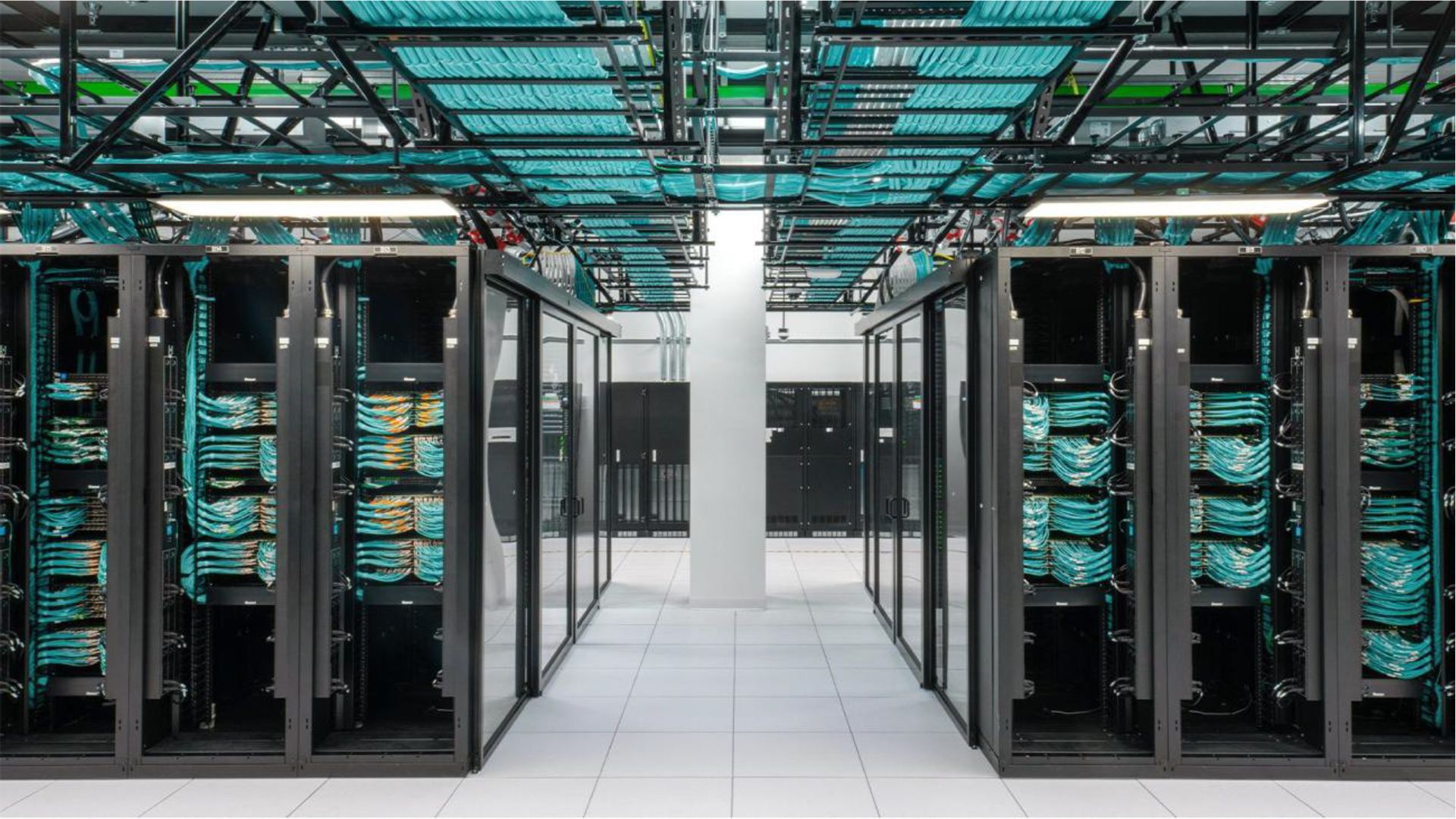
The buildout underpinning all of this accelerated through the fourth quarter. Microsoft added 31 new data centers across five continents in the quarter, bringing the fiscal year total to 88, and Nadella told investors the company remains on track to roughly double its overall capacity within two years. That pace of physical construction, spanning power substations, cooling plants, and long haul networking as much as server halls themselves, is what allows Microsoft to keep pulling forward Azure growth guidance even as it acknowledges supply constraints in the same breath. Delivering 88 facilities in a single fiscal year also means Microsoft is now running site selection, permitting, and construction as a continuous industrial process rather than a series of discrete megaprojects, which is the operational shift that makes a two year capacity doubling target credible rather than aspirational.
Nadella pointed to sovereign cloud requirements and expanding model deployment needs as demand drivers that extend beyond the usual training workload narrative, suggesting the capacity expansion is aimed as much at inference and regional data residency requirements as at the next frontier model. That broader demand base is one reason Microsoft's guidance assumes growth accelerates rather than moderates even as the denominator gets larger. Sovereign cloud commitments in particular lock in multi year capacity reservations tied to specific regions, which gives Microsoft a demand floor that is less exposed to a single customer or workload pulling back than a book of business concentrated in frontier model training would be, and it is part of why executives sound confident extending guidance well into fiscal 2027.
What it means for enterprise cloud buyers
For CIOs weighing Azure commitments against AWS or Google Cloud, the headline growth number matters less than the supply commentary underneath it. A vendor that openly describes its own supply demand gap as relatively extreme is not a vendor that will compete aggressively on price or provisioning speed for standard capacity in the near term, and enterprises with flexible workloads should expect continued friction getting priority allocation for the newest GPU generations.
The more durable signal is the capital discipline framing itself. Microsoft's emphasis on short lived assets, faster GPU deployment cycles, and now a longer useful life assumption all point toward a company trying to convince markets that its AI infrastructure spending is sustainable rather than a bubble era land grab. Whether that argument holds through fiscal 2027, when capex guidance itself keeps climbing, will shape how much room competitors have to underprice Microsoft on committed cloud contracts.