A Convenience Retailer Joins the Retail Media Land Grab
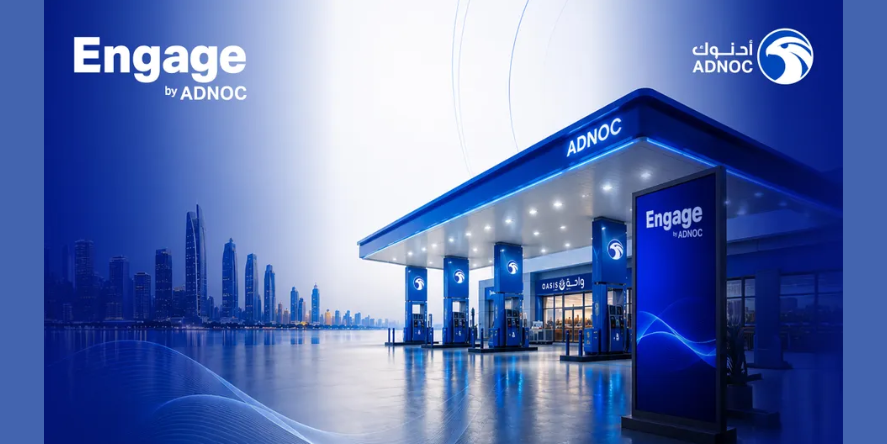
ADNOC Distribution launched Engage on July 29, its first full-funnel retail media network and, by the company's own account, the first of its kind run by a mobility and convenience retailer in the UAE. The network sells advertising across the ADNOC Rewards app, online platforms, in-store screens, and Oasis by ADNOC convenience stores. ADNOC says roughly 700,000 customers pass through its network daily and that its stations handle more than 250 million transactions a year, with two out of every three fuel purchases in the UAE happening at an ADNOC location.
That scale matters because retail media has so far been dominated by grocery chains and big-box retailers with basket-level purchase data. ADNOC is betting that fuel and convenience retail carry a comparable asset: extremely high visit frequency, a captive audience with dwell time at the pump and in-store, and a loyalty base large enough to support first-party targeting. The network sits inside ADNOC's broader Non-Fuel Retail push, which the company says delivered 14 percent year-on-year profit growth in 2025.
The Technology Stack Behind Engage
ADNOC assembled a four-vendor stack rather than building the network entirely in-house. Publicis supplies media strategy and buying expertise. Pyxis, a subsidiary of IHC, provides the AI layer that powers targeting and optimization. LiveRamp handles data collaboration, letting advertisers match their own customer data against ADNOC's audiences without either side exposing raw records. Network International, the payments processor, contributes spend insights and performance analytics tied directly to transactions. Assembling best-of-breed partners rather than building a proprietary stack is the same approach most grocery retail media networks settled on after early in-house builds proved too slow to launch competitively.
The audience foundation is ADNOC's 2.7 million Rewards members, whose purchase history gives the network first-party targeting data that does not depend on third-party cookies or device identifiers, an increasingly valuable property as browser and platform privacy changes erode traditional digital targeting. Jacqueline Elboghdadi, ADNOC's CMO, framed the pitch to advertisers around measurability: every marketer, she said, needs the ability to turn audience insights into measurable outcomes. That is the same language grocery retail media networks have used for years to win CPG ad budgets, now applied to a fuel and convenience footprint with its own transaction-linked proof points.
The Economics: 25 Million Dollars and a New Inventory Category
ADNOC is projecting more than 25 million dollars in cumulative gross profit from Engage over five years. That is a modest figure next to the retail media revenue grocery chains and marketplaces now report, but it establishes fuel and convenience as a distinct, monetizable inventory class rather than an afterthought bolted onto a loyalty app. The inventory itself spans app placements, on-site digital screens, and physical store space, giving CPG and mobility-adjacent brands a channel that reaches consumers at the point of a high-frequency, low-consideration purchase.
Publicis CEO Bassel Kakish described ADNOC as having built a consumer ecosystem compelling enough to justify a dedicated retail media operation. For Publicis and the other technology partners, Engage is also a template. A payments processor, a data collaboration platform, and an AI vendor stitched together around a retailer's first-party data is a repeatable architecture, and one that other regional convenience and mobility operators can copy without inventing it from scratch.
Why This Matters Beyond the UAE
Retail media has already spread from grocery into specialty categories: Academy Sports launched a network reaching 52 million shoppers, and hardware chains, pharmacies, and delivery platforms have followed. ADNOC's move extends that pattern into fuel and mobility, a category with purchase frequency that most retailers would envy but with far less historical ad tooling built around it. For CPG and consumer brands, that means yet another walled garden to evaluate, another measurement methodology to reconcile, and another data clean room to integrate with the LiveRamp or equivalent stack they likely already run elsewhere.
For CIOs and CMOs on the brand side, the practical question is not whether to buy into networks like Engage but how to avoid re-building integration and measurement work for every new one that launches. The vendors ADNOC chose, Publicis, LiveRamp, and a payments processor for closed-loop attribution, are the same categories of partner powering grocery and big-box networks. That consistency is useful: it means the integration patterns and data governance questions enterprise buyers have already worked through elsewhere largely transfer to this new category of inventory.
What to Watch Next
The open question is whether Engage's economics generalize. ADNOC operates in a market where it controls two-thirds of fuel transactions, an unusually concentrated position that most convenience and fuel retailers elsewhere do not enjoy. A network built on that level of share is easier to sell to advertisers than one competing against three or four similarly sized rivals for the same regional ad budgets. Whether Circle K, TravelCenters of America, or European fuel retailers attempt a comparable network will depend on whether they can match that concentration or instead pool data across operators.
Attribution is the other test. Fuel and convenience purchases are largely impulse-driven and low-value per transaction compared with a grocery basket, which makes proving incremental ad-driven lift harder. Network International's payment-linked measurement is ADNOC's answer to that problem, tying ad exposure directly to point-of-sale data rather than relying on survey-based lift studies. If that closed-loop measurement holds up under advertiser scrutiny, expect more fuel and convenience operators to follow ADNOC's playbook within the next year.