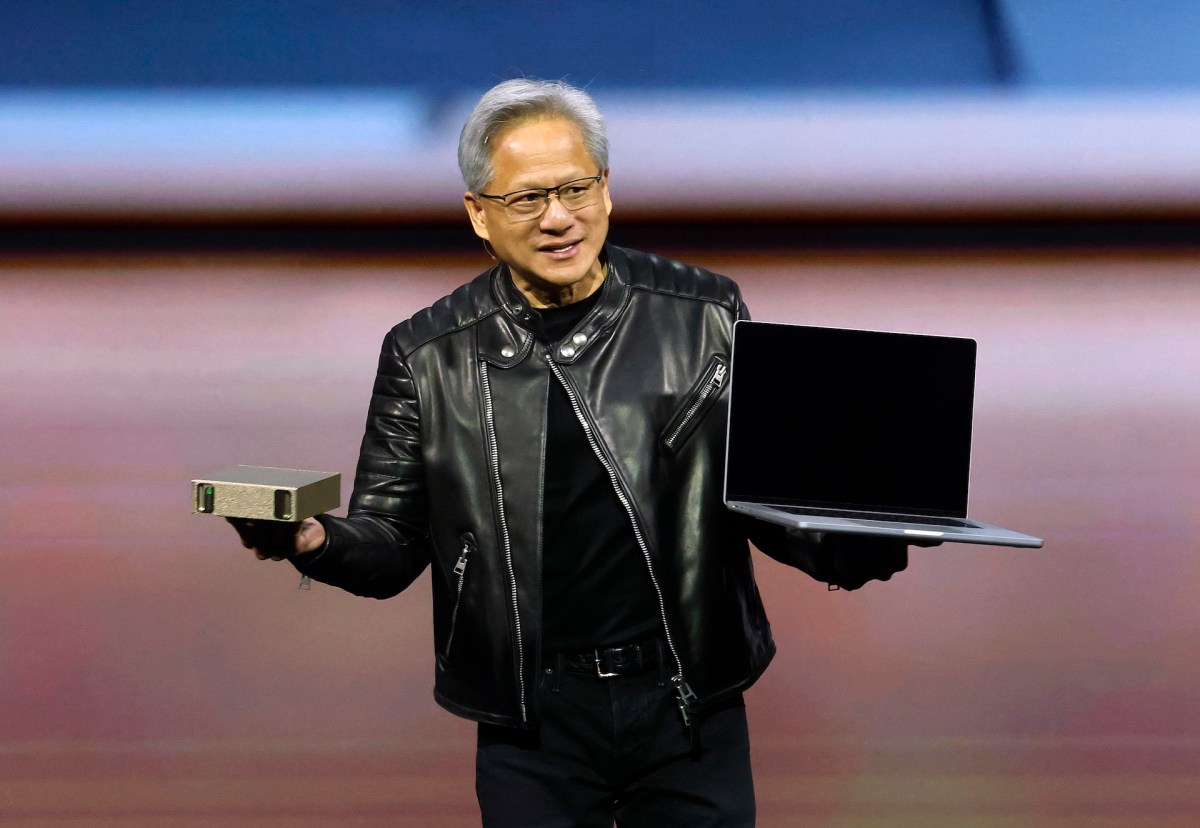
Nvidia used its Computex Taipei keynote to introduce RTX Spark, a new client superchip that the company says delivers one petaflop of compute and is designed to run AI agents locally on Windows laptops and desktops. CEO Jensen Huang positioned the platform as the foundation for what he calls agent PCs, machines that respond to natural language requests by orchestrating tools rather than waiting for users to launch applications, click menus, and type commands. According to TechCrunch.
The launch is broad. ASUS, Dell, HP, Lenovo, Microsoft Surface, and MSI all have hardware confirmed for the fall, with Acer and Gigabyte expected to follow. Microsoft's contribution is the Surface Laptop Ultra, described by the company as the most powerful Surface laptop ever built. Software partners number more than one hundred at launch and include Adobe, Blender, ComfyUI, Riot Games, and Xbox. On the agent side, Nvidia is highlighting OpenClaw and Hermes Agent as native runtimes, with secure sandboxing co developed with Microsoft to isolate agent execution from the rest of the operating system.
The technical pitch rests on three pillars. First, Spark provides enough on device compute and memory to run frontier class large language models locally, removing the latency and privacy concerns that come with sending every prompt to a cloud endpoint. Second, the same chip supports Nvidia's CUDA ecosystem, which means more than one thousand games and creative applications already optimized for RTX GPUs benefit automatically. Third, the integrated security model is designed to give IT administrators meaningful control over which agents can call which tools, addressing one of the largest enterprise objections to agentic computing.
The strategic context is the size of the prize. Jensen Huang told investors last month that he sees a $200 billion CPU market open to Nvidia, between client systems and the server tier. On the server side, the Vera CPU released earlier in 2026 has already booked roughly $20 billion in revenue, an extraordinary ramp for a new entrant in a market historically dominated by Intel and AMD. Nvidia framed Vera as the highest instructions per clock CPU in production, and the Spark client part shares architectural lineage with that server work.
There is real history to consider. In 2013 Microsoft wrote off $900 million on the Nvidia powered ARM based Surface RT, and Dell and other partners eventually exited that platform. The current cycle looks different in important ways. Spark is positioned as more powerful than mainstream x86 alternatives rather than less, ISV support has been negotiated up front, and the AI workload pattern is what is driving customer demand rather than Microsoft pushing a new operating system flavor. The presence of Microsoft as a hardware launch partner also reduces the risk that Windows on ARM is treated as a second class environment.
Pricing remains the open question. Nvidia did not disclose final retail prices for any Spark laptop, though TechCrunch noted that the developer focused DGX Spark mini computer sells for around $4,800. If consumer and commercial Spark laptops launch in a comparable bracket, the platform will be positioned against high end MacBook Pro and ThinkPad configurations rather than mainstream business notebooks. Volume adoption will depend on whether Microsoft and the OEMs can deliver agent PC configurations at price points that fit standard enterprise refresh cycles.
For our endpoint strategy, we should treat the fall as an evaluation window rather than a procurement window. The right move is to request review units from one or two OEMs, validate application compatibility for our core productivity, design, and developer tool stack, and benchmark local agent workloads against equivalent cloud calls. If the latency, cost, and security profile holds up, agent PCs could absorb a meaningful share of fiscal 2027 hardware budgets, particularly for engineering, analytics, and creative roles where on device inference offers a real productivity gain.
We should also watch how Intel and AMD respond. Both vendors have committed to AI accelerator integration in their next client roadmaps, and a credible Spark threat will accelerate that work. Competitive pressure should produce better discounts on x86 platforms and a faster cadence of platform improvements across the board. For procurement teams, the immediate action is to avoid signing multi year client hardware commitments before December 2026, when the early Spark performance and reliability data will be in.
The software ecosystem question is the other critical variable. Windows on ARM has improved substantially since the Surface RT era, and Microsoft has invested heavily in emulation layers, native ARM builds of Office, and developer tooling. Adobe's commitment to ship Spark optimized versions of Premiere and Photoshop is meaningful because creative workloads have historically been a weak spot for non x86 platforms. If Autodesk, JetBrains, and the major game engines follow with native Spark builds in the first six months, the platform's enterprise viability rises sharply. Our application owners should inventory the top twenty applications in our environment and request Spark roadmap commitments from each vendor as part of standard procurement reviews.
Finally, the agent runtime story is what makes this announcement strategically different from previous Windows on ARM cycles. Local execution of agents addresses three of the largest enterprise objections to cloud only AI: data residency, predictable latency, and per call cost. If Spark delivers on its specifications, a meaningful share of internal automation work that currently runs against cloud API endpoints could shift to local execution within eighteen months. That would reduce variable AI spend, improve responsiveness for interactive workflows, and give security teams a cleaner story to tell about sensitive data. The catch is that we will need to invest in agent management tooling, including local model versioning, sandbox policy management, and observability, before the productivity gains are realizable at scale.