Meta Plants Its First Canadian Flag
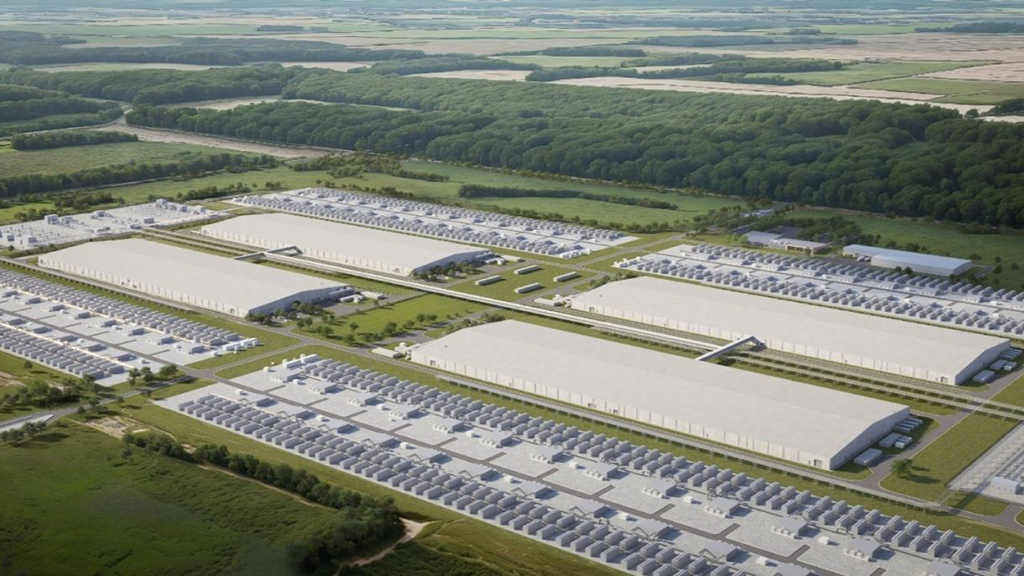
Meta has committed more than 13 billion dollars to a data centre in Sturgeon County, in the Industrial Heartland region north of Edmonton, Alberta. It is the company's first data centre in Canada, and at one gigawatt of capacity it is a genuine mega campus rather than a modest regional node. The announcement drew provincial officials into the spotlight, with Alberta's technology minister Nate Glubish framing the win as deliberate rather than lucky: we didn't do it by accident, he said, we did it by design. Sturgeon County mayor Alanna Hnatiw described the region as becoming an important part of Canada's emerging AI and power corridor, a phrase that captures why this project matters.
The location is not incidental. Alberta offers a combination that has become rare and valuable: available land, a supportive regulatory posture, and, critically, access to abundant natural gas. Meta's arrival signals that the AI buildout, long concentrated in a handful of US markets, is spreading to jurisdictions that can deliver power at scale and at speed. For a company racing to stand up compute for its AI ambitions, a province that welcomes gigawatt-class projects and can fuel them is exactly the kind of partner worth 13 billion dollars. The map of hyperscale infrastructure is being redrawn around energy availability, and Alberta just moved onto it.
The Real Story Is the Power Plant
The detail that separates this deal from a routine data centre announcement is that Meta is not simply plugging into the grid. A consortium including Calgary-based Pembina Pipeline will build a dedicated natural gas plant, the Greenlight Electricity Centre, at an expected cost of 4.6 billion dollars and a capacity of 932 megawatts. The plant is purpose-built to feed the campus, and the consortium holds permits allowing that capacity to double in the future. When a hyperscaler underwrites the construction of its own power plant, it is telling you that grid interconnection has become the binding constraint on growth.
This is the defining pattern of the current AI infrastructure cycle. The scarce resource is no longer capital, land, or even chips; it is deliverable power on a workable timeline. Rather than wait in an interconnection queue behind everyone else, Meta and its partners are building generation to order. The approach guarantees supply and control, but it also ties a technology company to a multi-billion-dollar energy asset and the operational and regulatory weight that comes with it. Hyperscalers are becoming, in effect, energy developers. That is a profound expansion of what it means to run a cloud, and it is now table stakes for competing at gigawatt scale.
A Timeline That Reframes AI Planning
The Greenlight plant is targeted to start up in the second half of 2030. Sit with that date for a moment. The power that will run this campus is more than four years out, which means the compute it enables is being planned against a horizon that stretches well beyond most corporate strategy cycles and far beyond the pace at which AI models themselves evolve. Meta is committing 13 billion dollars today against demand it expects to exist at the start of the next decade. That is a striking act of conviction, and a reminder that physical infrastructure moves on a fundamentally different clock than software.
The mismatch between AI's frenetic model cadence and its glacial infrastructure timelines is one of the central tensions of this era. New frontier models ship every few months; the plants and campuses that power them take half a decade to build. That gap forces hyperscalers into enormous long-range bets, wagering that demand will not only persist but grow enough to justify generation assets that will not switch on until 2030. For enterprise leaders, the implication is that the AI compute available to them years from now is being determined by decisions and permits being finalized right now, in places like rural Alberta, long before the workloads that will fill them exist.
Community, Water, and the Cost of Goodwill
Meta appears to have learned from the backlash that has trailed other mega projects. The company committed 60 million dollars to improve local infrastructure, including roads and water systems, and its VP Gary Demasi struck a conciliatory note: we believe that the success of a data centre is only possible when the community itself succeeds along with it. That framing is not merely public relations. Data centre projects have increasingly run into local opposition over strain on power, water, and land, and a project that alienates its host community can be delayed or blocked regardless of its economics.
The environmental engineering reflects the same awareness. The campus uses a closed-loop water cooling system specifically to avoid drawing on local water supplies, addressing one of the most common and legitimate community objections to large data centres. Water consumption has become a genuine flashpoint as these facilities proliferate in regions where it is scarce, and closed-loop cooling is fast becoming the expected standard rather than a nice-to-have. Meta's choices here read as a template for how hyperscalers must now operate: buy goodwill deliberately, engineer around the most contentious resource impacts, and treat community consent as part of the project cost rather than an afterthought.
What CIOs Should Read Into It
For technology executives who consume cloud rather than build it, a project like this can feel remote. It should not. The economics and timelines of deals like Meta's Alberta campus flow directly downstream into the price, availability, and location of the AI compute every enterprise will rent. When hyperscalers are building their own power plants to guarantee supply, it tells you that capacity is genuinely constrained and that the constraint will shape the market for years. The cost of standing up a gigawatt of AI compute, including a dedicated 4.6 billion dollar power plant, does not vanish; it is embedded in what customers ultimately pay.
The strategic reading is about dependency and geography. AI infrastructure is consolidating around a small number of players with the capital and the appetite to build energy assets, and it is clustering in jurisdictions that can supply power. Enterprises should track not only which cloud they use but where and how its capacity is being built, because those decisions determine latency, resilience, sovereignty, and cost. Meta's first Canadian campus is one data point in a global reordering, but it is a clarifying one. In the AI era, the question that governs cloud strategy is no longer where the servers sit, but where the power comes from.
/filters:no_upscale()/news/2026/07/sitar-agent-sidecar-config/en/resources/1airbnbsidecar-1782237201592.jpeg)
