
A Quiet Secondaries Deal in a Loud Market
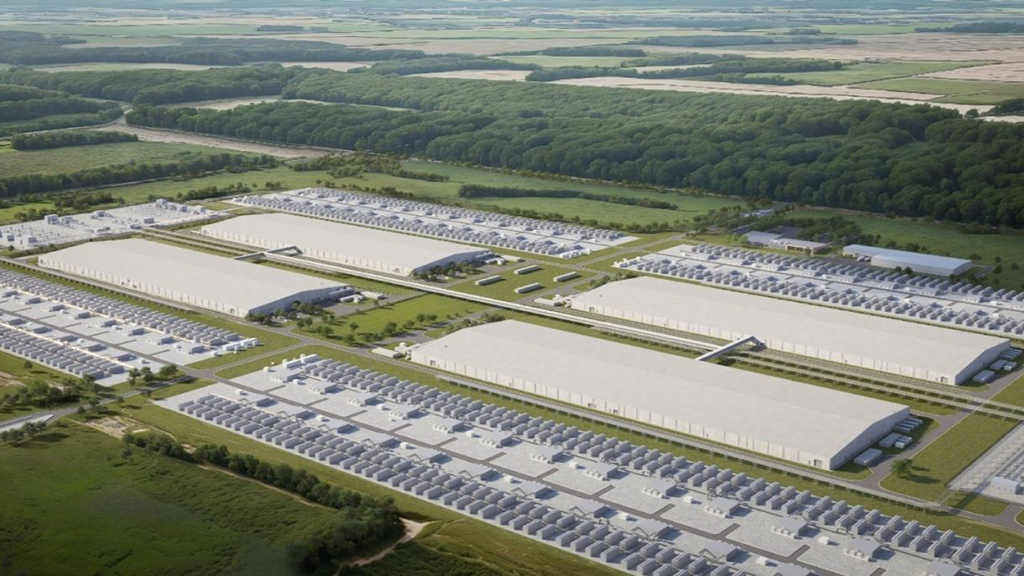
On July 8, Sabey Data Center Properties announced that funds managed by Ares Management's Secondaries business have taken a minority equity stake in the company. The financial terms were not disclosed, which is typical for secondaries transactions, where the point is often to reshuffle and expand the ownership base rather than to trumpet a headline number. Sabey, jointly owned with National Real Estate Advisors, operates or is developing data centers across seven locations, including Quincy and Seattle in Washington, New York City, Austin, Umatilla in Oregon, Indianapolis, and Ashburn in Virginia. The platform runs about 251MW across roughly 4 million square feet today.
The deal is small in visible terms and large in what it represents. Ares is not buying control, and it is not funding a splashy new mega-campus. It is buying into an established operator with a long track record and, crucially, with land holdings that Sabey says could triple its capacity by 2036. In a market obsessed with gigawatt announcements, a disciplined minority investment in a mid-sized operator is easy to overlook. We think it is exactly the kind of transaction that reveals where sophisticated capital actually wants to be positioned.
What Sabey Brings
Sabey is not a household name the way the hyperscalers or the largest colocation REITs are, and that is part of its appeal to an investor like Ares. The company has spent decades building a portfolio across primary and secondary markets, from central Washington's cheap hydro power to Ashburn's dense connectivity. Its 251MW of operating capacity is modest by 2026 standards, but the value is less in what is energized today than in the runway. Sabey says its existing landholdings could support roughly three times its current output, which means the growth can come without the hardest part of the current cycle: acquiring new, power-adjacent land.
That land-and-power optionality is the scarce asset in the data center business right now. Anyone can announce a gigawatt. Very few can actually secure the acreage, the interconnection, and the local approvals to deliver it. Sabey's advantage is that it already holds sites it can expand on, which sidesteps the land grab and the community fights that are stalling greenfield projects elsewhere. Ares is effectively buying a call option on capacity that is easier to bring online than most of what is being promised in press releases this year.
Why Secondaries Capital Is Flooding In
The structure of this deal matters as much as the target. Ares made the investment through its Secondaries platform, which specializes in providing liquidity and flexible capital to existing funds and their investors. Secondaries have become one of the hottest corners of private markets, and data center infrastructure is a natural fit. Early backers of data center platforms are sitting on large paper gains and want partial liquidity without forcing a sale of the whole business. Secondaries capital lets them cash out a portion while bringing in institutional partners for the next leg of growth. Sabey's deal is a textbook example.
For the broader market, the arrival of secondaries money is a sign of maturation, and of a subtle shift in sentiment. When secondaries investors move in, it usually means an asset class has enough of a track record and enough realized value to support a robust market in trading stakes. Data center real estate has crossed that threshold. Colliers recently reported that global data center investment topped $580 billion, surpassing oil and gas investment for the first time. Ares buying into Sabey is a small transaction riding an enormous wave of capital reallocation toward digital infrastructure.
The Institutionalization of Data Center Real Estate
A decade ago, data centers were a specialist real estate niche understood by a handful of REITs and telecom carriers. Today they are a core institutional asset class, and deals like the Ares-Sabey investment are how that transition happens in practice. Pension funds, sovereign wealth funds, and private-equity secondaries are steadily buying their way into the operators that own the physical layer of the cloud. National Real Estate Advisors, which co-owns Sabey and manages it on behalf of institutional clients, is itself a vehicle for exactly this kind of long-horizon capital.
The executives behind the deal framed it in the language of discipline, which is telling in a market prone to excess. Tim Mirick, president of Sabey Data Center Properties, called Ares's arrival a strong endorsement of the platform and of the long-term demand for scaled infrastructure. Jeffrey Kanne, president and CEO of National Real Estate Advisors, said the investment adds an institutional partner that aligns with a disciplined approach to growth. That emphasis on discipline is not accidental. Amid a buildout that many worry is overheating, the operators courting institutional capital want to signal that they are the sober ones.
What It Means for Enterprise Tenants
For CIOs and infrastructure leaders, the identity of who owns your colocation provider is not a trivial detail. Ownership shapes capital availability, expansion pace, pricing discipline, and staying power through a downturn. An operator backed by patient institutional capital is more likely to honor long-term commitments and less likely to be forced into a fire sale or a strategic pivot that disrupts tenants. The Ares investment strengthens Sabey's balance sheet and its ability to fund the tripling of capacity it has flagged, which is a positive signal for anyone considering it as a landlord.
There is a subtler point for buyers as well. As institutional capital consolidates the data center layer, the market is bifurcating between well-funded operators who can deliver at scale and smaller players who cannot secure the capital or the power to keep pace. Tenants benefit from betting on the former, even at a modest price premium, because delivery reliability is now worth more than a marginally cheaper lease. The Ares-Sabey deal is a marker of which side of that divide Sabey intends to be on.
The Bigger Pattern
Step back, and the Ares investment in Sabey is one tile in a much larger mosaic. The AI infrastructure boom is drawing capital not only into the flashy chip and hyperscaler stories but into the unglamorous physical layer: the buildings, the land, the power interconnects, and the operators who assemble them. Private capital has figured out that the surest way to profit from AI without picking the winning model or the winning chip is to own the picks and shovels. Data center real estate, with its long leases and hard-asset backing, is the pick-and-shovel trade of this cycle.
We would watch for more deals like this one, quieter than the gigawatt announcements but arguably more revealing. When Ares and its peers deploy secondaries capital into mid-sized operators with land runway, they are making a considered bet that the demand for physical capacity outlasts the current hype cycle. Whether or not the AI enthusiasm cools, the buildings and the power will still be there, leased to whoever needs compute next. Sabey just secured a partner to help it build more of them, and the institutional money kept flowing into the foundation the whole boom rests on.
/filters:no_upscale()/news/2026/07/sitar-agent-sidecar-config/en/resources/1airbnbsidecar-1782237201592.jpeg)