A Voice Model That Stops Waiting Its Turn
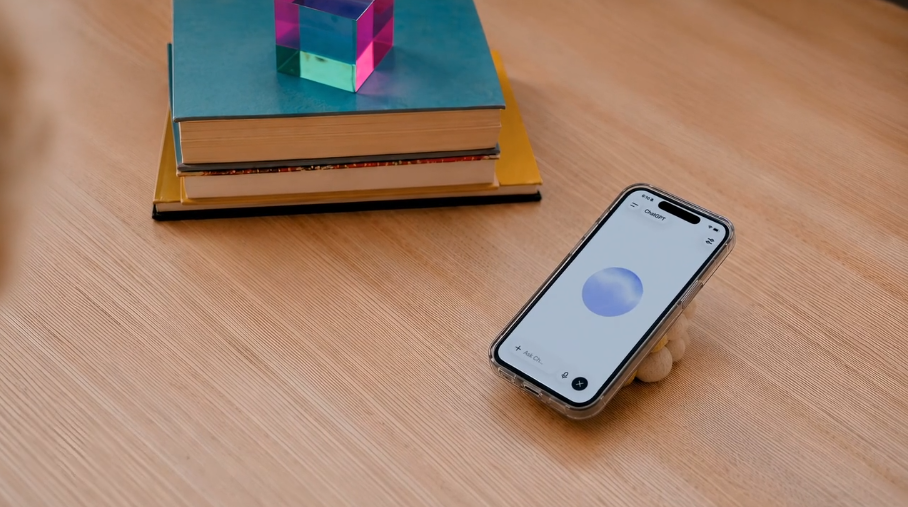
OpenAI used July 8 to introduce GPT-Live, a generation of voice models built around what the company calls a full-duplex architecture. The distinction matters more than the marketing suggests. Previous assistants operated in strict turns: you spoke, the model listened, and only then did it respond. GPT-Live collapses that sequence. During a conversation the model continuously evaluates whether it should interrupt, search the web, or begin a task before the user has finished talking. The result is an interaction that feels less like dictating to a machine and more like talking to a colleague who can nod, cut in, and act in real time. For anyone who has endured the awkward latency of legacy voice bots, this is a meaningful shift.
The lineup ships with two models. GPT-Live-1 is the more capable version and becomes the default in paid ChatGPT plans, while a lighter GPT-Live-1-mini powers the free tier. OpenAI reports the model scored 75.5 on internal pleasantness evaluations, a figure it says substantially beats the prior voice system, and adds real-time translation to the feature set. When a prompt demands deeper reasoning, GPT-Live routes it to GPT-5.5. That routing detail is quietly important: OpenAI is treating voice as an orchestration layer over its model stack rather than a single monolith, and that design choice is the one enterprises should study most closely.
The Government Now Holds a Release Valve
The second announcement is arguably the bigger story for technology executives. OpenAI confirmed it would make GPT-5.6 broadly available roughly two weeks after limiting the rollout to a small group of trusted partners at the request of the US government. The Commerce Department's Center for AI Standards and Innovation carried out an evaluation of the model series, and the White House authorized the wider release only after that review concluded. We are watching a frontier lab ship its most capable model through an explicit government checkpoint, and that is a structural change to how the AI supply chain works.
For CIOs and CTOs building on OpenAI, this introduces a new variable into capacity and roadmap planning. Model availability is no longer purely a function of the vendor's engineering timeline or commercial strategy. It can now be paced by a regulatory evaluation whose criteria and cadence sit outside the vendor's control. The Sol, Terra and Luna variants that make up GPT-5.6 arrive with that caveat attached. Enterprises that have grown accustomed to same-day access to new frontier models should recalibrate expectations and, where continuity matters, keep a multi-model hedge rather than assuming uninterrupted access to any single provider.
What Full-Duplex Changes for Enterprise Workflows
The obvious applications for GPT-Live are the ones vendors always cite: contact centers, in-car assistants, and accessibility tools. Those are real, but they undersell the shift. A model that can interrupt, search, and act mid-sentence is a different primitive for building agentic experiences. It closes the gap between conversation and execution, which is precisely the gap that has made voice agents feel like toys rather than tools. When the assistant can start a lookup the instant it understands intent, the perceived speed of the whole system improves even if the underlying reasoning has not changed. Perception, in interactive products, is much of the battle.
There is a discipline this demands, though. Full-duplex behavior means the model is making continuous decisions about when to act, and every one of those decisions is a potential point of failure or unwanted action. An assistant that interrupts to search the web has, by definition, decided on its own to reach outside the conversation. Enterprises deploying this will need guardrails around what the model may do autonomously, clear logging of those mid-conversation actions, and a way to constrain tool access by context. The convenience is genuine, but so is the expanded surface area, and treating a chatty voice model as low risk would be a mistake.
Reading the Timing
It is hard to ignore the choreography. GPT-Live landed on Wednesday, and GPT-5.6 went public the following day, immediately after the government cleared it. OpenAI has always been deliberate about sequencing announcements to sustain momentum, and this pairing puts a consumer-friendly voice launch directly alongside a frontier reasoning release. The effect is a one-two punch that dominates a news cycle while competitors are still shipping incremental updates. For observers of the market, the message is that OpenAI intends to compete on both the experiential surface and the raw capability layer at the same time.
We would caution against reading the government involvement as pure friction, however. A documented evaluation by a federal standards body, followed by an authorized release, is also a form of validation that risk-averse buyers in regulated industries may come to value. A CISO in banking or healthcare can point to that review as part of a due diligence trail. The same gate that slows access can, for some buyers, lower the barrier to adoption. Whether that trade favors enterprises will depend entirely on how predictable and transparent the evaluation process turns out to be over the coming quarters.
The Competitive Backdrop
OpenAI is not moving in a vacuum. The voice space has become a battleground, with rivals pushing their own low-latency, natural-conversation models, and the broader model market has fragmented as buyers chase cost and control. Recent months have seen enterprises route meaningful traffic to cheaper alternatives and open-weight options precisely because frontier access has grown expensive and, now, occasionally gated. GPT-Live and GPT-5.6 are OpenAI's answer: raise the experiential bar high enough that the premium feels justified, and lean on the safety evaluation as a differentiator that open-weight challengers cannot easily replicate.
The open question is durability. A more pleasant voice and a faster reasoning model are advantages that competitors will chase within months, as they have every prior time. The regulatory clearance is harder to copy, but it is also a double-edged asset that ties OpenAI's release cadence to a government process. For technology leaders, the practical takeaway is neither hype nor dismissal. It is to treat GPT-Live as a capable new building block worth piloting, to plan for model access that may no longer be instantaneous, and to keep architectural flexibility so that no single provider, however impressive this week, becomes an unmanaged dependency.