From two stores to nine, on the strength of the numbers
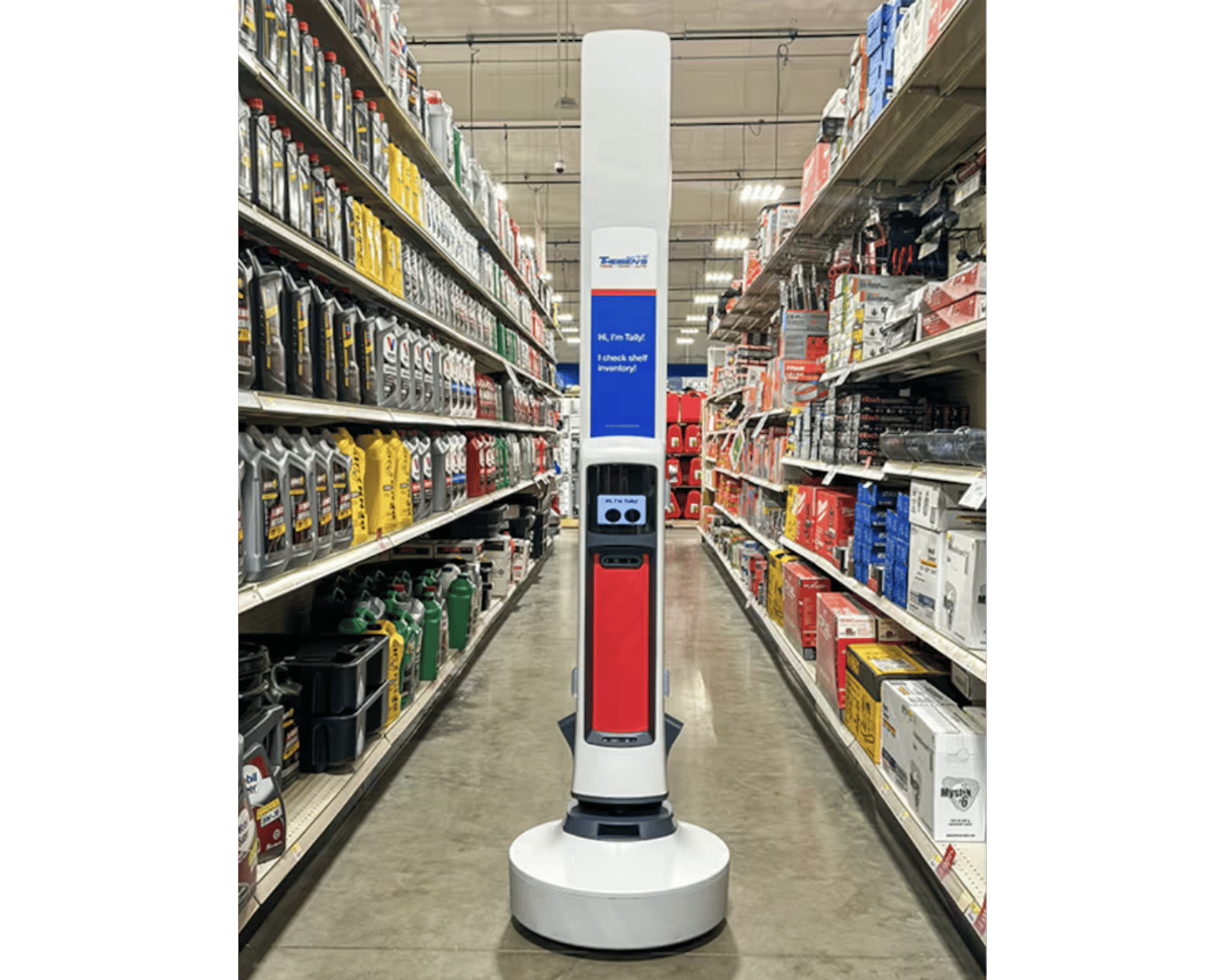
HomeBase USA, a farm, ranch, and hardware retailer operating large-format stores across Texas, Wyoming, Kansas, and Missouri, has expanded Simbe Robotics' Store Intelligence platform to all nine of its locations. The rollout follows a pilot that ran for roughly a year at two stores, testing whether Tally, Simbe's autonomous shelf-scanning robot, could catch pricing and stocking problems before they reached customers. Given HomeBase's format, stores with expansive footprints and tens of thousands of SKUs spanning farm, ranch, hardware, seasonal, and everyday essentials, that is a harder inventory problem than a typical grocery aisle.
The pilot results are what make this worth a CTO's attention rather than a routine automation story. HomeBase reported a 92 percent reduction in pricing errors and a 58 percent decrease in controllable out-of-stocks, bringing total out-of-stocks below 1 percent. Annual physical inventory counts, traditionally a three-day, store-closing exercise, now take less than a single day. Those are specific, verifiable operational metrics, not the vague productivity claims that usually accompany a retail robotics announcement.
What Tally is actually doing on the floor
Tally moves through the store autonomously, capturing continuous shelf-level data on pricing, stock levels, and planogram compliance and feeding it into dashboards store teams can act on immediately. Store manager Tim Blakesley put the operational shift plainly: 'Instead of spending time searching for problems, our teams start each day knowing exactly where to focus.' That reframes the labor question around retail robotics. The robot takes over the manual shelf-walk that used to consume hours of a manager's day before any actual restocking work began, leaving the stocking and merchandising work itself to the human team.
HomeBase CEO Joel McLiney tied the investment to both employee experience and customer experience in the same breath, calling it a way to make it 'even better to work and shop at HomeBase.' That framing matters for retailers evaluating similar technology: the business case for shelf-scanning robots increasingly rests as much on freeing store labor for higher-value work as it does on the inventory accuracy numbers themselves. Retention and morale are harder to quantify than a pricing-error rate, but they show up in the same labor budget line, and a CEO citing both in one sentence suggests the internal pitch was built on more than the headline metrics.
Why the metrics are the real story
Most in-store AI and robotics pilots get announced with a press release and then quietly scale or quietly die, with no public accounting of what actually happened in between. HomeBase publishing pricing-error and out-of-stock reduction figures before its chainwide rollout is the exception, and it is the kind of evidence a retail technology leader can actually use to build an internal business case, because it ties the technology directly to metrics finance and merchandising teams already track.
It is also worth being precise about what a nine-store chain proves and does not prove. HomeBase's format, expansive big-box stores with dense, varied SKU counts, is closer to a home improvement or farm supply footprint than a typical grocery or apparel store. Simbe's broader client roster, which includes Kroger, SPAR, and BJ's Wholesale Club, suggests the platform generalizes across formats, but a retailer evaluating this technology should look for pilot data from a format close to their own before assuming HomeBase's numbers will repeat. Grocery stock turns faster than farm and ranch inventory, and that difference alone could change how much value a robot's scan frequency actually delivers.
The build-versus-buy case for shelf robotics
Shelf-scanning robotics sits in a category where building in-house rarely makes sense for a mid-size retailer. The hardware, computer vision models, and fleet management software Simbe has built represent years of engineering investment that would be difficult to justify for a nine-store chain to replicate. HomeBase's decision to license a mature platform rather than build a smaller, custom version is the correct call for an operator of its size, and it mirrors what most retailers below the scale of a Walmart or Kroger should be doing with in-store AI generally.
The harder question for any CTO evaluating this category is fleet economics at scale: robot uptime, charging logistics, and the ongoing cost of a vendor relationship against the labor hours it displaces. HomeBase's inventory-count time savings, from three days to under one, is the clearest proxy for ROI in this announcement, because labor hours convert directly into dollars in a way that 'pricing accuracy' alone does not. A nine-store rollout is small enough that a single vendor account team can support it closely, and that level of support tends to disappear once a platform scales to hundreds of locations, which is exactly when the real fleet-economics questions start to bite.
What this signals for retail operations leaders
The chainwide expansion, following a genuinely long pilot period rather than a rushed 90-day trial, is itself a signal worth noting. A full year of data before committing to a nine-store rollout suggests HomeBase treated this as an operational bet requiring real evidence, not a technology showcase requiring a press cycle. That discipline is worth more to other retail leaders than the specific vendor choice, and it is the part of this story most worth copying regardless of which shelf-scanning platform ends up on your own store floor.
For retail and CPG operations leaders watching this space, the real takeaway is narrower than 'every store needs a shelf-scanning robot.' Continuous shelf-level data, captured automatically rather than through periodic manual audits, is becoming table stakes for inventory accuracy at scale for retailers with the SKU density to justify it. The operators who wait for perfect certainty before piloting this kind of technology will be competing against retailers who already know, in near real time, exactly what is wrong on their shelves, and that gap compounds every quarter it goes unaddressed.