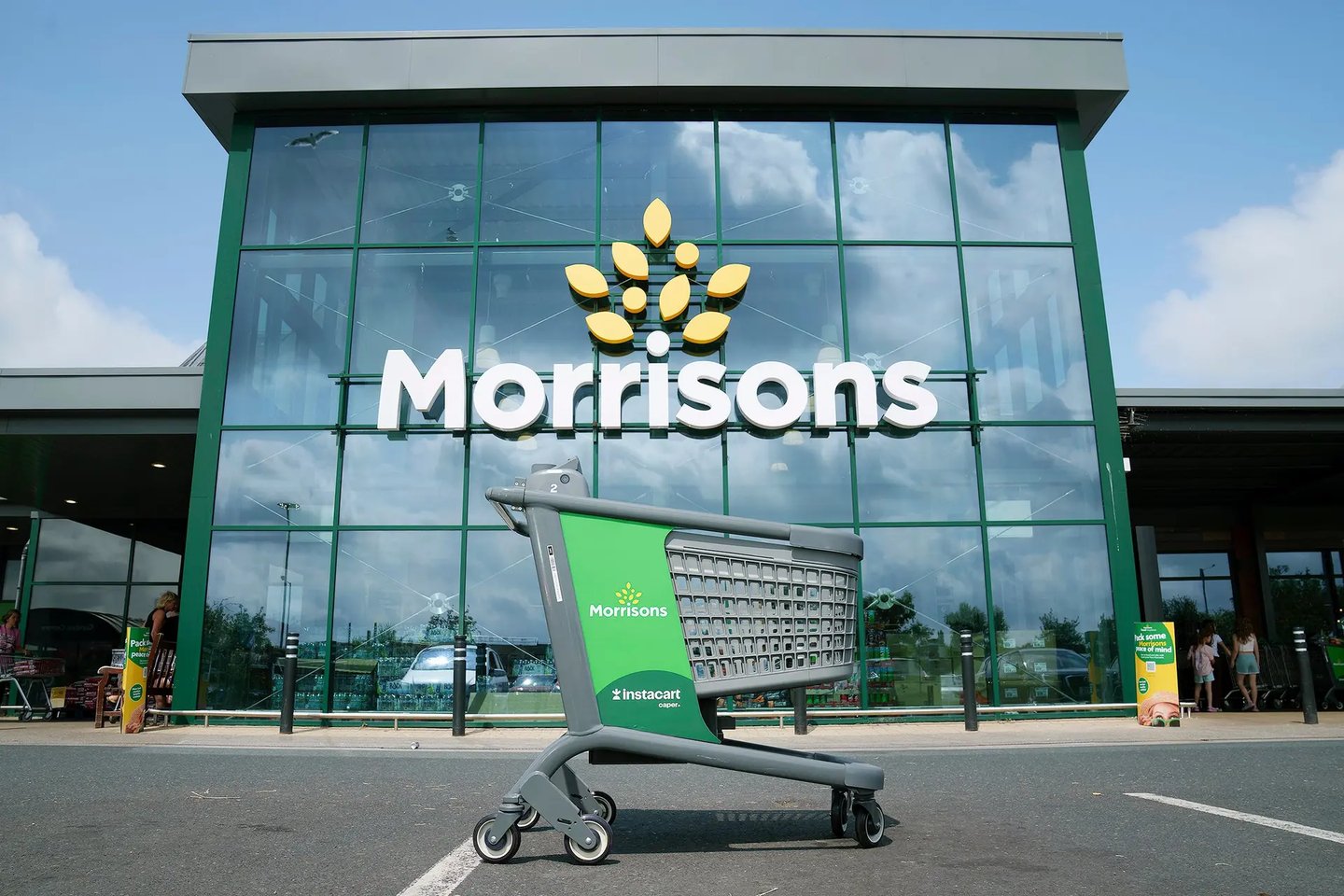
What Morrisons actually deployed
Morrisons has installed Instacart's Caper Cart at its Preston Riversway store, making it the first UK grocer to run the technology and kicking off a three month trial. The cart pairs onboard cameras, a built in scale, and Nvidia Jetson edge compute with a touchscreen that shows a running total as shoppers load items. Fresh produce gets weighed automatically inside the cart rather than at a scale near the deli counter, and the screen surfaces personalized offers tied to Morrisons' More Card loyalty program as customers move through the store.
Shoppers finish at a dedicated Caper checkout lane rather than a full self-checkout bank, scanning a code to complete the purchase using data the cart already captured. Gordon Macpherson, Morrisons' productivity director, framed the pitch around visibility rather than speed: the carts give customers 'real-time visibility of their spending, instant access to their More Card savings, and a seamless experience in the aisle.' That is a notably different sales pitch than the labor-reduction argument usually made for in-store automation.
Instacart's hardware bet outside the US
Caper Cart is not new. Instacart has run it across more than 100 cities in the US and Australia with retailers including Kroger, Coles, Schnucks, and Wakefern Food Corp, and the company cites Net Promoter Scores above 70 for the experience, a figure that would be strong for almost any retail technology deployment. Morrisons is the first UK retailer to bring the hardware into a live store, and Instacart's Chief Connected Stores Officer David McIntosh described it as making the physical store 'as intelligent and personalised as the best online experience,' which is the same language Instacart has used to sell grocers in North America.
The UK market has its own history here. Waitrose previously piloted a lighter weight clip-on smart cart device with a touchscreen and camera rather than a full integrated trolley, and the difference in approach matters. A clip-on unit is cheap to deploy across a fleet and easy to retire if it flops. A purpose-built cart like Caper is a capital commitment per unit, and Morrisons will need real usage data, not just NPS scores from other markets, before it scales past one store.
The economics a CTO should actually interrogate
Every smart cart has a fleet management problem that never shows up in the vendor pitch: carts get lost, damaged, stuck in parking lots, and need charging infrastructure that most stores were not built for. Instacart's answer, refined over several years of US deployments, is presumably built into the Morrisons contract, but a three month pilot in one store will not surface fleet-scale problems like theft, battery degradation, or the operational overhead of a dedicated Caper checkout lane during peak hours. Those are the numbers that determine whether this scales past a press release, and they rarely show up until a retailer is running hundreds of units across dozens of stores rather than a single trial location.
The more interesting question is what the trolley is competing against. A mobile app with a barcode scanner and a running total costs Morrisons essentially nothing per customer and does most of what the cart does, minus automatic item recognition and produce weighing. If Morrisons cannot show that the hardware experience converts meaningfully better than a free app feature, this becomes an expensive way to generate a press cycle rather than a durable operating advantage. The honest test is a controlled comparison between Caper-equipped baskets and app-equipped baskets over the full three months, tracking basket size, dwell time, and repeat usage, not just launch-week press coverage.
Why the timing lines up with affordability, not novelty
UK consumer research cited around the launch, from Researchscape International, found that 53% of shoppers have forgone groceries due to affordability concerns and 46% prefer loyalty programs specifically as budgeting tools. That context explains why Morrisons and Instacart are pitching this as a spend-visibility feature rather than a discovery or convenience play, even though 54% of the same survey respondents said they enjoy discovering unplanned products while shopping. The messaging is calibrated to a cost-of-living moment, not a technology showcase.
That is a smarter go-to-market than most in-store AI pilots manage. Retailers routinely lead with the AI and let the value proposition follow, and shoppers tune it out. Morrisons is doing the reverse: leading with a problem UK grocery shoppers say they actually have, and letting the AI be the plumbing underneath. Whether that framing survives contact with a full rollout, when the novelty of real-time price tracking wears off, is the actual test.
What this means for retail technology leaders
For a CTO weighing in-store hardware investment, the Morrisons pilot is a useful low-risk reference case precisely because it is small. One store, three months, a named productivity director owning the outcome, and a stated intention to look at customer response before committing further. That is the right way to test capital-intensive retail hardware before signing a fleet-wide contract, and it is worth copying as a pattern regardless of whether smart carts specifically make sense for your format or your customer base. Too many retail technology pilots skip this discipline and scale on vendor case studies from other markets instead of their own store data.
The build-versus-buy calculus here also matters. Instacart is selling Caper Cart as a packaged hardware-plus-software platform with years of US deployment data behind it, which is exactly the kind of vendor relationship that makes sense for grocers without a hardware engineering bench. If your organization has already invested in computer vision or edge AI elsewhere in the store, the math on building versus licensing shifts. Most retailers have not, which is why partnering with an operator like Instacart rather than building in house is the defensible choice here. The vendor lock-in that comes with a proprietary cart platform is a real cost too, and it belongs in the same spreadsheet as the NPS scores before anyone signs a multi-year agreement.


