The cloud number that should be the headline, and isn't
Google Cloud's Q3 revenue of $30.7 billion, up from $15.16 billion a year earlier, is a 103% growth rate that stands out even in a cycle where every major cloud provider is posting unusually strong numbers. CEO Sundar Pichai highlighted the figure directly, and on its own, doubling a multibillion-dollar business in a single year is the kind of result that would normally dominate a company's earnings narrative and send its stock higher on the strength of that single data point.
That is not what happened. Alphabet's total revenue of $127.6 billion, up 25% year over year, still missed broader expectations once search and advertising results were factored in, and shares fell nearly 10% in after-hours trading. The market's reaction is a clear signal about how investors are currently weighing AI infrastructure growth against core business health: a spectacular cloud number is necessary but not sufficient when the business funding that cloud buildout is simultaneously showing weakness in its primary revenue engine.
Why search and ads missing matters more than it would have two years ago
Alphabet's advertising and search revenue underperforming forecasts would have been a notable but manageable story on its own in a normal quarter. In this quarter, it lands alongside a capex trajectory that is about to top $300 billion for 2027, which means the business generating the cash to fund that buildout is showing exactly the kind of softness that makes continued aggressive AI investment harder to justify to shareholders without a clearer return timeline.
This is the structural tension every hyperscaler now faces in a more acute form than a year ago: AI infrastructure spending is funded substantially by legacy, high-margin businesses, search advertising for Google, retail and AWS margin for Amazon, Windows and Office for Microsoft, and any softness in those legacy engines directly constrains how comfortably the AI buildout can continue at its current pace, regardless of how well the AI-adjacent cloud business itself is performing.
What a 25% profit drop alongside doubled cloud revenue actually tells you
Reported net profit fell roughly 25% even as Google Cloud revenue doubled, which is the clearest possible illustration of how AI infrastructure investment is compressing margins company-wide, even at the business segment growing fastest. Depreciation on AI hardware, data center construction costs, and power procurement are all now large enough line items to meaningfully drag down consolidated profitability, even when the revenue growth story looks as strong as Google Cloud's does on its own.
For any enterprise buyer trying to assess Google Cloud's long-term pricing stability and investment durability, this margin compression is the number to watch more closely than the headline growth rate. A cloud business growing 103% while dragging down company-wide profit by a quarter is sustainable only if that growth rate, or the margin profile underneath it, improves meaningfully in subsequent quarters. If neither happens, pricing pressure or slower capacity expansion become more likely outcomes down the line.
The $300 billion capex figure in context
Alphabet's 2027 capex signal of over $300 billion represents a significant step up from already-elevated 2026 guidance, and it arrives in the same earnings report where the company's core advertising business is showing cracks. That combination, rising capex commitments alongside a softening primary revenue source, is precisely the scenario that makes Wall Street nervous about whether the AI infrastructure buildout across the entire hyperscaler sector has outrun the near-term revenue it can realistically support.
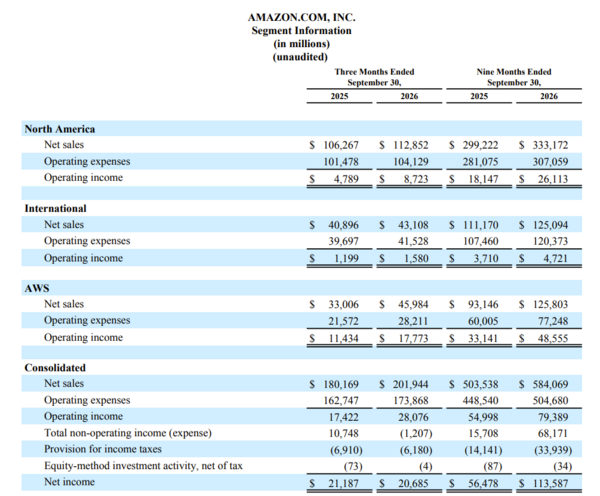
Google is not alone in this position. Amazon and Microsoft are both running comparable capex trajectories funded by their own legacy businesses, and the entire sector is effectively making the same bet simultaneously: that AI demand will continue to outpace even this scale of infrastructure investment. Alphabet's stock reaction this quarter is one of the clearest signals yet that investors are no longer willing to fund that bet on faith alone, cloud growth rate included.
Why this quarter is a preview of every hyperscaler earnings report ahead
Alphabet's specific combination this quarter, spectacular AI-adjacent cloud growth paired with a stock sell-off driven by legacy business softness and ballooning capex, is likely to become the template rather than the exception across the sector over the next several quarters. Every major hyperscaler is now running the same structural bet simultaneously: fund an enormous AI infrastructure buildout from a legacy business, hope AI-driven cloud revenue scales fast enough to eventually justify the spend, and absorb whatever margin compression happens in between.
That means enterprise technology leaders evaluating any major cloud vendor's financial stability should expect this exact pattern, strong cloud growth headline, weaker core business, aggressive forward capex, margin pressure, to recur at Microsoft, Amazon, and Google in turn as each reports. Reading past the headline growth number to the underlying margin and capex trajectory is now a necessary diligence step for any multi-year infrastructure commitment, not an optional one for sophisticated buyers only.
What this means for enterprises planning multi-year Google Cloud commitments
A cloud provider growing its cloud business at 103% while its stock falls on broader earnings concerns is, somewhat counterintuitively, a reasonable moment for enterprise buyers to negotiate: Google Cloud has every incentive to keep that growth rate visible and growing in future quarters to offset weakness elsewhere in Alphabet's business, which means sales teams have real pressure to close and expand enterprise commitments regardless of the stock market's reaction to the broader earnings picture.
The honest risk on the other side is the margin compression story. If capex continues rising toward $300 billion for 2027 without a corresponding improvement in cloud unit profitability, Google faces the same pressure every capital-intensive infrastructure business eventually faces: raise prices, slow expansion, or accept thinner margins indefinitely. None of those three outcomes are fully priced into current Google Cloud contracts, and enterprises locking in multi-year terms now should ask directly which of the three their vendor is actually planning for.