A revenue delay the company is framing as a timing issue, not a demand issue
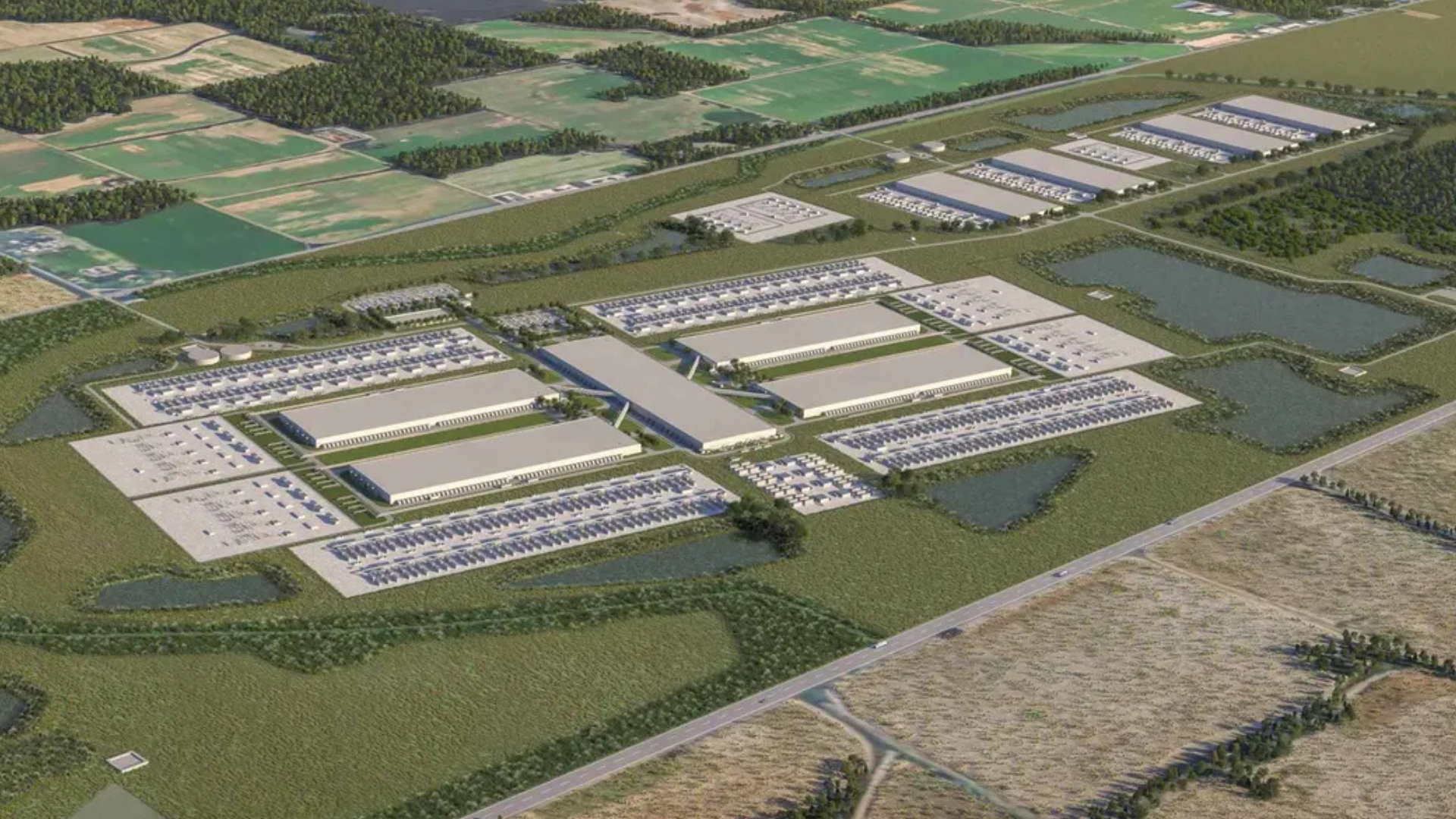
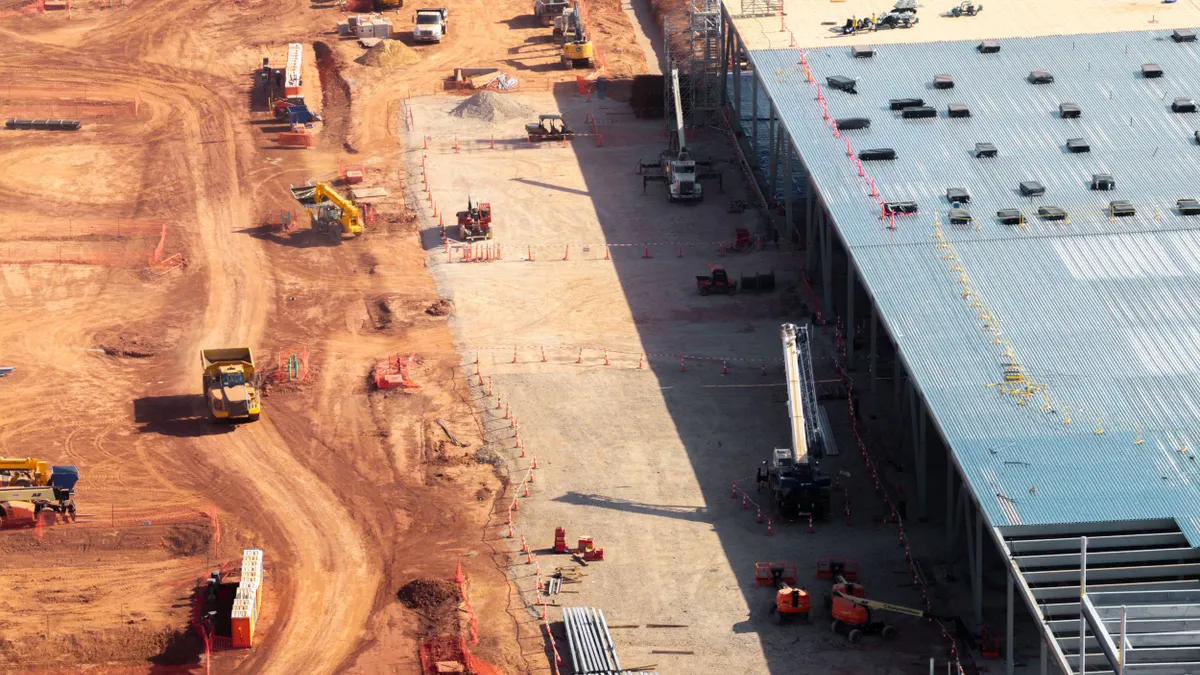
Nebius told investors it now expects 2026 revenue to land at the low end of its previous $3 billion to $3.4 billion guidance range, with the difference pushed into 2027. The company attributes the slip to two specific operational problems: its Vineland, New Jersey data center was delayed by power issues, and a planned bridge-power arrangement with DataOne wound down faster than expected while Nebius was still transitioning to Bloom Energy generation at that site. In plain terms, annual recurring revenue the company expected to book in December is now expected in February.
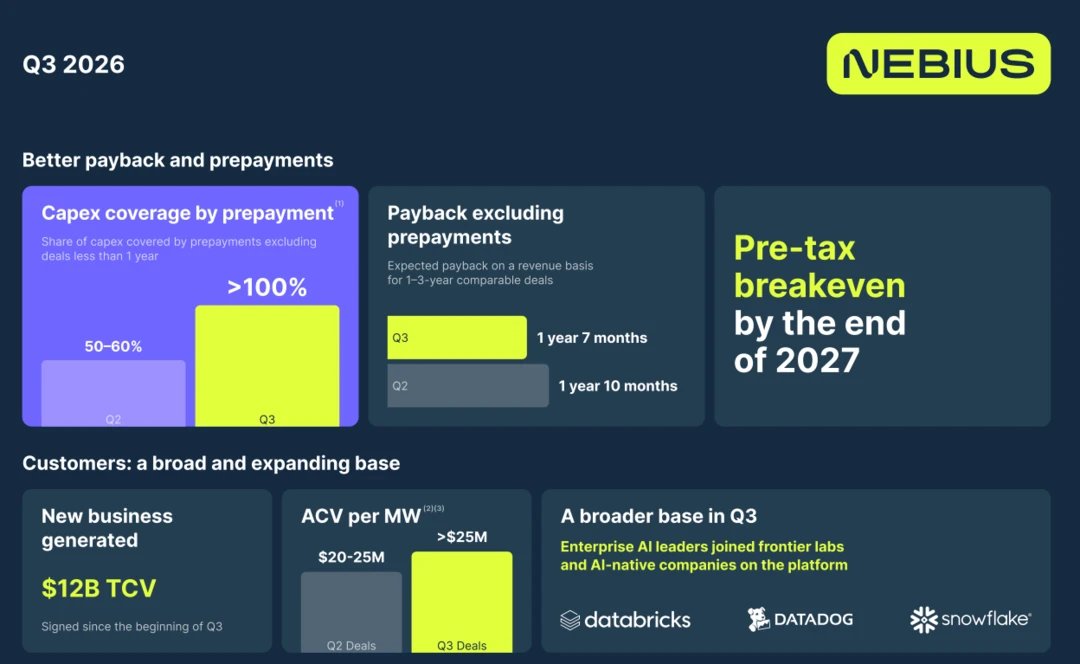
That is a meaningfully different story than a demand shortfall, and the underlying Q3 numbers support the framing: revenue grew 571% year over year to $980.8 million, and non-GAAP earnings of $90.9 million beat Wall Street expectations even with a GAAP net loss of $37.5 million. A company facing a demand problem does not usually post triple-digit growth and still beat earnings estimates. A company facing a power and construction timeline problem does exactly what Nebius just described.
Why Nebius keeps insisting it is not a neocloud
CEO Arkady Volozh drew an explicit line between Nebius and the neocloud category that includes CoreWeave and similar GPU-rental operators: 'We do not just build and operate data centers and compute, like neoclouds.' His description of a 'hyperscaler model' covers designing and running infrastructure, cloud software, and managed AI services together, building its own racks and storage rather than buying commodity hardware and renting it out at a markup to whoever needs GPU cycles that week.
That distinction is not just positioning for its own sake, and the economics behind it are real. Neoclouds generally carry thinner margins and heavier reliance on debt financing against GPU assets that depreciate quickly as newer chip generations arrive every twelve to eighteen months. Volozh's framing is an argument that Nebius's revenue has more structural durability: managed services and software layered on top of infrastructure are stickier and higher-margin than bare GPU rental, and considerably harder for a customer to walk away from on short notice once workloads are integrated into Nebius's own platform layer rather than a generic rented GPU instance.
The capex number that should make any CIO pause
Nebius is raising its 2027 capex guidance to $40 billion to $45 billion, a figure that would be enormous for a company whose full-year 2026 revenue is landing around $3 billion. CFO Dado Alonso's claim that prepayments are covering 100% of that capex is the detail that makes the number less alarming than it first appears, because Nebius is building against contracts customers have already committed capital to, with those prepayments funding construction well ahead of any need to tap debt markets against speculative future demand.
Alonso also said Nebius could shift its mix toward more long-term contracts if financing markets become less attractive, which is a direct acknowledgment that the broader AI infrastructure financing environment is not guaranteed to stay favorable. That hedge is worth remembering given how much of the neocloud sector's recent stock volatility has traced directly to questions about debt financing and whether Nvidia's financial backing of its customers holds up under scrutiny.
Why the market reacted to the delay anyway
Despite the beat-and-raise elements of the quarter, Nebius's stock move reflected broader anxiety about neocloud financing that the company's own results cannot fully insulate it from. The article covering the results frames the reaction as driven partly by concerns about whether Nvidia's financial support for its ecosystem of customers could be questioned without Jensen Huang as CEO, and partly by CoreWeave's own Q3 results showing a revenue surge alongside parallel debt concerns.
That matters for how CIOs should read Nebius's numbers: the company's own execution this quarter was arguably strong, a power-and-construction delay is a specific, explainable problem rather than a structural one, but the stock reaction shows investors are currently pricing the entire neocloud-adjacent category with a shared discount regardless of individual company fundamentals. A vendor evaluation that only looks at Nebius's own numbers, without accounting for that sector-wide sentiment risk, is incomplete.
How this fits the broader neocloud financing anxiety
Nebius's results landed in the middle of a sector-wide reassessment of how GPU-heavy infrastructure companies fund their growth, with CoreWeave's own Q3 results showing a similar pattern of strong revenue growth paired with investor unease about debt levels. The common thread across nearly every company in this category is that rapid AI infrastructure buildout requires capital years ahead of the revenue it eventually generates, and the market is currently deciding, quarter by quarter, how much trust to extend to each company's specific financing structure for bridging that gap.
Nebius's prepayment-funded approach is one answer to that trust question, and a reasonably strong one on paper. It does not fully insulate the stock from sector-wide sentiment, as this quarter's reaction demonstrated, but it does give Nebius a more defensible answer than most peers when a board member or analyst asks exactly how a $40 billion capex commitment gets paid for without betting the company on debt markets staying favorable through 2027.
What this means for anyone evaluating Nebius as an AI infrastructure vendor
For enterprise buyers comparing Nebius against CoreWeave, Lambda, or a traditional hyperscaler, the prepayment-funded capex model is a genuinely useful signal: a vendor whose growth capital comes from customer prepayments rather than open-ended debt has less incentive to overbuild speculatively, and more alignment between what it builds and what is actually contracted. That is a real argument in Nebius's favor relative to neoclouds financing GPU purchases against uncertain future utilization.
The counterargument is that a single data center power delay already pushed real revenue into the following year, which is exactly the kind of execution risk that matters when an enterprise is planning its own AI roadmap against a vendor's delivery timeline. Prepayment-funded capex reduces financial risk; it does not reduce physical construction and power delivery risk, and Nebius just demonstrated that risk is live and can move real revenue by a full fiscal year.