Three buildings, one power plant next door
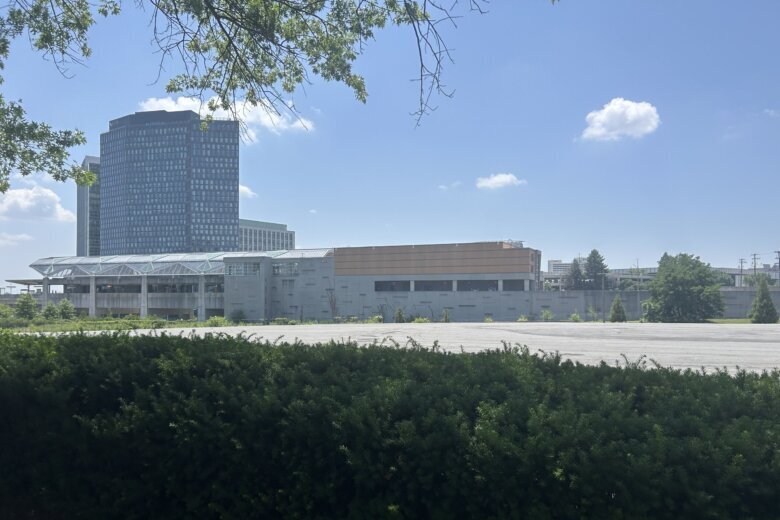
CyrusOne has filed development plans for a three-building data center campus in Fairfield, Texas, roughly 90 miles south of Dallas along FM 488 in Freestone County. Each of the three buildings, DFW20A, DFW20B, and DFW20C, spans 306,215 square feet, for a combined 918,650 square feet and 760MW of IT capacity across the finished campus. The price tag is $1.5 billion, and construction is already well underway on two of the three buildings, with the third expected to break ground next month and the full campus targeted for completion by the end of August 2027.
The defining feature of the site is its neighbor. The campus sits adjacent to Calpine's Freestone Energy Center, a roughly 1GW natural gas facility on a 506-acre energy campus now owned by Constellation Energy following its acquisition of Calpine. That proximity is not incidental. It is the entire reason the project can move on a roughly 18-month construction timeline instead of waiting years in an ERCOT interconnection queue that has become one of the biggest bottlenecks for new data center capacity in Texas, a queue that in some regions now stretches past 2030 for large industrial loads seeking new grid connections.
Why co-location with gas is the new playbook
Texas has become the proving ground for a specific strategy: build data centers next to existing or planned gas generation and negotiate direct or behind-the-meter power arrangements rather than fighting for grid interconnection. Calpine and CyrusOne have already worked this playbook once before, with a separate 400MW project at Calpine's Thad Hill Energy Campus. Fairfield extends that relationship at nearly double the scale, and it signals both companies see enough demand from hyperscale and neocloud tenants to justify repeating the model rather than treating it as a one-off pilot deal.
The advantage for CyrusOne's investors, KKR and Global Infrastructure Partners, is speed to revenue. A campus that can be energized in under two years commands a premium from hyperscale and neocloud tenants who are themselves under pressure to bring GPU capacity online before their own capital commitments come due. For a private equity-backed operator, cutting two to three years off a development timeline materially changes the return profile of a $1.5 billion project, since every quarter a building sits empty waiting on power is a quarter of lost lease revenue against a fixed construction loan.
What this means for the ERCOT queue
ERCOT's interconnection queue has swelled with data center requests over the past two years, and grid operators across Texas have been explicit that co-location and self-generation are becoming the default path for large loads that cannot afford to wait years for a queue slot. Fairfield is a case study in what that looks like in practice: a developer choosing a site specifically because a gas plant with spare or expandable capacity already sits on the parcel next door, turning what would normally be a multi-year utility negotiation into a private commercial agreement between two companies.
That trend has real knock-on effects for enterprises evaluating Texas as a data center market. Sites without an adjacent power source are increasingly the slow lane, while co-located sites are commanding faster timelines and, likely, faster lease-up as tenants compete for the earliest available capacity. If your infrastructure team is evaluating Texas colocation or built-to-suit options, ask providers directly whether their site has firm, contracted generation on or adjacent to the parcel, not just a favorable position in the interconnection queue.
The financial engineering behind the speed
CyrusOne has separately been working a roughly $1 billion refinancing on other Texas data centers, a reminder that campuses like Fairfield are being financed as much like power infrastructure projects as traditional commercial real estate. Lenders are increasingly comfortable underwriting data center debt when there is a credible power story attached, which is part of why co-located gas sites are proliferating faster than pure grid-dependent ones, and why private equity owners like KKR are willing to commit new capital to expand the model.
For enterprise buyers negotiating capacity commitments, this financing dynamic matters more than it might appear at first glance. Projects with a clear power source tend to carry lower execution risk than projects still waiting on utility approvals, even if the headline capacity numbers look similar on paper. Fairfield's 760MW is backed by a generator that already exists next door, which is a meaningfully different risk profile than a campus still waiting on a substation upgrade that could slip by a year or more.
The bigger Texas pattern
Fairfield is the latest in a string of Texas hyperscale announcements built around direct power access, following similar co-location deals across the state's gas-rich corridors. Combined with EdgeConneX, Crusoe, and other developers pursuing comparable behind-the-meter strategies, it reinforces that Texas's data center boom is now fundamentally a power story before it is a real estate or fiber story, a shift that changes which developers can compete for the largest hyperscale tenants.
We would watch whether Constellation, as Calpine's new owner, starts marketing spare capacity at its other Texas generation assets more aggressively to data center developers looking for the same speed advantage CyrusOne secured at Fairfield. If Freestone and Thad Hill prove out the economics, expect Constellation to replicate the model across its broader Texas gas fleet, and expect more operators beyond CyrusOne to chase sites with existing generation attached rather than betting on raw land and a queue position.