Who Credit Acceptance just hired
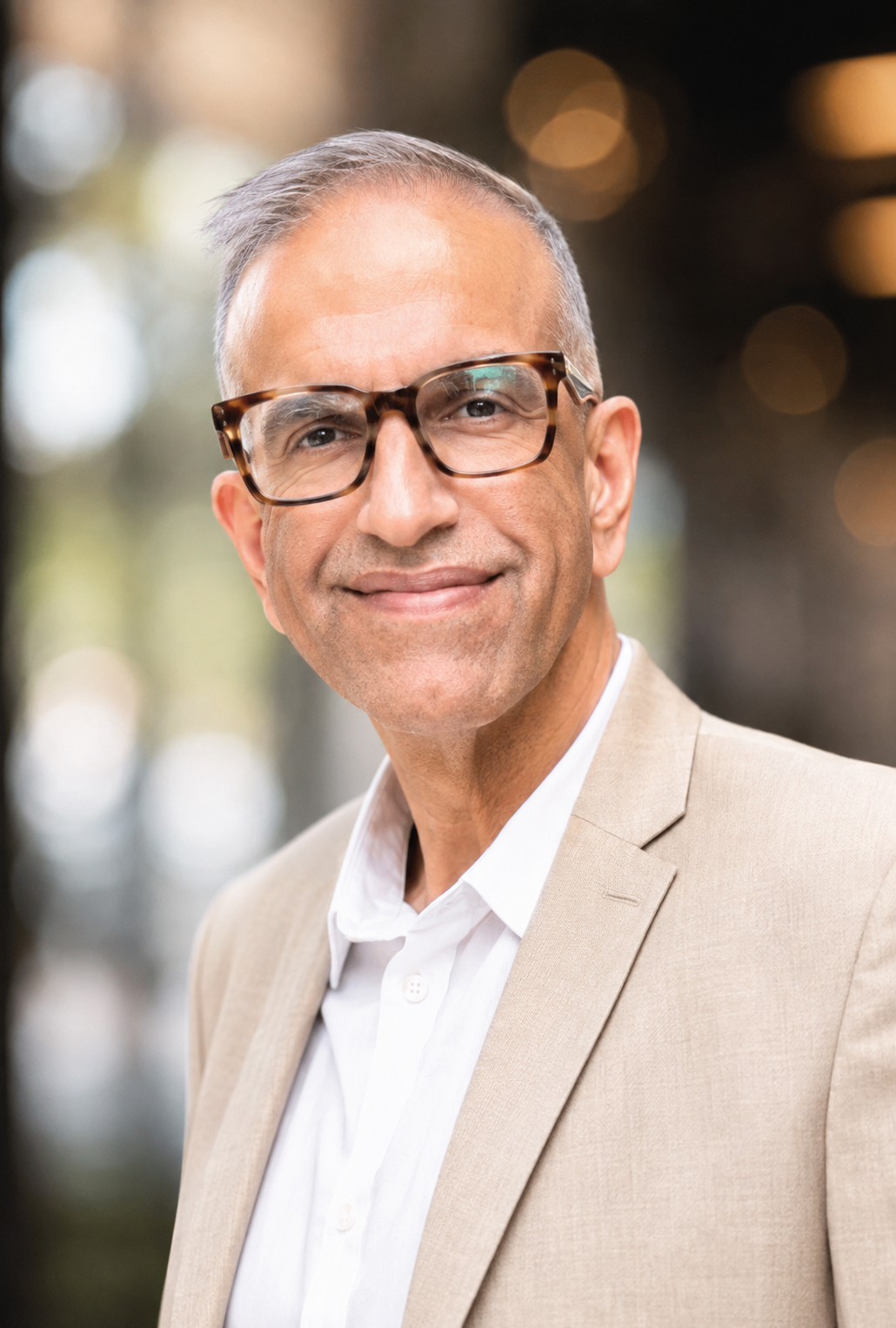
Credit Acceptance, a specialty auto finance company that works with credit-challenged borrowers through a national network of dealer partners, named Jeetu Mirchandani as its new Chief Technology Officer effective August 27. Mirchandani spent more than 21 years at Amazon, most recently as Head of Applied AI, where he led technology organizations supporting Amazon's global fulfillment network and scaled engineering teams to more than 500 people across multiple business units serving both consumer and logistics operations at enormous scale.
His resume includes direct hands-on work on fulfillment, supply chain technology, personalization, and e-commerce systems, along with multiple U.S. patents in machine learning and personalization technology filed during his time at Amazon. He also evaluated major acquisitions on Amazon's behalf, including Twitch and Goodreads, giving him meaningful exposure to how large technology bets get underwritten financially as well as how they eventually get built, staffed, and integrated once the deal closes. That combination of operating depth and deal diligence experience is unusual even among senior hyperscaler technologists, and it is part of what made him an attractive outside hire for a lender looking to move fast.
The AI transformation credential that got him hired
The credential Credit Acceptance's announcement emphasizes most is that Mirchandani partnered directly with Amazon's CEO and CFO on an AI transformation strategy the company says generated multi-billion-dollar business impact across its operations. That is a specific and fairly unusual credential in the market right now: a technologist who sat close enough to the C-suite of a hyperscaler to help shape how that company allocated capital toward AI at scale, rather than one who simply ran departmental AI pilots several layers removed from strategic budget decisions.
CEO Vinayak Hegde said Mirchandani 'has operated at the forefront of significant technology and AI advancements' and that his experience applying emerging technologies to complex business challenges makes him 'an exceptional addition' to the company's executive leadership team. Mirchandani, for his part, framed his own mandate as building 'a more data-informed and AI-enabled organization' that delivers greater value for customers, dealer partners, team members, and shareholders across the entire lending business.
Why a subprime auto lender needs this profile
Credit Acceptance's core business runs on underwriting risk for borrowers that traditional lenders routinely decline, which makes data quality and predictive modeling directly and immediately tied to loss rates and overall profitability rather than a nice-to-have efficiency layer bolted on afterward. A CTO who spent two decades building personalization and machine learning systems at Amazon's scale brings pattern-matching experience that specialty finance boards increasingly view as more valuable to underwriting accuracy than a traditional banking technology background focused mainly on core systems uptime.
This hire also reflects a broader shift underway in where financial services companies now source their technology leadership. Rather than recruiting from peer banks or established core banking technology vendors as they historically have, Credit Acceptance went directly to a hyperscaler's applied AI organization, betting that experience building machine learning systems at Amazon's scale transfers more directly into competitive underwriting advantage than years spent running conventional IT operations at a similarly sized lender. Expect more specialty lenders and mid-market insurers to test the same theory over the next year or two as they compete for scarce applied AI talent.
The talent market signal for other CTOs
When a mid-cap specialty lender pulls a Head of Applied AI directly out of Amazon, it tells competitors and adjacent industries something important about current compensation expectations and mandate scope for comparable roles. Hires like this one typically come bundled with meaningful equity, direct board visibility, and a mandate broad enough to reorganize engineering functions outright, not merely modernize existing infrastructure incrementally. Other financial services companies and PE-backed lenders should expect this kind of hire to reset the market rate for comparable AI leadership roles across the sector fairly quickly.
It also raises the practical bar for what a credible AI strategy actually means at the CTO level going forward. A candidate carrying direct C-suite AI transformation experience earned at hyperscaler scale represents a genuinely different hire than a CTO who has merely overseen a handful of internal AI pilots without board-level capital allocation exposure. Boards evaluating their own technology leadership bench should honestly ask whether their current mandate and compensation structure could realistically attract or retain someone carrying this level of credential.
What to watch next
The real measure of this hire will show up in what Mirchandani actually reorganizes across his first two quarters on the job, and whether Credit Acceptance's loss ratios or customer acquisition costs move meaningfully as a direct result of those changes. Amazon-scale AI experience does not automatically transfer cleanly to a company running a fraction of Amazon's data volume and engineering headcount, and boards should track concrete underwriting and cost metrics rather than resting on the credential alone as proof of impact.
For other CTOs across specialty finance, retail lending, and adjacent PE-backed sectors, this hire is worth flagging as both a compensation benchmark and a competitive signal at the same time. If your own board asks why a direct peer just hired an ex-Amazon applied AI leader, the honest answer is that data-driven underwriting and consumer personalization are converging into the same underlying skill set, and the executive talent market is already pricing that convergence into compensation packages today. Boards that wait another cycle to act on this should expect a smaller and pricier candidate pool.