The problem Streamhouse is naming
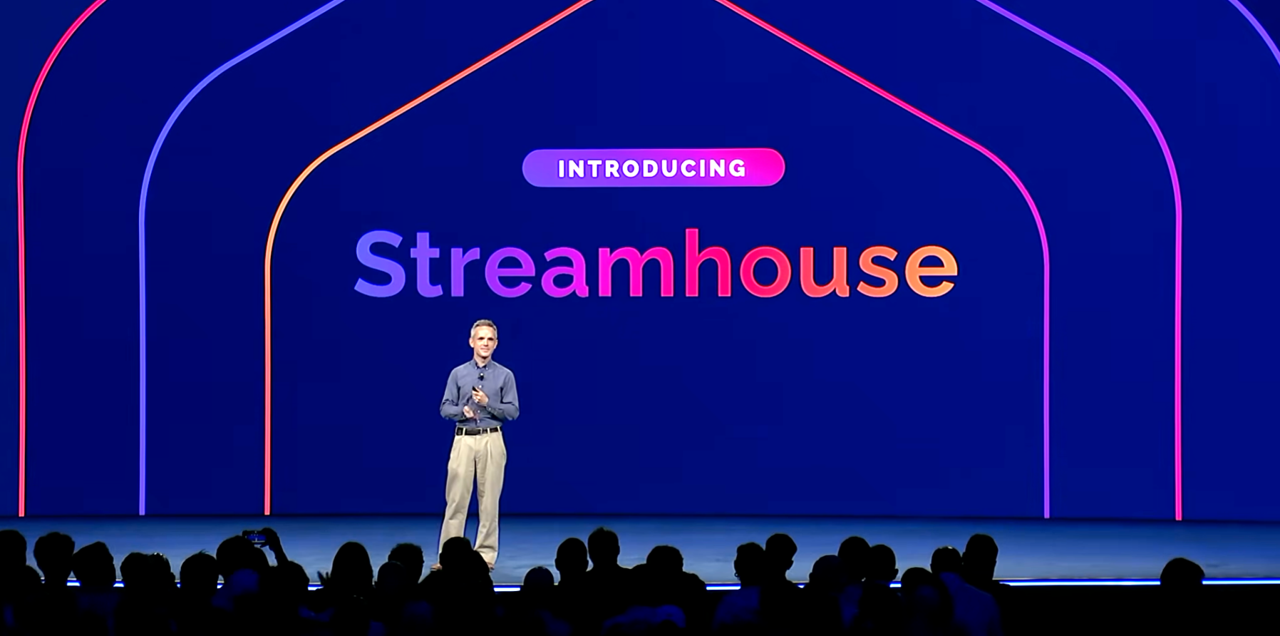
Every team running Kafka at scale eventually builds the same thing: a database or cache that mirrors a topic so an application can query current state instead of replaying a stream. Confluent calls this gap real and says its new Streamhouse architecture, introduced at its Current 2026 conference in San Francisco, is meant to close it directly inside the platform. The pitch is that applications, analytics, and AI agents all need the same thing, a view of the business that is always current, decentralized across the systems that already produce the data, and reliable enough to be mission-critical.
This is less a new product than a formal name for work companies were already doing with Kafka plus a database plus a cache, stitched together by hand. Confluent's bet is that naming the pattern and productizing it, rather than leaving every customer to rebuild it, is worth paying for. Whether that is true depends on how much custom glue your team has already written and how painful it has been to maintain.
Lightning Tables and the new Query pillar
The concrete feature is Lightning Tables, now available on AWS, which keeps read-only tables continuously updated from Kafka data. Applications query them with SQL or an API, and AI agents reach them through the Model Context Protocol, the same connector pattern Anthropic has pushed across the industry this year. Confluent is formally adding Query as a fifth pillar next to Stream, Connect, Process, and Govern, bundling Tableflow, the Real-Time Context Engine, and Lightning Tables under it.
A Schema Registry compatibility policy ships alongside this to catch breaking schema changes before they reach Flink, Tableflow, or Lightning Tables, which is the kind of guardrail that only matters once you have agents reading from these tables unattended. In Confluent's internal testing, new data was ready to serve in under a second. That number has no published methodology behind it, so validate it against your own write volume and table size before you build a latency commitment around it.
Forecasting without leaving your environment
Confluent added three Granite Time Series models directly inside Flink on its self-managed platform, aimed at forecasting and anomaly detection through plain SQL. The pitch here is specific and credible: the models need no pretraining, run on CPUs alone, and keep data inside the customer's own environment rather than shipping it to an external inference endpoint. For retail and commerce teams doing demand forecasting or fraud anomaly detection, that removes a real objection, that your transaction stream has to leave your network to get a forecast.
This is a narrower claim than a general AI platform pitch, and that is its strength. A CPU-only, no-pretraining model that runs where your stream processing already runs is a lower-risk adoption path than standing up a new model-serving stack just to add forecasting to a Flink job you already maintain. It is worth testing against a workload you already understand well enough to judge the output, since a forecasting model you cannot sanity-check against your own historical numbers is not worth the integration effort, however little that effort turns out to be in practice.
The IBM reach, and what it actually buys you
Confluent's acquisition by IBM closed less than eight months before this announcement, and the Streamhouse push leans on that ownership directly. IBM is extending Streamhouse into mainframes, enterprise databases, and hybrid environments, plus a watsonx.data integration that lets IBM's lakehouse query Tableflow's Iceberg tables without another data copy. For any enterprise where the authoritative transaction history still sits on a mainframe, that is the part of this announcement that matters more than Lightning Tables.
The honest reading is that most PE-backed SaaS and retail commerce companies are not running mainframes, so this specific extension will not move your roadmap. What it does signal is that Confluent is using the IBM balance sheet to go after a market, large regulated enterprises with legacy cores, that was never going to adopt Kafka on its own. That is a different buyer than the one evaluating Lightning Tables, and it is worth knowing which one you are before you read vendor messaging that blends both.
A commerce reference worth checking yourself
Confluent's customer evidence here is Extend, an AI-native commerce platform, which it says uses Streamhouse to turn Kafka into its operational source of truth. That is a smaller, newer company than the usual enterprise logos vendors lean on, and it is a more honest proof point for exactly the kind of commerce-tech buyer this category serves: a team that wants one event backbone to double as both the system of record and the agent-facing query layer.
The useful question is not whether Extend's story is real, it probably is, but whether your own event volume and query patterns resemble theirs. A commerce platform with bursty, high-cardinality event streams and a need for sub-second state is a good fit for this architecture. A back-office analytics pipeline that runs on a nightly batch is not, and bolting Lightning Tables onto it would be solving a latency problem you do not have.
Where this fits in your streaming roadmap
If your team already runs Kafka and has built or is maintaining a custom read-replica pattern to serve queries off a topic, Lightning Tables is worth a pilot against that exact use case, since the cost of the comparison is low and the maintenance savings are concrete if it works. If you are earlier in your streaming journey and still deciding whether Kafka is the right backbone at all, this announcement is a reason to weigh Confluent against alternatives on query capability now, not just ingestion throughput, since that gap is closing across the category.
The broader signal, alongside MariaDB's agentic database push and Redis and Snowflake's recent moves, is that every layer of the data stack is racing to own the query path agents use, not just the storage underneath it. That consolidation pressure is good for your operational complexity if you pick a platform that actually delivers, and expensive if you commit early to one that does not. Treat the under-a-second latency claim and the Extend reference as a starting point for due diligence, not as a decision.