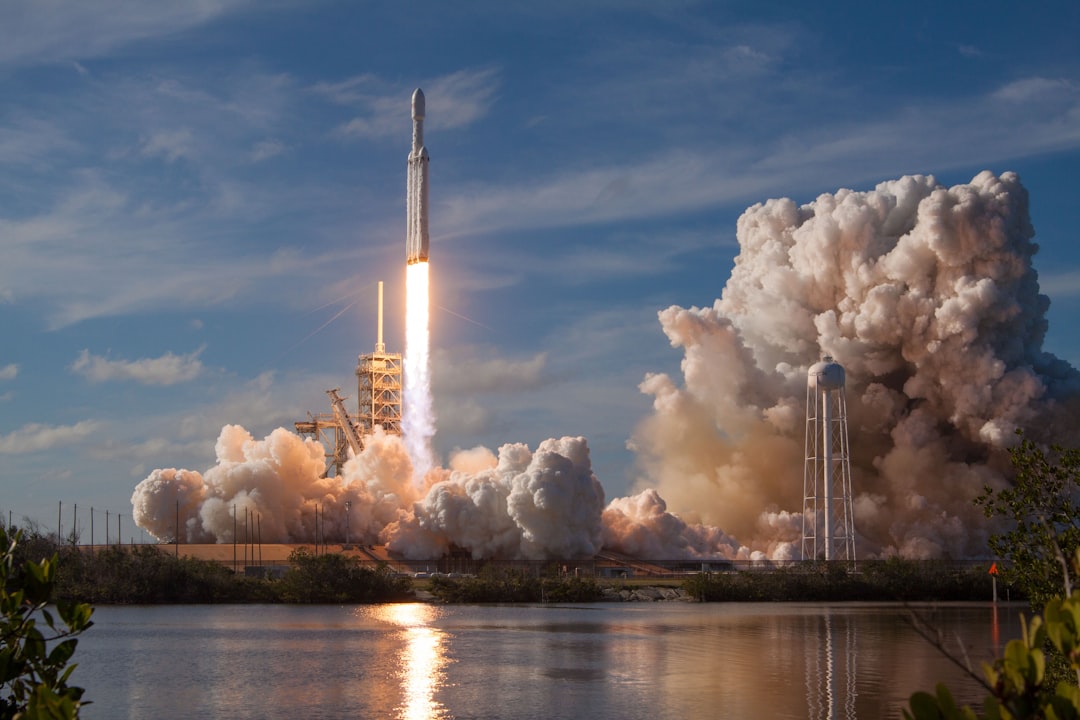
Blue Origin CEO Dave Limp used a public update today to commit the company to flying its New Glenn rocket again before the end of 2026, an aggressive six month timeline from the May 28 static fire test that destroyed the LC-36A launch pad at Cape Canaveral. The statement is the clearest signal yet of how Blue Origin intends to manage the recovery, and it comes after the first detailed inspection of the pad and integration facility since the accident.
The good news, in Limp's words, is that the long lead infrastructure survived. The propellant farm with its oxygen, liquid hydrogen, and LNG tanks is reported in good shape. The water tower used for acoustic suppression at launch is also intact. These are the items that would otherwise have driven a multi year rebuild, since the specialized tankage, plumbing, and certification work needed to stand them up new typically dominates pad construction schedules. With those assets preserved, the rebuild becomes a project focused on the flame trench, the launch mount, and the surrounding ground support equipment, all of which Blue Origin has built before.
The clear loss is the transporter erector, the massive vehicle that carries an integrated New Glenn from the hangar to the pad and rotates it vertical. Rather than spend a year and a half rebuilding it, Blue Origin says it had already been moving toward a different concept of operations in which the rocket is integrated and erected differently, and it will now go directly to that approach. That decision alone may be the single most important factor in whether the six month target is realistic. It removes a critical path item, but it also means the first return to flight will use procedures that have not been exercised at full scale before.
Blue Origin is also choosing to rebuild LC-36A in its current 7 by 2 configuration, which corresponds to the variant of New Glenn that has flown three times and performed well. The larger LC-36B, which would support the 9 by 4 variant intended for heavier payloads and eventual crewed missions, will wait. The trade is explicit. The company is prioritizing schedule and the existing customer manifest over a more ambitious capacity expansion, which is the right call given the pressure from both commercial customers and NASA.
Industry sources speaking to Ars Technica continue to suggest that a realistic return to flight is closer to twelve to eighteen months, which is a substantial gap to Limp's public statement. The skepticism is rooted in historical pad rebuild timelines, the availability of specialized labor, and Blue Origin's own track record of taking longer than initially announced. NASA Administrator Jared Isaacman visited the company last Friday and described himself as all in on supporting the recovery, and the US Space Force, which manages the Cape Canaveral range, is also offering expedited reviews. Those signals of federal support could shave months off the timeline, but they cannot manufacture welders, machinists, and ground systems specialists who do not exist.
For technology leaders with space dependencies, the practical implications fall into a few buckets. Companies with payloads manifested on New Glenn in 2026 and early 2027 should be revisiting launch contracts now and modeling backup scenarios on Falcon 9, Falcon Heavy, Vulcan, and where appropriate, on emerging Chinese and European vehicles. Satellite operators with refueling, deorbit, or in space mobility services should look at whether changes to manifest cadence affect their own scheduling. Defense and intelligence customers should be reviewing their classified launch contingencies, since Blue Origin's New Glenn was beginning to take on national security manifest as the BE-4 engine matured.
The Artemis program implications are the most visible. New Glenn is intended to fly cargo missions in support of NASA's lunar architecture, and the Blue Moon lander, which Blue Origin is developing for both cargo and crewed surface missions, depends on the rocket. A twelve to eighteen month gap would push surface mission planning to the right, and it would intensify pressure on NASA to consider Falcon Heavy or Starship as alternative launch paths for Blue Moon hardware. The fact that Blue Origin executives are publicly committing to a six month rebuild may itself be a way to limit that conversation, since once a backup path is normalized, it becomes harder to recapture the manifest.
The underlying engineering question of what caused the static fire failure is still secondary to the schedule story. Speculation continues to focus on a first stage engine anomaly that propagated quickly to the second stage, but the BE-4 has a generally good track record, including on the Vulcan vehicle, and the failure analysis should be tractable. The launch infrastructure is the harder problem, and that is where the next two quarters of company news will likely concentrate. For now, the planning assumption for any New Glenn dependent program should be a soft return in early 2027 with continued risk through mid year, and any commitment that hinges on a 2026 flight should carry an explicit contingency.