A Danaher alumnus takes the IT seat
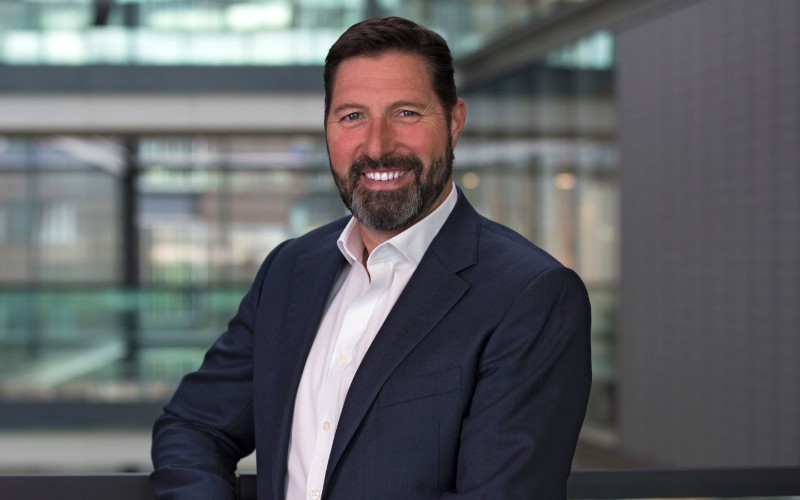
Avantor has named Mikey Santiago as its new Chief Information Officer, hiring him out of a career spent largely inside Danaher Corporation and its operating companies. Santiago's background includes four separate CIO roles, a detail Avantor's announcement leads with because it is the kind of signal boards look for when the job is less about picking technology and more about running IT through constant organizational change. Danaher's operating model, which rotates executives across a portfolio of life sciences and industrial businesses while demanding consistent operational discipline, is effectively a CIO finishing school for exactly this kind of role.
CEO Emmanuel Ligner framed the hire around Santiago's combination of business knowledge and technology leadership, language that matters more than it might read on the surface. Avantor is hiring someone who has already run IT inside a company built by serial acquisition, precisely Avantor's own history and ongoing growth strategy, well beyond the job of modernizing a single IT stack in isolation. That alignment between Santiago's track record and Avantor's structure is the actual case for the hire, not his technical résumé alone.
What Santiago is walking into
Avantor describes itself as a life science tools company providing mission critical products and services across 300,000 customer locations in 180 countries, a scale that turns even routine IT decisions into multi-region coordination problems. A company operating at that footprint typically carries years of accumulated system sprawl from acquisitions, regional variations in compliance requirements, and a patchwork of legacy platforms that never quite got unified during prior integration pushes. Santiago's mandate, as described by Avantor, covers cloud modernization, cybersecurity, and advanced analytics and AI, which reads as a standard CIO job description until you account for the acquisitions and integrations line sitting right alongside it.
That pairing is the real tell. Most CIO mandates treat integration work as a side project that happens after a deal closes and technology modernization as the main job. Avantor is explicitly making both the same job, under one executive, which only works if that executive has already done it more than once. Santiago's academic background, an MBA from USC plus graduate work in computer science and cognitive science from UC San Diego, gives him the cross-disciplinary grounding the role implies, but it is the four prior CIO tours that actually explain why Avantor picked him over a candidate with a cleaner, single-company resume.
Why repeat CIOs are winning these roles
The market for CIO talent at companies built through acquisition has shifted noticeably toward executives who have already absorbed the specific pain of merging IT estates under live operating pressure, rather than toward candidates whose strength is greenfield digital strategy. A first-time CIO can design an elegant target architecture on a whiteboard, but only someone who has lived through the messy reality of decommissioning duplicate ERP instances while the business keeps shipping product actually knows where the real risk sits. Boards evaluating life sciences and industrial suppliers are increasingly weighting that lived experience over theoretical fit.
Santiago's four prior CIO roles inside Danaher's operating company structure are effectively four separate stress tests of exactly that skill, each one presumably at a different stage of integration maturity. That repeat exposure is harder to replicate through consulting engagements or a single long tenure at one company, which is why companies like Avantor are increasingly recruiting directly out of conglomerates like Danaher rather than out of pure-play technology firms. The specific skill being bought is pattern recognition across multiple messy integrations, not technology vision in the abstract.
The customer experience angle
Avantor's own framing ties Santiago's mandate to customer experience and innovation alongside the more internal goals of operational excellence and growth support, a pairing that matters for a company selling into life sciences labs and advanced technology manufacturers who depend on Avantor's supply reliability. IT fragmentation in a company this size does not just slow internal reporting, it shows up externally as inconsistent order processing, slower customer onboarding, and uneven service levels depending on which legacy system a given customer's account happens to sit on. Fixing that is a revenue problem dressed up as an IT problem.
That framing is consistent with how a growing number of CIOs at B2B suppliers are being evaluated now, less on infrastructure uptime metrics and more on how directly their work shows up in customer-facing reliability and speed. Santiago inherits a company where the IT function's success will be measured partly by whether a customer ordering from two different Avantor-acquired business units experiences one coherent process instead of two disconnected ones. That is a harder target than most CIO job descriptions admit, and it is the implicit test his tenure will be judged against.
What CIOs elsewhere should take from this
Santiago's hire reinforces a hiring pattern worth watching across any industry built on serial acquisition, whether that is life sciences, industrial distribution, or enterprise software roll-ups backed by private equity. Companies in that category are increasingly unwilling to split the CIO role into a strategy half and an integration half handled by different executives or outside consultants, preferring instead a single accountable CIO who owns both. That consolidation raises the bar for what counts as a qualified candidate and narrows the talent pool to executives with Santiago's specific repeat-integration background.
For CIOs currently running IT at a company that is actively acquiring, the practical takeaway is that the market increasingly rewards demonstrated integration reps over polished strategy decks when the next role comes up. Santiago's path through four CIO seats inside Danaher's operating structure is itself a career strategy worth naming explicitly: build the integration track record inside a company whose entire model depends on it, then take that specific, provable skill to a buyer who needs exactly that and nothing else first.