A First-Mover Claim Worth Testing
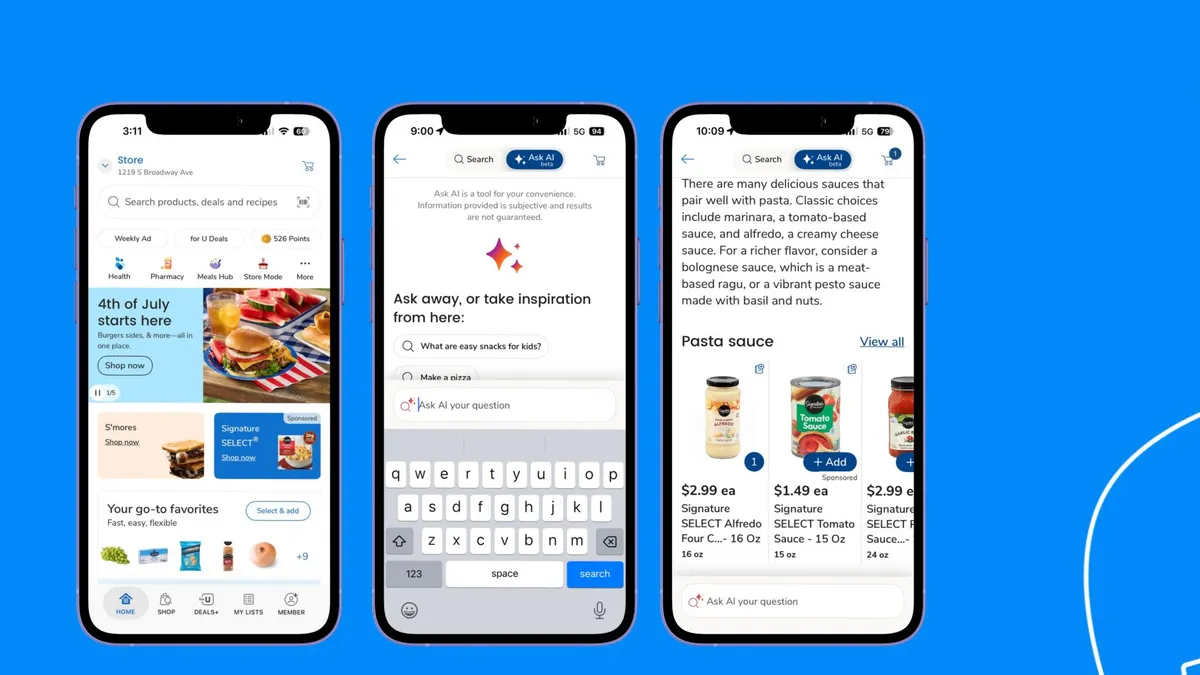
Albertsons Media Collective said on June 22 that it has become the first retailer to bring Criteo Sponsored Products into an AI-powered shopping assistant, placing sponsored product carousels inside its conversational search experience. On paper this is a modest integration. In practice it is a template for the question every retail media network is racing to answer: how do you monetize a chat interface without breaking the trust that makes shoppers use it? Albertsons operates more than 2,200 stores across 35 states and the District of Columbia, so the surface it is experimenting on is not small.
We take the "first retailer" framing with the usual caution reserved for vendor superlatives, but the substance holds. Criteo, which the company says operates on proprietary data drawn from more than 1 trillion dollars in annual sales, has plenty of retailers running its sponsored products across traditional search and category pages. Doing it inside a generative assistant, where results arrive as a conversational carousel rather than a ranked list, is a genuinely different design problem. That is the part worth watching.
How the Integration Actually Works
The mechanics are straightforward. When a shopper asks Albertsons' AI search a question, eligible sponsored products can appear within the conversational carousels the assistant returns, alongside the organic recommendations. Brands buy placement through the same Criteo pipes they already use, and the ads surface in the flow of meal planning, product discovery, and basket building rather than as a separate banner or interruption. The pitch is that the ad is additive, showing up when a shopper is actively exploring rather than being pushed at them.
This is the crux of the design. In keyword search, sponsored placement is a solved and accepted convention. In a conversational assistant, the shopper is asking for a recommendation, which raises the stakes: a sponsored answer that feels bought rather than earned corrodes the trust that made the shopper ask in the first place. Albertsons is betting that carousel placement, clearly within a discovery moment, threads that needle. Whether shoppers agree is an empirical question that the next few quarters of usage data will settle.
The 85 Percent Signal
The single most interesting number Albertsons disclosed is that more than 85 percent of conversations on its AI search begin with open-ended or exploratory questions. That is a profound shift from keyword search, where a shopper who types "ketchup" has already decided what they want. An open-ended question, something like what to make for dinner this week, arrives before the decision, which means the ad now sits earlier in the path to purchase than retail media has traditionally reached.
For advertisers, this is the whole point. Upper-funnel influence has been retail media's persistent weakness, because sponsored products historically caught shoppers who already knew what they wanted. If 85 percent of AI conversations start in discovery mode, the assistant becomes a genuine consideration-stage channel, the place where a brand can enter a basket that had not formed yet. That is why McCormick, quoted in the announcement, is paying attention, and why we expect a queue of CPG brands behind it.
What the Principals Are Saying
The executives framed this as customer-first, which is the required posture for anyone monetizing an assistant. Jill Pavlovich, senior vice president of digital customer experience at Albertsons, said the goal is "creating retail media that helps customers along their shopping journey, showing up in ways that are useful and additive to their experience, while giving advertisers a new path to engage closer to the moment of purchase." The word additive is doing a lot of work, and it is the standard the program will be judged against.
Criteo's ambition is broader. Sherry Smith, the company's president of retail media, said that with Albertsons as its first retailer to bring Sponsored Products into an AI-powered shopping assistant, Criteo is "setting the foundation for how retailers will monetize AI-driven discovery while maintaining control of the shopper journey." Jenny Dickinson, an ecommerce customer business manager at McCormick, added that being part of the experience "lets us introduce our brands in a way that feels genuinely helpful to shoppers." The vendor, the retailer, and the brand are aligned on the pitch. The shopper has not voted yet.
Why This Matters for the Retail Media Wars
Retail media is a roughly 200 billion dollar market that has spent 2026 confronting its own maturity. The easy growth phase is over, advertisers are stretched across an average of six networks headed toward eleven, and only a small minority strongly trust their measurement. Into that fatigue arrives a new inventory type: conversational, upper-funnel, and native to how shoppers increasingly behave. If it works, AI-search sponsorship is the first genuinely new ad surface the category has produced in years.
We see the strategic logic clearly. As shoppers move from typing keywords to asking assistants, the retailers that fail to monetize that surface will watch their most valuable inventory lose reach without a replacement. Albertsons is planting a flag early, and Criteo gets a reference implementation it can sell to every other grocer nervous about the same shift. The risk is that a rush to monetize the assistant repeats the banner-blindness mistake, cramming the conversation with ads until shoppers route around it entirely.
Our Take on the Trade-Off
The tension in this launch is honest and unavoidable. Every sponsored slot inside an assistant is a small tax on the shopper's trust, and trust is the only reason conversational search works at all. Albertsons and Criteo clearly understand this, which is why the language is so heavily weighted toward additive and helpful. The discipline required is to leave the ad load low enough that the assistant stays useful, even when the revenue incentive pushes the other way.
Our advice to retail leaders watching this is to copy the structure but not the temptation. The upper-funnel opportunity is real, and the 85 percent open-ended figure is a genuine unlock. But the moment shoppers sense the assistant is steering them toward the highest bidder rather than the best answer, they will stop asking, and the inventory evaporates. The retailers who win conversational retail media will be the ones who treat restraint as a competitive advantage, not a missed sale.