A pension fund buys into a live campus
Yondr, the data center developer and operator owned by DigitalBridge, has sold a majority stake in its Slough campus to GLIL Infrastructure, an investment platform backed by a group of UK local government pension schemes. The financial terms of the transaction went undisclosed, yet the structure of the deal stands out on its own: a pension fund taking a controlling position directly in an operating, cash-flowing campus, reflecting how far data center investing has moved into mainstream institutional territory over the past few years.
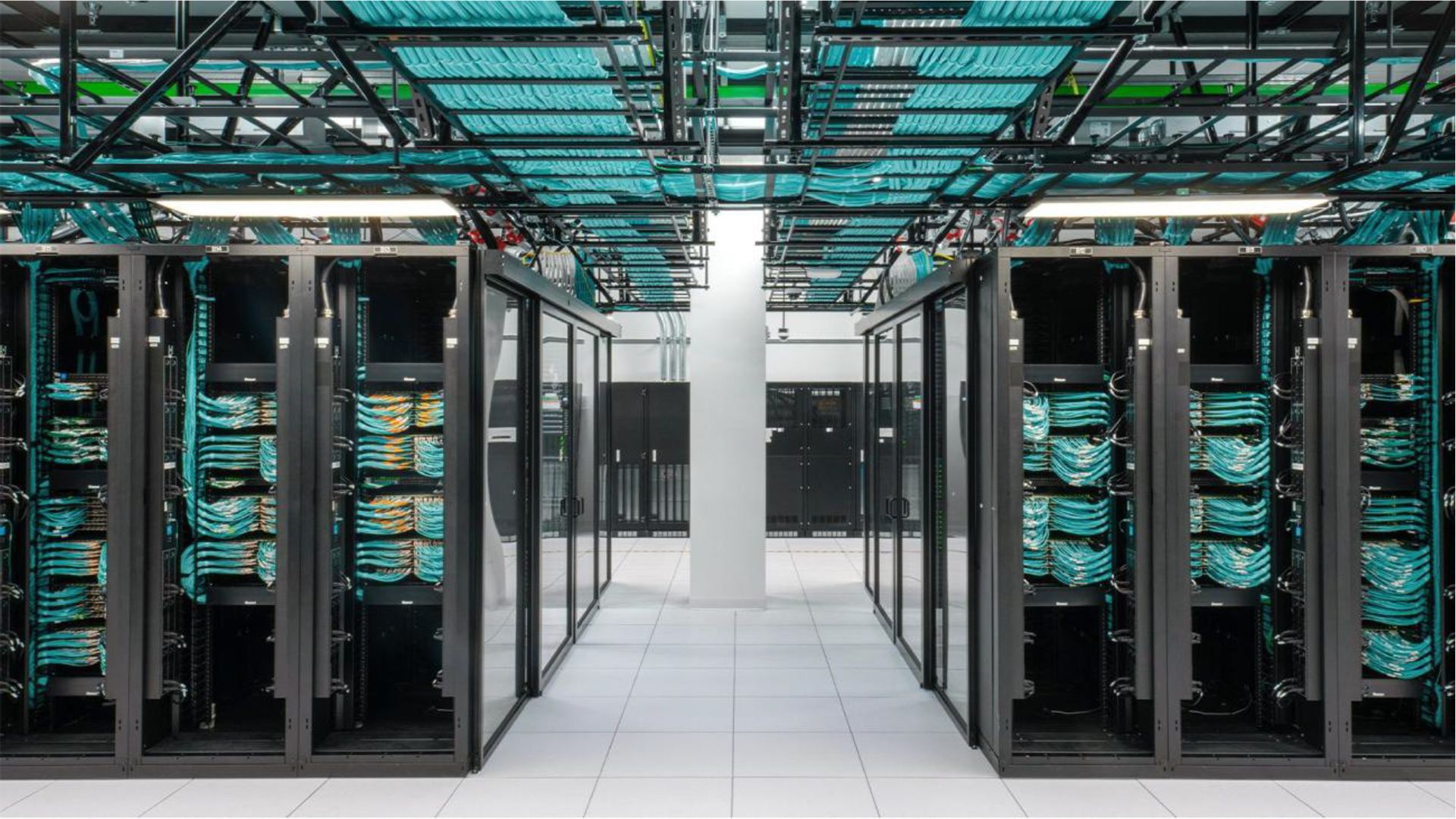
The Slough site currently has two fully operational data centers delivering more than 60MW of capacity, with a third facility targeted for launch in mid-2026. At full build-out the campus is planned to reach 100MW, positioned on the site of a former paint factory west of London in one of Europe's densest data center corridors, an area that has hosted industrial and technology tenants for decades before AI demand turned it into a hyperscale hotspot.
Why Slough, and why now
Slough has been a UK data center hub for over two decades thanks to its proximity to London, existing power infrastructure, and dense fiber connectivity, hosting facilities from Equinix, Digital Realty, and GTR among others. That maturity is exactly what makes it attractive to a pension fund investor: unlike emerging markets where power availability is uncertain, Slough's grid capacity and permitting environment are well understood, which lowers the risk profile for long-duration capital.
Yondr CEO Aaron Wangenheim called the transaction "another important milestone in Yondr's long-term growth strategy," language that signals the deal is about recycling capital to fund Yondr's next round of development elsewhere, not an exit from the UK market entirely. GLIL Investment Director Lee Belfield said the investment reflects the fund's strategy of "partnering with high-quality operators to invest in essential infrastructure," framing data centers explicitly alongside the roads, utilities, and transport assets pension funds have traditionally favored for their predictable, long-term returns.
Pension capital's growing appetite for data centers
GLIL is a sizable institutional player in its own right. It pools capital from several UK local government pension schemes specifically to invest in infrastructure assets with long-duration, inflation-linked cash flows, and data centers increasingly fit that mandate as operators sign multi-year leases with hyperscale and enterprise tenants. The Slough deal adds to a wave of pension and sovereign capital moving into operating data center assets globally over the past two years, as these investors look for yield outside traditional infrastructure like toll roads and utilities, asset classes that no longer offer the growth premium data centers currently command.
The advisory roster on the deal, RBC Capital Markets and Linklaters for Yondr, Nomura and Simpson Thacher & Bartlett for GLIL, reflects the scale of interest large institutional players now have in what used to be a niche real estate asset class. Data center M&A has moved fully into mainstream infrastructure finance territory, with the same banks and law firms that handle airport and utility transactions now routinely working data center deals.
What consolidation means for enterprise tenants
For enterprises with workloads or colocation agreements in Slough, ownership changes at the campus level are generally low-risk in the near term since operational management typically stays with the existing team, in this case Yondr, who negotiated the deal specifically to keep running the site day to day and preserve continuity for existing tenants throughout the transition period. New majority owners can still shift capital allocation priorities over time, particularly around expansion pace and pricing on new capacity as older leases roll off and fresh negotiations begin under a different ownership structure and a different set of investor return expectations altogether, so it pays to ask early rather than assume the terms that applied under the previous owner will simply carry forward unchanged.
If your organization has UK or European colocation footprint in Slough or is evaluating it, this is a reasonable moment to confirm your provider's expansion roadmap and capacity commitments in writing, since a change in majority ownership is exactly the kind of event that can precede renegotiated terms on future phases even when day-to-day operations remain unchanged in the short term.
The bigger European data center capital story
Slough's deal lands alongside a broader European trend of established data center hubs, London, Frankfurt, Amsterdam, Paris, and Dublin, attracting more institutional ownership as AI demand pushes lease rates and occupancy higher across the continent. Investors that once viewed data centers as a specialist real estate niche now treat them as core infrastructure, comparable to power grids or telecoms networks, worthy of the same long-duration, low-volatility capital that has historically flowed into toll roads and airports.
We would expect more transactions like this one over the next year as developers with strong balance sheets, DigitalBridge among them, continue recycling capital out of mature, cash-flowing European campuses to fund new greenfield development in power-constrained markets elsewhere. Watch for similar pension and infrastructure fund stakes in other established UK and continental European data center hubs as this capital rotation continues and more institutional investors look for exposure to the sector without taking on construction risk.