For years, engineering promotion decisions followed a pretty predictable formula. Write more code, stay long enough, handle increasingly complex tickets, and eventually someone taps you on the shoulder and says "congratulations, you're a senior now."
That formula is broken.
With 84% of developers now using AI assistance regularly (according to the 2025 Stack Overflow Survey), the skills that used to separate junior from senior have fundamentally shifted. An engineer with two years of experience and an AI coding agent can produce output that would have taken a senior five years ago an entire sprint. But output volume was never what made someone truly senior. We just measured it that way because we didn't have better tools.
So here's the real question engineering managers need to answer: when the code writes itself, what exactly are you promoting someone for?
What "Senior" Used to Mean
The traditional career ladder in software engineering was essentially a function of time and technical depth. You joined as a junior, spent a couple of years writing CRUD endpoints and fixing bugs, got comfortable with the codebase, and eventually graduated to designing features end-to-end.
The old split looked something like this: 80% coding, 10% meetings, 10% planning. A senior was someone who could hold more context, write code faster, and solve harder problems without supervision.
But the keyword there is "could." The gatekeeping mechanism for seniority was raw technical ability, and the proxy metric was lines of code, tickets closed, and features shipped.
Here's the problem: AI tools just commoditized that entire skill set.
The AI Productivity Gap Nobody Talks About

Research from Jellyfish shows that senior developers write code 22% faster with GitHub Copilot, while junior developers see only a 4% improvement. That's nearly a 5x productivity multiplier favoring seniors.
Why? Because AI tools are amplifiers, not equalizers. The 2025 DORA Report puts it clearly: "AI does not automatically improve software delivery performance. Instead, it acts as a multiplier of existing engineering conditions."
Senior developers write better prompts, catch errors in AI-generated code faster, and know when the suggestion is wrong before it breaks something in production. Junior developers, without that foundation, tend to accept AI output at face value. And that creates a compounding problem: Copilot users introduce 9.4% more bugs than non-users, according to December 2024 data.
The gap between someone who can use AI tools and someone who can use them well is the new seniority signal.
Five Things That Actually Differentiate a Senior Engineer Now
If you're rebuilding your career ladder or rethinking promotion criteria, here's what the data and industry research actually point to.
Architectural judgment. Can they design systems, not just implement them? AI handles module-level code generation. But deciding which modules should exist, how they interact, and where the failure modes are remains firmly human territory. Job postings requiring AI coding tool experience increased 340% between January 2025 and January 2026, while postings for pure implementation roles declined 17%.
Code review quality. AI has created a code review bottleneck. PRs are 18% larger and incidents per PR are up 24%. A senior engineer who can spot what AI got subtly wrong (race conditions, security holes, bad abstractions) is more valuable than ever.
AI fluency with critical thinking. There's a difference between using AI tools and wielding them effectively. Can the engineer write prompts that produce architectural decisions, not just boilerplate? Do they cross-check AI output against documentation and existing patterns? Critical thinking around AI output is now as fundamental as syntax mastery used to be.
Mentorship and knowledge transfer. McKinsey forecasts a 14 million senior developer shortage by 2030 if junior training doesn't resume. Someone who can level up their teammates, coach junior engineers on effective AI tool use, and transfer domain knowledge is a force multiplier that no AI can replace.
Business context and product sense. Can they explain why a technical decision matters to the business? Can they make tradeoff calls between speed and correctness without being told? This separates someone who writes code from someone who solves problems.
The Junior Pipeline Problem

Here's a reality check that should worry every engineering leader.
Entry-level tech hiring has decreased 25% year over year. Indeed reports a 60% drop in junior engineer listings in just two years. Employment for software developers aged 22-25 has declined nearly 20% from its late 2022 peak, according to a Stanford Digital Economy study.
A LeadDev survey found that 54% of engineering leaders plan to hire fewer juniors because AI copilots enable seniors to handle more work. And 70% of hiring managers believe AI can perform intern-level work.
The math on this is terrible for the long run. Junior developers are not hired to do "junior work." They're hired to become senior developers. The job is the training pipeline, and right now, we're dismantling it.
If you cut entry-level hiring now, you are borrowing from your future senior talent pool. In five years, you'll be competing for the same small cohort of experienced engineers that everyone else failed to grow.
A Practical Framework for Promotion Decisions
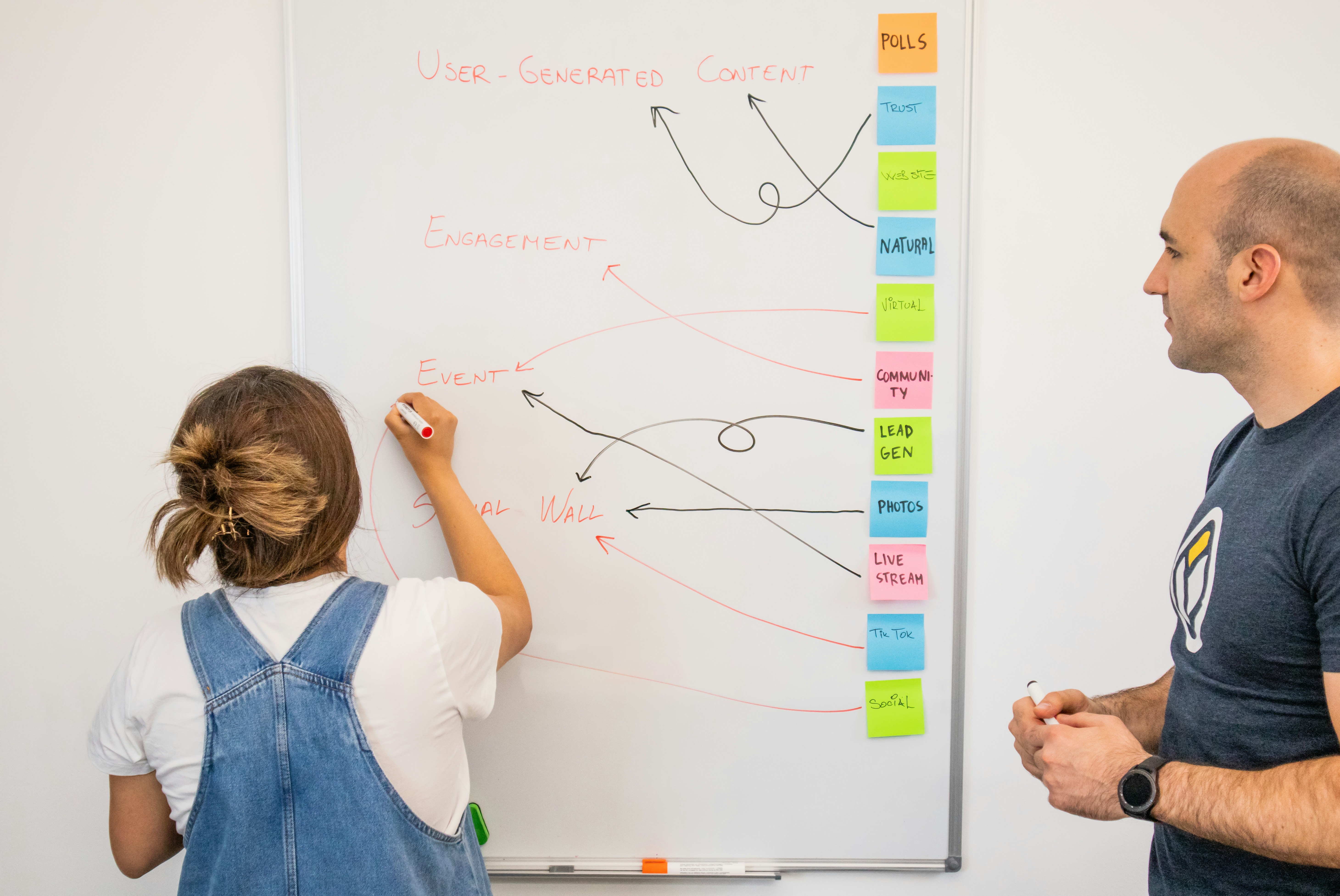
I believe promotion frameworks need to shift from measuring output to measuring judgment. Here's a practical approach.
Stop measuring
Lines of code written
Number of tickets closed
Speed of feature delivery in isolation
Start measuring
Code review impact (issues caught, production incidents prevented)
Architectural decisions and their long-term outcomes
Mentorship results (how many juniors leveled up under their guidance)
AI tool effectiveness (using AI to go faster and safer, not just to produce more)
Incident response quality (how do they perform when things break at 2am?)
Cross-team influence (do other teams seek their input on design decisions?)
The DORA framework offers a useful starting point with its four metrics: Deployment Frequency, Lead Time for Changes, Mean Time to Restore, and Change Failure Rate. But layer the SPACE framework on top for the human signals: Satisfaction, Performance, Activity, Communication, and Efficiency.
A true senior doesn't just ship faster. They ship safer, mentor better, and make the team around them more effective. That's what a promotion should recognize.
The Bottom Line
The career ladder hasn't disappeared. It's measuring different rungs now.
In an AI era, seniority means making the best decisions when AI writes the code for you. It means knowing why something should be built, not just how. It means being the person who makes everyone around them better.
Evaluate for judgment. Promote for influence. And keep investing in junior talent. The pipeline you build today is the leadership team you'll have in five years.

Written by
Bruno Bonando
Fractional CTO and technology advisor. 23+ years shaping platforms for many companies across Europe and Latin America. Has had leadership roles at REWE, MediaMarktSaturn, Cazoo, and some others.