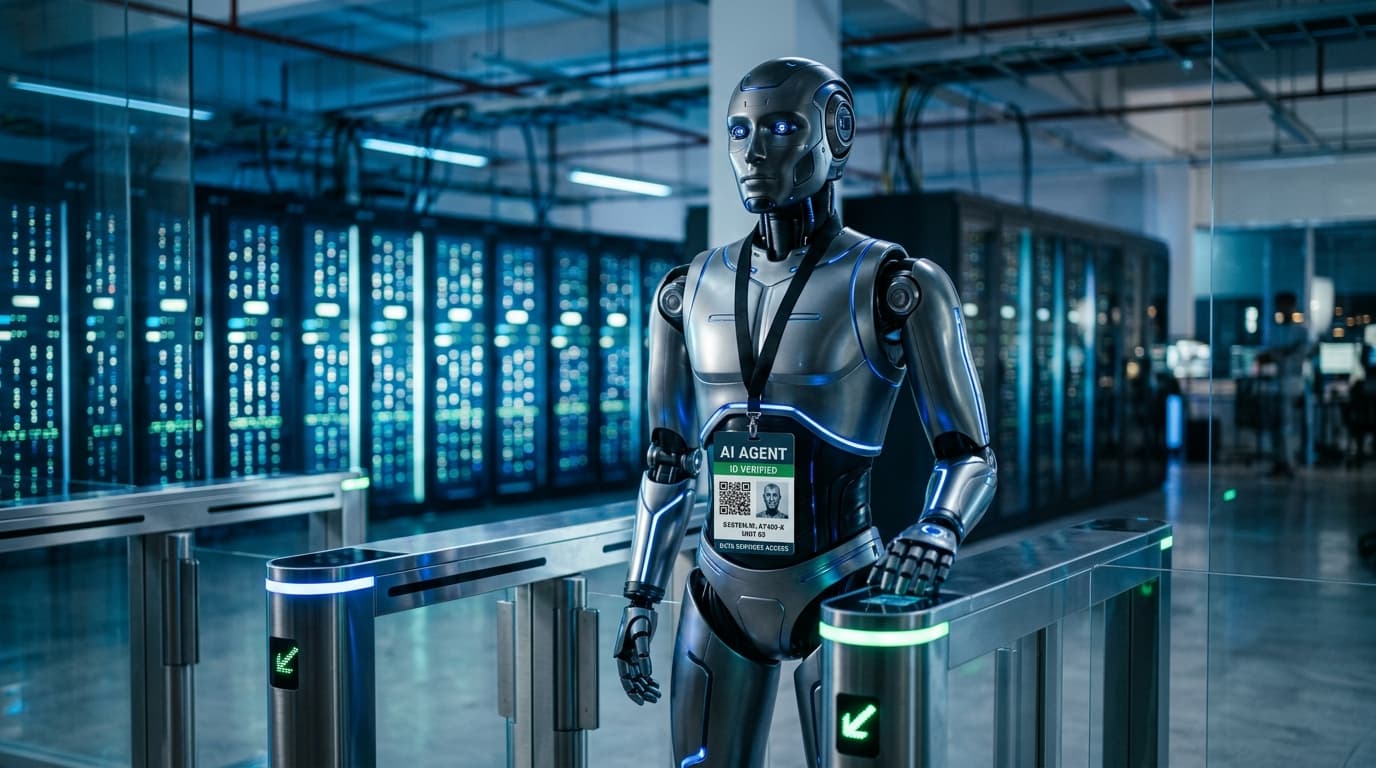
I run an AI agent platform. Most days I describe a feature, hand it to Claude Code, and review what comes back. AI writes the bulk of what gets shipped at Bruno Digital.
So when someone asks me, should they still learn to code in 2026, I get why the question is sharp. If I barely write code, why should they?
The answer is not what I would have given two years ago.
The Numbers Look Brutal
Pull up the surface data and it looks like coding is finished.
The Bureau of Labor Statistics shows "computer programmer" roles dropped roughly 27% in two years, with another 6% decline projected through 2034. Indeed reports tech postings are 36% below the pre-pandemic baseline as of mid-2025.
On the AI side, the Stack Overflow 2025 survey found 84% of developers using or planning to use AI tools, up from 76% the year before. The Pragmatic Summit, a gathering of 500 engineering leaders, put it at 93%, saving an average of four hours a week. AI-authored code jumped from 22% in Q3 2025 to 27% in February 2026. Some industry estimates put the global figure closer to 41%.
If you are looking at that and asking why you should spend two years learning something AI already does, the question is fair.
But the Numbers Hide the Real Story
Two stats from the same BLS dataset tell completely different stories.
"Computer programmer" roles, the ones whose job was translating specs into syntax, are down 27%. "Software developer" roles, the ones that own design, reliability, trade-offs, and incident response, are projected to grow 15% through 2034. That is five times faster than the average occupation.
The work that is dying was always going to die. Compilers ate part of it. High-level languages ate more. AI took the rest. The work that is growing is the part that requires judgment.
And here is the other half. Stack Overflow's 2025 survey found 46% of developers actively distrust AI-generated code, up from 31% the year before. Only 3% highly trust it. Two-thirds say the output is "almost right, but not quite," which is the worst possible failure mode. Code that compiles and looks correct, but is wrong, is harder to debug than code that fails out loud.
I am one of the 84% using AI every day. I am also one of the 46% who do not trust it without review.
What Actually Changed in My Day-to-Day
I think about software work in three phases:
Before code. What are we building, why, for whom, with which constraints, and where does it break?
During code. Writing the functions, modules, and tests.
After code. Deployment, monitoring, on-call, compliance, post-incident reviews.
AI compressed the during phase. It barely touched the other two. If anything, both got more important.
A typical project for me now looks like this. Two weeks of stakeholder calls and writing a tight spec. Two days of pair-coding with Claude. Then often two more weeks of testing, evaluating, hardening, and convincing myself I should ship it.
The middle part is fast. The bookends are not. And the bookends are where every expensive mistake gets made.
Here is what I keep telling people who ask. AI gets you 80% of the way there in record time. The last 20%, building the right thing and making it production-safe, has always been where the actual work lives. If you cannot evaluate that 20%, you are shipping code you cannot defend.
Why Understanding Still Matters
When something breaks in production, somebody is on the hook. A security breach, a compliance failure, a 4 a.m. outage. AI does not get paged. AI does not sit in the incident review. AI does not explain to the board why customer data leaked.
You do.
To do that, you need to understand systems. To understand systems, you need to read code. Not necessarily write every line, but read it, evaluate it, and know what correct looks like.
You cannot audit AI-generated code if you do not know the shape of correct. You cannot debug a stack trace if you have never read one. You cannot reason about databases, networking, concurrency, or failure modes if you skipped the foundations.
The typing has gotten cheap. The understanding has gotten expensive.
Dave Farley put it well on Modern Software Engineering. AI is an amplifier. If you are doing the right things, it amplifies them. If you are doing the wrong things, it helps you dig the hole faster. I see this every week. Some teams have cut customer incidents in half since adopting AI. Others have doubled them. Same tools, opposite outcomes. The variable is the humans.
How to Learn to Code in 2026
If you are starting today, here is what I would do. Three layers, in order.
Layer 1: Foundations. Pick one language, Python or JavaScript, and learn it well. Master data structures, APIs, authentication, and how databases actually work. Write tests. Practice reading unfamiliar code and explaining what it does to a rubber duck. Use AI only to clarify concepts, never to skip them. If you outsource your learning to AI in this phase, you will be guessing forever.
You are ready to move on when you can read code and explain it, debug a failing test on your own, and reason about data flow.
Layer 2: Working with AI. Now you bring the tools in. Practice writing prompts with hard constraints and a clear definition of done. Use AI to generate tests, then review them critically. Keep your PRs small and focused. Build a habit of evaluating AI output instead of accepting it. Code review becomes the primary skill.
You are ready when you can move faster with AI without quietly making your code worse.
Layer 3: The human layer. This is the judgment layer. Reason about trade-offs: latency vs cost, consistency vs availability, security vs speed of delivery. Write specs and design docs. Explain technical decisions to a non-technical stakeholder. Develop an incident-response mindset, because production will break and someone will need to triage it. Learn to own a product end-to-end, from the spec to the deploy to the post-mortem.
That is a lot. I will not pretend it is easy or short. The market is harder than 2021, and the path is longer. But it is the path that actually leads to a job that survives the next three years.

Is Coding Actually Dead?
You have heard some flavor of "coding is dead" lately. NVIDIA's CEO said no one will need to program. Anthropic's CEO predicted AI would write 90% of code within six months, and that prediction is now over a year old.
François Chollet, the creator of Keras, made the right observation. Software engineering has been "within six months of dying continually since early 2023."
The pattern is older than that. FORTRAN was supposed to let scientists skip programmers. COBOL was pitched as English for managers. Compilers, high-level languages, object-oriented programming, low-code, no-code. Every abstraction in the last 60 years was sold as the end of software engineering. Demand for people who actually understand systems went up every time.
AI is the biggest amplifier we have ever shipped. It changes who gets hired. It does not remove the need for people who understand the machine.
Takeaway
Learning to code in 2026 is a worse trade than 2021 if your goal is "type code for a salary." It is a better trade than 2021 if your goal is to own a real product in a market where most contributors will be AI.
The job is changing. Build for the version that's growing.

Written by
Bruno Bonando
Fractional CTO and technology advisor. 23+ years shaping platforms for many companies across Europe and Latin America. Has had leadership roles at REWE, MediaMarktSaturn, Cazoo, and some others.