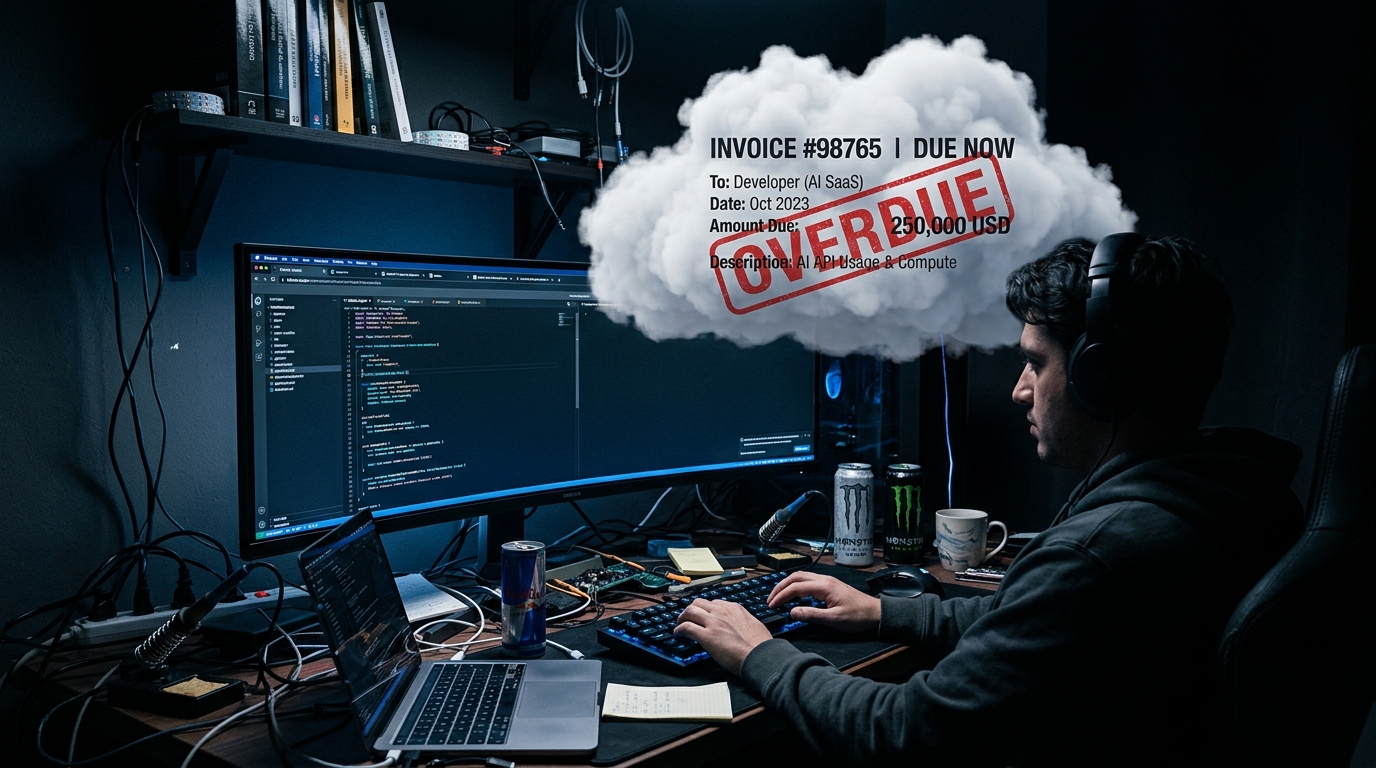
I keep having the same conversation with engineering leaders lately. It goes something like this: "We rolled out Copilot (or Cursor, or Claude Code) to the team six months ago. Everyone loves it. But I have no idea what it's actually doing to our codebase, our velocity, or our bill."
If that sounds familiar, you are not alone. JetBrains just released the results of their AI Pulse survey, covering 11,000 developers across the globe in January 2026, and the numbers paint a picture that should worry anyone responsible for engineering operations.
The Numbers That Matter
Let me lay out the key findings, because they tell a very specific story:
90% of developers already use AI tools at work. Adoption is basically universal at this point.
Only 22% use AI coding agents specifically. So most developers are using chatbots and autocomplete, not autonomous agents.
66% of companies plan to adopt coding agents within 12 months. That number is about to triple.
Only 13% of developers report using AI across the full software development lifecycle. Most AI usage is concentrated in code generation and not much else.
Read those numbers together and you get a clear picture. Adoption is wide but shallow. Everyone is writing code with AI, but almost nobody is using it for testing, deployment, security scanning, or incident response. And with two-thirds of companies about to spin up agents in the next year, the gap between "using AI" and "governing AI" is about to get a lot wider.

We Have Seen This Movie Before
Oleg Koverznev, VP and Head of Agentic Platform at JetBrains, put it bluntly: the industry is about to replay the cloud ROI crisis. When enterprises moved to the cloud, the initial pressure was just to get there. Migrate the workloads. Prove you're modern. Show the board you're "cloud-native." But nobody built the tooling to track what it cost or whether it was working.
That pressure to demonstrate ROI spawned an entire category of cloud cost management and observability tooling. Companies like Datadog, HashiCorp, and CloudHealth built billion-dollar businesses essentially cleaning up after the first wave of unmanaged cloud adoption.
The same pattern is forming with AI agents right now. Teams are adopting fast, building quick, and nobody has a clear view of what's running, what it costs, or whether the output is actually good. As Koverznev noted, code generation is cheap and no longer the bottleneck. The real challenge is aligning outcomes with intent, and managing the growing operational and economic complexity of agent-driven work.
The Agent Sprawl Problem
I see a useful analogy in the microservices era. Around 2016 to 2018, engineering teams went all-in on microservices. Each team built their own services independently. By the time anyone looked up, organizations had hundreds of services with no unified observability, multiple deployment pipelines, and incidents that took hours to triage across twelve service hops.
Agent sprawl follows the exact same arc. It starts with legitimate exploration in months one through six: individual teams build isolated agents to solve specific problems. Then comes quiet proliferation in months six through eighteen: use cases expand, but there's no centralized governance. By month eighteen and beyond, the friction becomes visible: contradictory outputs, broken workflows, undocumented interdependencies, and costs that nobody can attribute.
A recent OutSystems survey found that 94% of organizations already report concern that AI sprawl is increasing complexity, technical debt, and security risk. And Gartner's 2026 CIO Survey reveals that 42% of enterprises plan to deploy AI agents this year, with many of those deployments not being led by IT at all.

The Productivity Paradox
Here is where it gets interesting. Individual productivity gains from AI coding tools are real and measurable. Developers using AI daily report saving roughly 3.6 hours per week and showing higher PR throughput. That is genuinely significant.
But those individual wins are not translating into business-level ROI. Only 29% of organizations report seeing significant returns from generative AI, and only 23% from AI agents specifically. 79% of enterprises say they face challenges in AI adoption, a double-digit increase from 2025.
The disconnect makes sense when you think about it. If every developer on a 200-person team saves 3 hours a week writing code, but nobody is tracking whether that code is correct, tested, secure, or aligned with what the business actually needs, then you have just accelerated the production of unverified output. That is a net negative if the rework cost exceeds the generation savings.
What JetBrains Is Betting On
JetBrains announced their response to this problem in late March 2026: a platform called JetBrains Central. The pitch is straightforward. Central is the control and execution plane for agent-driven software production, connecting agents (from JetBrains and third parties like Claude, Codex, and Gemini) directly to the systems where software is built: repositories, knowledge bases, CI/CD pipelines, and infrastructure.
The three capabilities Central provides are:
Governance and control. Policy enforcement, identity and access management, observability, auditability, and cost attribution for agent-driven work.
Agent execution infrastructure. Cloud runtimes and compute provisioning so agents can operate reliably across environments.
Shared semantic context. A unified knowledge layer across repositories so agents actually understand the codebase they are modifying, not just the file in front of them.
The pricing model is two-part: a fixed per-seat subscription for governance (covering both JetBrains and third-party seats) and pay-as-you-go for agentic execution. That means one developer might spend $100 a month while another orchestrating thousands of agents could spend $100,000. It is consumption-based, which tracks with how cloud billing evolved.

The Bigger Picture
JetBrains is not the only one seeing this. AWS just unveiled their Agent Registry to bring order to enterprise AI sprawl. Microsoft has overlapping efforts with Agent 365 and Entra Agent ID, which treats agents as managed identities alongside human users. Google paired its Cloud API Registry with Vertex AI Agent Builder to give admins a curated catalog of approved tools.
When AWS, Microsoft, Google, and JetBrains all launch agent governance products within the same quarter, that tells you the problem is real and the window to get ahead of it is closing.
What Engineering Leaders Should Do Now
Based on the data, I see three practical steps that separate the organizations getting real value from AI agents from those accumulating hidden debt:
Inventory what is running. If you cannot list every AI agent, tool, and integration your team uses today, you are already in sprawl territory. The organizations that see the best ROI track AI-written code percentage, defect rates on AI-generated code, and per-agent costs.
Set governance before you scale. The cost of retrofitting governance onto a sprawling agent fleet is significantly higher than building it in from the start. Decide on identity management, cost attribution, and output quality standards now, before your 66% adoption plan kicks in.
Measure beyond code generation. Only 13% of developers use AI across the full SDLC. That gap represents both the biggest risk (ungoverned automation spreading into testing, deployment, and ops) and the biggest opportunity (agents that actually improve end-to-end delivery, not just autocomplete speed).
The Takeaway
AI coding agents are delivering real value to individual developers. That part is settled. But the enterprise story is a governance problem wearing a productivity mask. The organizations that win will be the ones that treat agent management with the same rigor they eventually brought to cloud cost management, and ideally before they spend the next three years learning the same expensive lessons all over again.

Written by
Bruno Bonando
Fractional CTO and technology advisor. 23+ years shaping platforms for many companies across Europe and Latin America. Has had leadership roles at REWE, MediaMarktSaturn, Cazoo, and some others.