A $650 Million Round Built for an IPO Run
Wonder, Marc Lore's food-technology company, announced a 650 million dollar Series D on July 16 at a 9 billion dollar pre-money valuation. Existing backers Accel, GV, and NEA returned, joined by new investors including AllianceBernstein, ARK Invest, and Kayne Anderson Rudnick. Goldman Sachs, Jefferies, and J.P. Morgan ran the placement, a lineup that reads like IPO preparation. Lore told Fortune the company will be "ready and prepared to go public early next year." Wonder's footprint has tripled from 46 to 140 locations since its last raise in May 2025, and the capital funds more physical expansion, marketplace growth, and heavier investment in robotics and AI.
The valuation is aggressive for a business that blends physical kitchens with software, and the investor mix tells you why the market is willing to underwrite it. Cathie Wood, whose ARK Invest joined the round, said "Wonder is disrupting an industry that has been slow to change with the kind of scalable, innovative model that we look for." That framing, a technology and robotics thesis wrapped around food, is exactly how Lore wants Wonder read heading into public markets. For retail and CPG leaders, the more useful question is whether the automation underneath actually changes unit economics, or whether this is another delivery story funded by patient capital.
The Infinite Kitchen Is the Real Story
Underneath the marketing sits a genuine bet on automation. Wonder's Infinite Kitchen is, by the company's account, the only fully automated bowl-making system in commercial production, assembling made-to-order meals with minimal human touch. Lore put the thesis directly: "By building the technology, robotics and infrastructure behind a new kind of food platform, we're making high-quality food more affordable, more convenient and available to more people than ever before." The claim is that robotics compresses labor cost per order while holding quality steady, which is the variable that has kept food delivery structurally unprofitable for a decade.
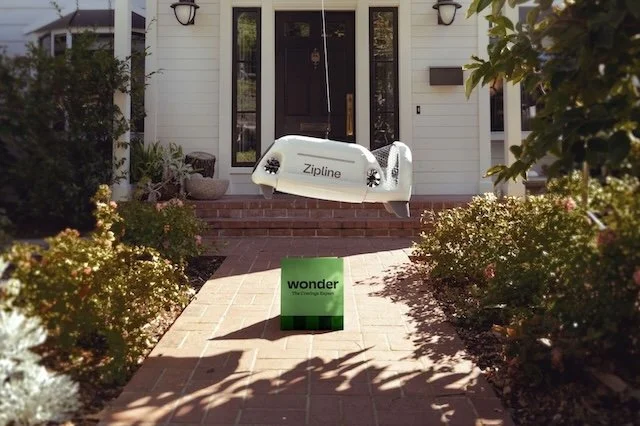
This is where the story intersects with the same forces reshaping retail broadly. Physical automation on the line, drone delivery pilots with Zipline in Texas and a partner in New Jersey, and a multi-brand marketplace running on one kitchen stack all point at vertical integration as the moat. Tony Florence, co-chief executive of NEA, said the ongoing investment "reflects our confidence in that model and in Marc's ability to continue executing at scale." For any operator weighing how much of their fulfillment to automate, Wonder is a live experiment in whether owning the whole stack, from kitchen robots to the app, beats renting pieces of it.
ChatGPT Ordering Puts Wonder in the Agentic Lane
Wonder has also wired ordering into ChatGPT, placing it squarely inside the agentic-commerce shift that every retailer is now navigating. When a consumer can ask an AI assistant to order dinner and have it fulfilled by an automated kitchen, the entire flow from intent to delivery runs with very little human involvement on either side. That is a preview of where high-frequency commerce is heading, and it is instructive that a food company reached the fully automated loop before most traditional retailers finished their first agentic pilot. The ownership of both the demand interface and the fulfillment engine is what makes it possible.
The Grubhub acquisition roughly two years ago gave Wonder a marketplace and a large base of ordering demand to feed into this machine. Combining an established delivery marketplace with proprietary kitchens and AI ordering is a different posture from the asset-light aggregators that dominated the last cycle. We would watch closely whether Wonder can convert Grubhub's demand into Infinite Kitchen throughput at margins the aggregators never reached. If it can, the model becomes a template that grocers and restaurant groups will feel pressure to answer, because agentic ordering rewards whoever controls fulfillment end to end.
An IPO Signal on a Consolidating Sector's Best Week
The timing is not incidental. Wonder unveiled this round the same week Uber agreed to buy Delivery Hero for 14.8 billion dollars, a reminder that food delivery is consolidating hard and that scale is the price of survival. Raising 650 million dollars with three bulge-bracket banks on the cover, then telling Fortune an IPO could come early next year, is a bid to enter public markets as an independent platform rather than an acquisition target. Lore is signaling that Wonder intends to be a consolidator, funded and public, while rivals sort themselves into buyers and sellers.
For leaders tracking where commerce capital is flowing, the pattern across the week is clear. Money is concentrating in platforms that own both demand and fulfillment, whether through a 14.8 billion dollar cross-border acquisition or a 650 million dollar robotics-and-marketplace raise. The independent point solutions that defined the last decade are being absorbed or outspent. If your roadmap assumes a fragmented delivery and fulfillment landscape with many interchangeable partners, this week is a data point arguing the opposite. Plan for a market with fewer, larger, more vertically integrated players who set the terms.
The Read for Commerce and CPG Leaders
We are not endorsing the 9 billion dollar valuation, and the risks are obvious: heavy capital expenditure, unproven robotics at national scale, and a delivery sector littered with expensive failures. The signal that matters is directional. Serious late-stage investors, including a public-markets name like ARK, are underwriting the thesis that robotics and AI can finally fix food delivery's cost structure. That thesis, if it holds, does not stay confined to prepared meals. The same logic, automate the labor-heavy middle and own the customer interface, applies to grocery, convenience, and any category where fulfillment cost dominates.
For a retail or CPG technology leader, the practical takeaway is to treat vertical automation as a real competitive variable in this cycle. Map which parts of your fulfillment are most exposed to labor cost, and ask honestly whether a robotics-forward entrant could undercut you on price in two or three years. Wonder is telling the market it intends to reach public scale on exactly that premise, and it just raised 650 million dollars to try. The prudent response is to run your own numbers on automation payback now, while it is still a planning exercise rather than a defensive scramble.