A Wearable Camera Bet on the Physical Workforce
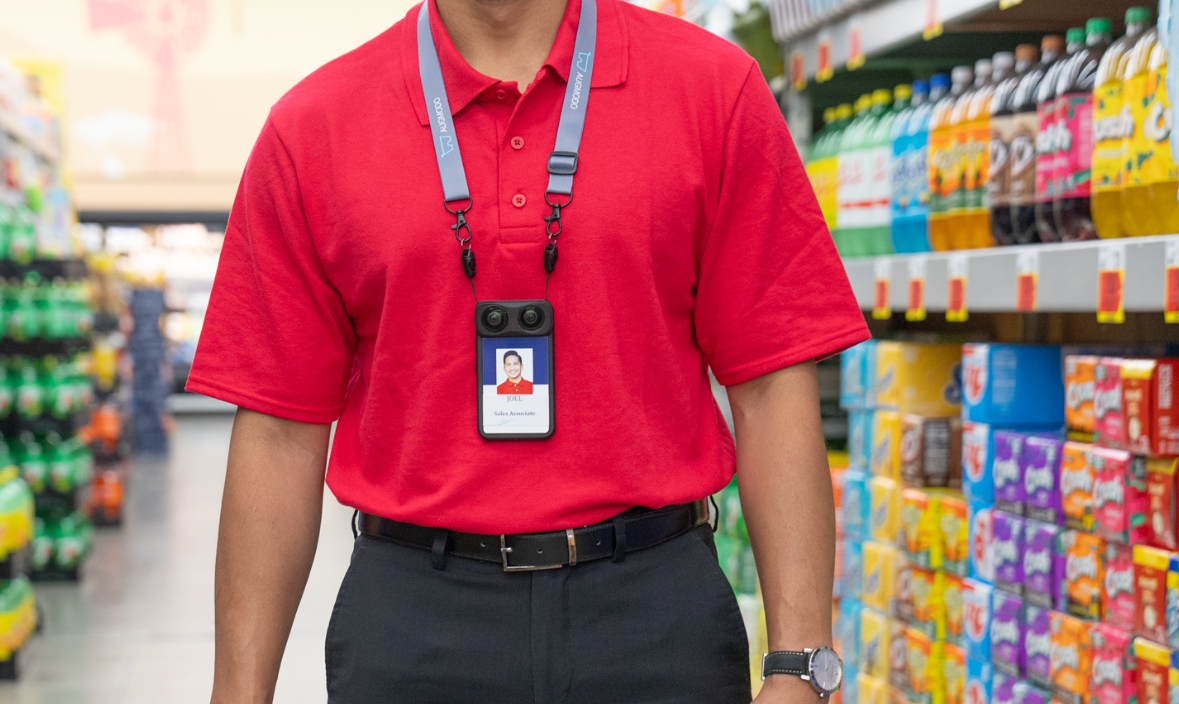
Augmodo, the Seattle spatial-AI startup that clips cameras onto store employees, raised 21 million dollars on July 13 at a 350 million dollar valuation. Existing investor TQ Ventures led, with Lerer Hippeau, Jefferson River Capital, Arena Holdings, Chemist Warehouse, and others joining. The round follows a 37.5 million dollar raise a year earlier and lands as revenue grew tenfold over the past year. The core product is a lightweight wearable the company calls a Smartbadge: dual cameras plus computer vision, 3D mapping, and spatial computing that log inventory continuously while an associate does normal work on the floor. No dedicated scanning shift required.
The output is what Augmodo calls a Realogram, a live digital twin of every shelf that updates as staff move through the aisles. The platform maps more than 186 million square feet of retail space each month today and expects to clear one billion square feet monthly by year-end as it adds 50 to 100 locations a month. Andrew Marks, managing partner at TQ Ventures, said the firm's "strong retail relationships combined with Augmodo's innovative tech results in a dynamic and strategic partnership." For retail operators who have watched shelf-intelligence pilots stall on hardware cost, the wearable form factor is the interesting variable here.
Why Continuous Shelf Data Beats the Weekly Audit
Out-of-stocks remain one of the most expensive unsolved problems in physical retail, and the reason is stale data. Most chains still learn about an empty shelf from a manual audit, a customer complaint, or a point-of-sale gap that shows up hours late. Augmodo's pitch is that associates already walk every aisle many times a day, so instrumenting the worker turns routine labor into a real-time inventory feed. That reframing sidesteps the two approaches that have underdelivered: fixed shelf cameras that are costly to install, and autonomous scanning robots that are slow and awkward in a busy store.
The economics are what make this worth a CTO's attention. A wearable badge amortizes across every hour an employee is already on shift, so the marginal cost of coverage falls as staffing rises. Compare that to shelf-scanning robots priced in the tens of thousands per unit, or camera rails that require store remodels. Augmodo has also folded in walkie-talkie functionality, a digital identity display, and an optional panic button, which gives operations a reason to deploy the device beyond inventory alone. When a single piece of hardware earns its keep across several workflows, the internal business case gets much easier to defend.
The Physical AI Thesis Is Bigger Than Grocery
Chief executive Ross Finman is explicit that retail is only the wedge into a much larger market. "Everyone's focused on the 20 percent of the workforce that's knowledge work, and we're focused on the 80 percent," he said, framing Augmodo as an AI system for the physical workforce. The company is already extending the same spatial models into warehouses, factories, hospitals, and automotive maintenance. Finman's line captures the ambition: "someone grabbing a wrench in an automotive factory isn't that different from someone grabbing a Cheerios box." The underlying claim is that a general model of physical space and human action transfers across industries.
We are skeptical of the universal-model story and bullish on the near-term retail case, and both can be true. Cross-industry transfer of spatial models is genuinely hard, and the deployment reality in a hospital differs sharply from a supermarket. For a retail CTO, though, the relevant question is narrower: does continuous, worker-generated shelf data cut out-of-stocks and labor hours enough to pay for itself this fiscal year. The tenfold revenue growth and the roster of retail-savvy backers suggest early customers are answering yes. That is the signal worth acting on, independent of whether the factory-floor ambition materializes.
The Build-Versus-Buy Question It Forces
Shelf intelligence has become a crowded category, and this raise sharpens a decision many retail technology leaders are deferring. The incumbents are pursuing heavy infrastructure: Instacart bought a computer-vision firm to scan shelves through its shopper fleet, and large chains have piloted robots and fixed cameras for years. Augmodo represents the light-touch alternative, software and a cheap wearable that rides on existing labor. If your stores already run tight on capital budget, the wearable model lets you start with a pilot in a handful of locations without ripping up store infrastructure or committing to a multi-year robotics lease.
The counterargument is real. Worker-worn cameras raise privacy, labor-relations, and data-governance questions that fixed sensors partly avoid, and any deployment needs clear policy on what is recorded, who sees it, and how associate consent is handled. There is also platform risk in betting a core operational feed on a 350 million dollar startup rather than a diversified vendor. Our guidance is to treat shelf data as strategic infrastructure and to run Augmodo as one input in a portfolio, with clean export formats and a fallback, so the intelligence survives whatever happens to any single supplier.
What to Do With This on Your Roadmap
The strategic takeaway is that real-time inventory truth is finally becoming affordable, and that unlocks capabilities downstream that many retailers have stubbed out for lack of clean data. Accurate, live shelf state is the missing input for automated replenishment, for buy-online-pickup-in-store promises you can actually keep, and for the agentic shopping flows that will soon query your catalog and expect accurate availability. A model that says an item is in stock when the shelf is empty destroys trust with both customers and AI agents. Fixing the sensing layer is a prerequisite for every one of those capabilities.
Practically, we would scope a bounded pilot now: pick a category with chronic out-of-stocks, instrument one store cluster, and measure lift against your current audit cadence over a quarter. Insist on raw data export and a clear privacy framework before signing, and negotiate for the multi-workflow features so the hardware justifies itself even if the inventory model underperforms. The broader point stands regardless of vendor choice. The retailers who make shelf reality machine-readable will be the ones whose automation and AI shopping bets actually work, and that race is already underway.