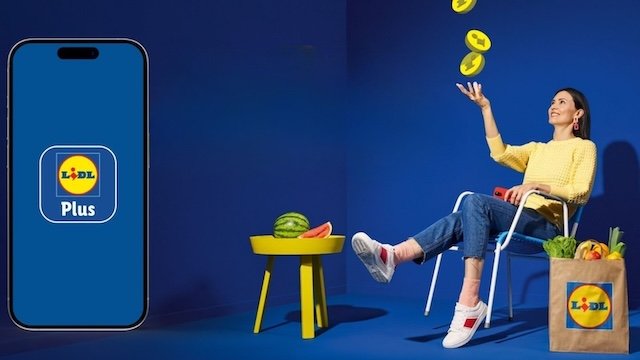
What Lidl switched on
Lidl turned on its Lidl Plus loyalty app for US shoppers on July 15, closing out an international rollout that now reaches more than 120 million users across 32 countries. The US was the last market on the map: Lidl Plus is now live everywhere the discounter operates stores. The app bundles instant savings, member-exclusive offers, and a points-based rewards layer into one place, and it is the same core platform Lidl runs in Europe rather than a bespoke American build. For a chain built on a tight assortment and rock-bottom prices, that is a notable shift in how it plans to know and reach its customers.
The headline number matters because of what sits underneath it. A hard discounter competes on cost, and every euro or dollar of overhead is scrutinized. Building and operating a loyalty app at this scale is not free, which tells you Lidl has decided the payoff justifies the spend. The prize is identified purchase data: who bought what, where, how often, and at what price sensitivity. Lidl historically ran on anonymized baskets and gut feel about its shopper. Lidl Plus converts that into a named, longitudinal record across 120 million people, and that record is the asset that compounds.
Why a discounter builds a data platform now
The timing is not accidental. Grocery is heading into an era where AI agents help plan the weekly shop, retail media budgets flow to whoever owns the customer relationship, and personalization is table stakes rather than a differentiator. None of that works without first-party data tied to a real identity. Third-party cookies are gone, and signal from open advertising markets keeps degrading. A loyalty app is the cleanest way left to collect consented, high-quality purchase data at scale, and Lidl now has one running in every country it serves. That is a durable moat that a price war alone cannot buy.
Owning the data also changes Lidl's negotiating position with the consumer packaged goods brands on its shelves. A retailer that can prove exactly which shoppers bought a product, and measure the lift from a promotion, can sell that measurement back to suppliers as retail media. Kroger and Walmart have built billion-dollar, high-margin media businesses on precisely this foundation. Lidl entering the US with a mature loyalty platform gives it the ingredient it needs to eventually play that game on American soil, even if it monetizes cautiously at first while it builds density and trust with its new shoppers.
The engineering problem behind the marketing win
Launching one platform across continents and time zones is a systems challenge before it is a campaign. Linus Himzmann, Global SVP and board member at Lidl International, framed it plainly: "Launching a platform at global scale across continents and time zones requires more than excellent tech and project management." That is an honest admission that the hard part is coordination: shared data models, localized offers, regional privacy regimes, and a release process that does not break Germany when it ships a feature for the US. Technology leaders in multi-market retail will recognize the shape of that work immediately.
The advantage of running a single platform rather than a federation of local apps is that improvements compound. A pricing or personalization model trained on European baskets can inform the US launch from day one, and a self-scanning feature proven in one market can be rolled to the next without a rebuild. Lidl is already extending Lidl & Go, a self-scan capability inside the app that lets shoppers scan products as they browse, track spend in real time, and check out faster. Each such feature deepens the data Lidl collects and raises the switching cost for the shopper who has learned to rely on it.
What US shoppers actually get
For the American customer, the immediate pitch is savings: instant discounts stacked with points-based rewards and offers tuned to what they buy. That is a familiar loyalty formula, and Lidl is not reinventing it for the US. The interesting question is how quickly Lidl layers on the personalization and convenience features it has matured elsewhere, and whether US shoppers, who already carry Kroger, Target, and Walmart loyalty credentials, adopt yet another app. Adoption is the variable that turns a launch announcement into a data asset, and Lidl will be watching enrollment and repeat-scan rates far more closely than install counts.
The competitive context is unforgiving. US grocery loyalty is crowded, and the incumbents have years of head start on data and media monetization. Lidl's counter is that its app is already global, already at scale, and already integrated with the operating model that makes its prices low. If Lidl can tie savings tightly to the app so that shopping without it feels like leaving money on the table, it can drive the enrollment it needs. That is the same lever that made Lidl Plus stick across Europe, and it is the one worth watching in the US over the next few quarters.
The decision this puts on your desk
For technology and operations leaders in retail, Lidl's move is a reminder that loyalty is an identity and data infrastructure decision wearing a marketing costume. The question is not whether to run promotions. It is whether you own a consented, first-party record of your customer that is clean enough to power personalization, retail media, and the agentic shopping flows arriving now. If your loyalty data lives in a silo that marketing cannot join to transactions, or a system that cannot serve a real-time offer, you have a promotions program and not a platform. That gap becomes expensive precisely when agents start comparing baskets across banners.
The build-versus-buy call is real here. Standing up a global loyalty and data platform is a multi-year commitment in engineering, privacy governance, and change management, and Lidl's own executives concede the coordination cost. The alternative is renting pieces from vendors and accepting less control over the data model that will define your customer relationship for the next decade. Whichever path you choose, decide it deliberately and resource it like the strategic asset it is. The retailers who treat first-party data as a byproduct will find themselves buying back their own customer insight from someone who captured it first.