What CNCF just blessed
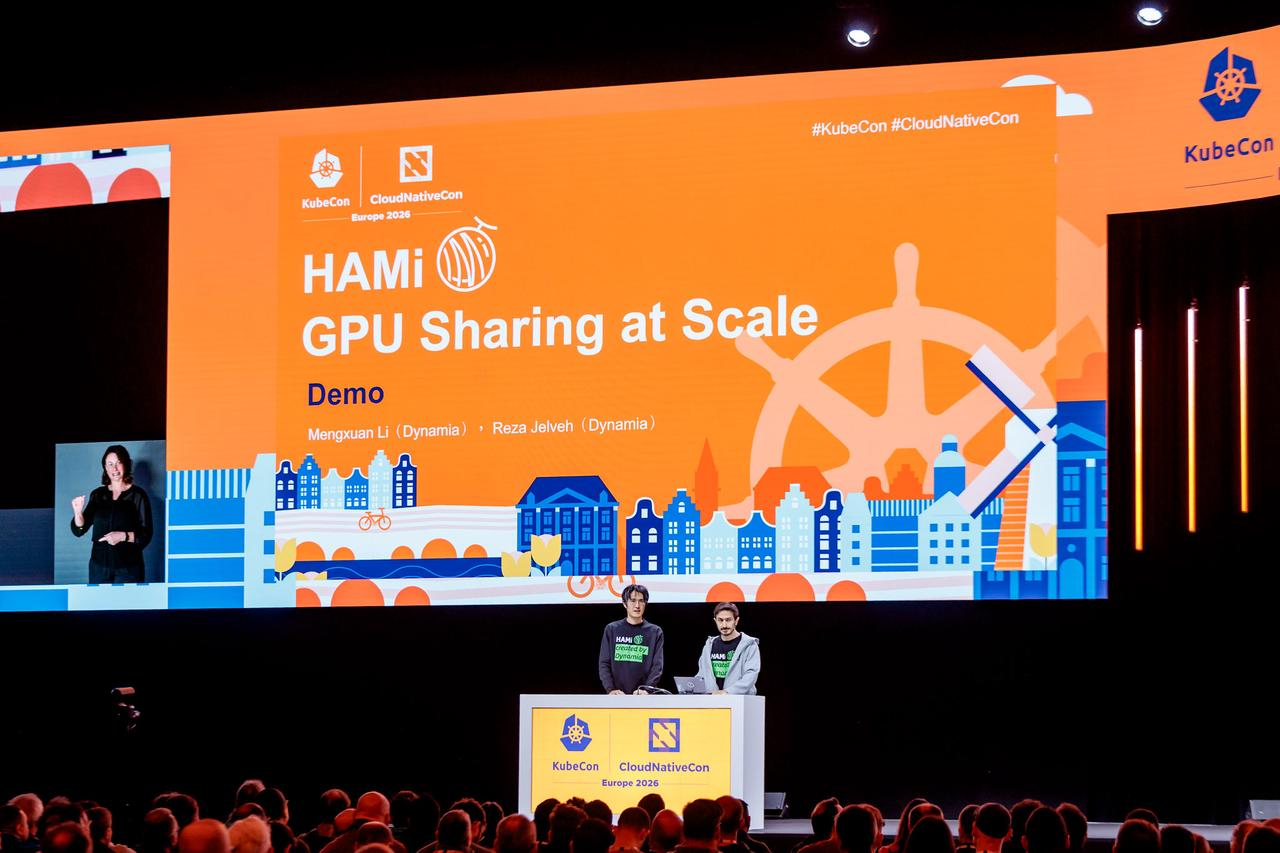
The Cloud Native Computing Foundation announced that HAMi, short for Heterogeneous AI Computing Middleware, has been accepted as a CNCF incubating project after the Technical Oversight Committee passed the vote unanimously. HAMi is open-source virtualization and scheduling middleware for Kubernetes that brings sharing, isolation, and scheduling of heterogeneous accelerators to AI workloads. Incubation sits a step below graduation, yet it is the tier where CNCF signals that a project has real production adoption and a credible community, the point at which cautious enterprises usually feel comfortable putting it on a roadmap.
The maintainers framed the milestone around reach rather than novelty. "HAMi has grown into a recognized CNCF incubating project with an international community," said maintainer Mengxuan Li. Karena Angell, the CNCF TOC sponsor, was more specific about the value. "HAMi solves a real problem: scheduling and sharing accelerator resources on Kubernetes in a way that works across vendors," she said. For platform leaders, the cross-vendor claim is the interesting part, because the alternative is a separate operational model for every hardware line you buy.
The fragmentation problem it solves
The problem HAMi targets is one every AI infrastructure team hits. Expensive accelerators sit fragmented and underused because whole devices get allocated to jobs that only need a fraction of one. A model-serving pod that needs a few gigabytes of GPU memory can end up holding an entire card, while queued jobs wait for hardware that is technically busy but barely utilized. Multiply that across a fleet and the effective utilization of the most expensive line item in the budget drops well below what the finance team assumed when they approved the purchase.
On top of that waste sits an operational tax: every hardware vendor exposes a different model for partitioning and scheduling its accelerators. Teams running a mix of GPUs and other accelerators end up maintaining several incompatible workflows to do the same conceptual thing. HAMi's proposition is a single scheduling and isolation layer that spans that heterogeneity. For a CTO staring at accelerator costs that dominate the AI budget, utilization is not a tuning detail. It is the difference between buying more hardware and getting more out of what you already own.
How it slices a GPU
Technically, HAMi lets platform teams carve a physical GPU, or an NPU, DCU, MLU, or other accelerator, into units defined by memory, core, or device count. Workloads sharing a device get hard runtime isolation between them, so one job cannot starve or crash another sharing the same card. Scheduling supports binpack, spread, and topology-aware policies, letting operators pack workloads tightly for efficiency or spread them for resilience depending on the goal. The critical design constraint is that none of this requires touching application code or existing Kubernetes resource manifests.
That zero-disruption model is what makes adoption tractable at scale. Teams do not rewrite their workloads or retrain developers on a new resource API. They install the middleware and existing pods gain sharing and isolation. Maintainer Xiao Zhang described the breadth the project has reached. "HAMi now supports dozens of Heterogeneous GPU and has grown into a global community with hundreds of contributors," he said. For platform teams, the appeal is obvious: an infrastructure capability that raises utilization without asking every application owner to change how they ship.
Who is running it in production
The production evidence is what separates HAMi from a promising experiment. DaoCloud has deployed it across more than 10,000 GPUs in over 10 data centers in mainland China and Hong Kong, a scale at which scheduling and isolation bugs would surface quickly. China Merchants Bank uses the project to manage diverse accelerator resources, a reference that carries weight because regulated financial institutions do not adopt infrastructure casually. CNCF has published five independent case studies documenting production use across education, cloud platforms, and enterprise technology.
The community numbers back the adoption story. HAMi reports 2,687 contributors across GitHub, more than 550 contributing organizations, and 43 percent year-over-year contributor growth, with maintainers drawn from dynamia.ai, NVIDIA, and independent developers. The project has shipped 16 releases and stands at a stable v2.9.0. Contributor counts are an imperfect proxy for health, but a broad and growing base of organizations, rather than a single corporate sponsor, is exactly what CNCF incubation is meant to certify. That diversity is what reduces the risk of adopting a project that could stall if one backer walks away.
Why vendor-neutral matters right now
The timing is not incidental. Accelerator supply is tight, prices are high, and most organizations are running a mix of hardware because they take whatever they can procure. That mix is precisely where single-vendor scheduling tools fall short, since each is optimized for its own silicon. A vendor-neutral layer that treats a heterogeneous fleet as one schedulable pool is worth more in a constrained market than it would be in a world of abundant, uniform hardware. Scarcity raises the value of utilization, and utilization is what HAMi sells.
There is also a governance angle that maps to the build-versus-buy decision. Running an open-source, CNCF-governed layer keeps the scheduling and isolation policy under your control rather than embedded in a proprietary appliance or a cloud provider's managed service. For teams wary of deepening lock-in to any single hardware or cloud vendor while accelerators dominate their spend, a community-governed middleware is a hedge. It keeps the option open to change hardware or venue later without rewriting how workloads are scheduled and isolated.
What it means for your infra roadmap
If accelerators are a meaningful share of your infrastructure budget, HAMi's incubation is a prompt to measure your real utilization before buying more hardware. Most teams have never quantified how much of their GPU fleet sits idle inside jobs that hold a whole card for a fraction of its capacity. That number is usually uncomfortable, and it is the number that justifies a sharing layer. Incubation status lowers the adoption risk enough that a proof of concept on a non-critical cluster is a reasonable next step rather than a bet.
The strategic read is that GPU sharing is graduating from a research curiosity into standard platform-team responsibility, the same way networking and storage abstraction did before it. As AI workloads move from pilots into production, the teams that treat accelerator utilization as a first-class platform capability will run more work on the same hardware than the teams that keep allocating whole devices per job. In a market where the hardware is the constraint, that efficiency compounds directly into capacity and cost. This is infrastructure worth understanding before the next accelerator purchase order goes out.