What actually shipped
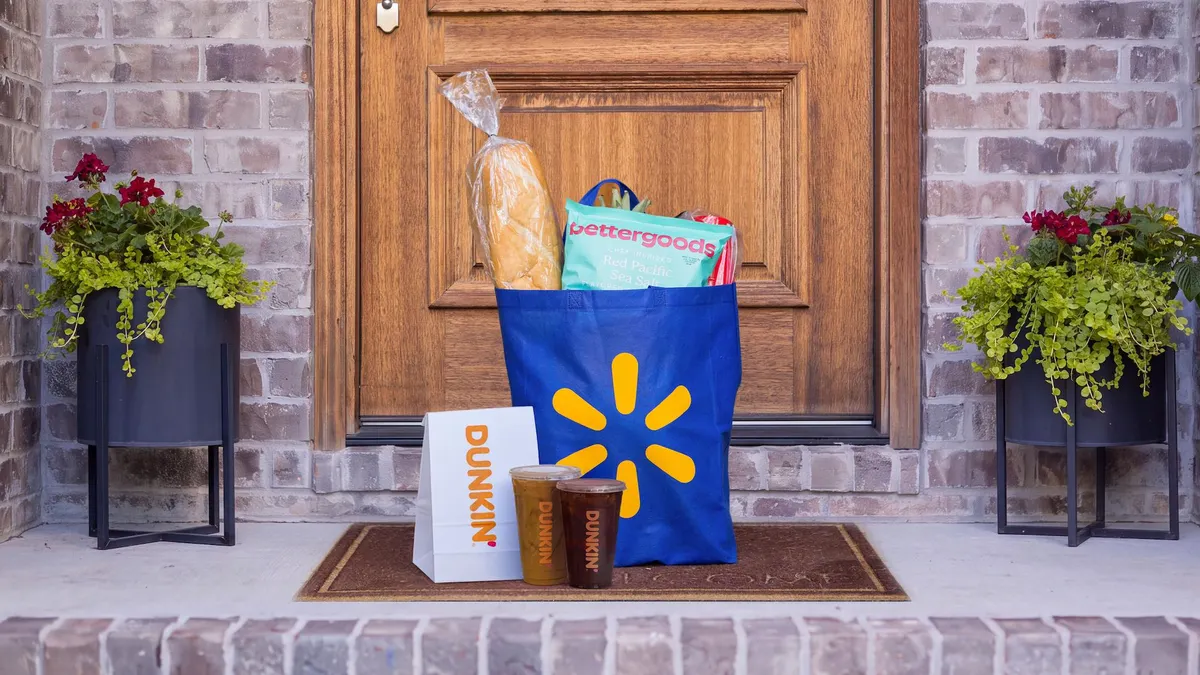
Walmart announced on September 3 that customers can now order Dunkin' food and beverages directly through the Walmart app and website, with the option to combine that order with a regular grocery or general merchandise purchase in the same checkout flow. The service is live through roughly 150 in-store Dunkin' locations at launch, with Walmart signaling plans to expand across most of its roughly 10,000 US locations over time. Orders show up under a dedicated restaurants tab inside the Walmart app, with eligibility gated by delivery address, and the integration runs through a partnership with Inspire Brands, Dunkin's parent company.
Greg Cathey, Walmart's senior vice president of e-commerce fulfillment transformation, framed the move as core strategy rather than a side project: "The future of retail is about meeting customers wherever they are and simplifying their lives." That is a notably expansive claim for what looks on the surface like a minor delivery feature, and it is worth taking at face value, because the pattern behind it has been building for months and points toward a genuinely different role for Walmart's physical footprint.
This is the second integration, not the first
Dunkin' is not Walmart's first restaurant delivery partner. The company launched a similar integration with Subway in June 2026, its first restaurant tenant to get full express delivery treatment inside the core Walmart app. Subway happens to be Walmart's largest in-store restaurant tenant by location count, which made it a logical first test case, but the fact that Walmart has now repeated the pattern with a second, larger national brand within three months signals this is becoming a standard onboarding motion rather than a one-off pilot.
That repeatability matters more than either individual partnership. A retailer that integrates one restaurant brand into its app has run an experiment. A retailer that has now built the technical and operational playbook to onboard a second national chain in a matter of months has built a product capability, and product capabilities tend to keep expanding to the next available partner. Watch for additional quick-service and fast-casual brands with in-store or adjacent-lot presence at Walmart to get the same treatment before the holiday shopping season peaks.
The real strategy is store-as-fulfillment-node
Walmart disclosed that store-fulfilled delivery grew approximately 43 percent in the second quarter of 2026, with about 37 percent of those orders arriving customers in under three hours. Those numbers describe a fulfillment network that is scaling fast and increasingly treating individual stores as micro-distribution centers rather than pure retail floor space. Restaurant delivery integrations fit neatly into that same infrastructure: a Dunkin' or Subway order picked up by the same driver network already moving grocery orders out of the same building adds marginal delivery volume without requiring Walmart to build new logistics capacity.
This is the more important strategic point for other retailers to absorb. Walmart is not primarily trying to become a restaurant delivery company. It is trying to maximize the utilization of a fulfillment network it has already built, and restaurant orders are simply an available, low-marginal-cost category to route through that network alongside groceries. Any retailer sitting on excess delivery capacity, whether from a store network, dark stores, or a logistics partnership, should be asking the same question Walmart clearly has: what adjacent order categories can ride the same last-mile infrastructure without requiring new capital investment.
Who controls the customer relationship in this model
There is a meaningful platform-ownership question embedded in this strategy that deserves more scrutiny than it has gotten. When a Dunkin' order flows through the Walmart app rather than the Dunkin' app, Walmart owns the checkout experience, the delivery relationship, and increasingly the customer data associated with that transaction, even though the product and the brand equity belong to Inspire Brands. That is a favorable trade for Walmart and a genuinely risky one for its restaurant partners, who are effectively handing over their digital customer relationship in exchange for physical distribution and delivery infrastructure they would otherwise have to build themselves.
Any brand considering a similar in-store or app-integration partnership with a large retailer should negotiate data access and customer relationship terms explicitly rather than treating the arrangement as a pure distribution deal. Subway and Dunkin' gain real fulfillment reach through this partnership, but they are also training their most convenience-driven customers to open the Walmart app first, a habit that compounds against the restaurant brand's own app engagement and first-party data every quarter it continues.
The template other retailers should be evaluating now
The mechanics behind this Walmart rollout are not exotic. Any retailer with existing in-store tenants, whether that is a pharmacy chain with an in-store coffee counter, a mall operator with adjacent quick-service restaurants, or a grocery chain with a deli and prepared foods counter, has the raw ingredients to build the same order-aggregation layer: a checkout API that can route mixed-category orders, a delivery network already sized for the retailer's core business, and a tenant partner with a brand worth featuring inside the retailer's own app.
The execution risk sits mostly in technology integration rather than strategy. Combining a restaurant's menu and inventory system with a retailer's checkout and fulfillment stack in a way that feels native rather than bolted-on is a real engineering lift, and it is the reason most retailers with similar tenant relationships have not yet done what Walmart just repeated for the second time this year. For CTOs evaluating whether this is worth building, the Walmart precedent suggests the payoff, incremental delivery volume through existing infrastructure plus a stickier reason to open the retailer's own app daily, is large enough to justify the integration cost once you have more than one tenant partner worth onboarding.