The scope is the story, not the software category
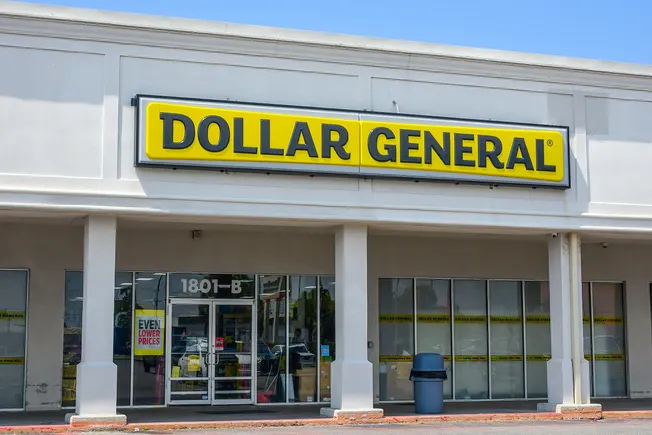
Dollar General and Relex Solutions announced a partnership covering the retailer's full North American footprint: 21,000 stores and 34 distribution centers running on one forecasting and replenishment platform from day one. That is not a regional pilot or a single-category test rolled out cautiously before wider adoption. The Relex platform handles store replenishment, ordering schedules, lead times, and supplier coordination, and it folds demand forecasting directly into the planning layer so every location, from a rural single-register store to a full-scale regional distribution center, works from the same underlying demand inputs.
Forecasting and replenishment software has existed in retail for decades, and plenty of large chains already run some version of it. Doing it at Dollar General's scale, across a chain built on thin margins and high SKU velocity in small-format stores, is a genuinely harder engineering and operations problem than the enterprise-grocery case most forecasting vendors optimize their platforms around. A discount chain running 21,000 locations off a single data layer becomes the kind of reference account that changes how the rest of the value retail segment evaluates its own systems and vendor shortlists going forward.
What was broken before this
Jeff Vaughan, Dollar General's senior vice president of global inventory management, described the problem the platform solves in plain operational terms: bringing forecasting, replenishment, and allocation planning into a single environment gives the company's teams greater visibility across the network. Read between the lines and that is a fairly direct admission that these functions previously ran on separate systems or separate sets of assumptions, which is exactly the kind of fragmentation that produces stockouts in one region and overstock in another during the very same week, without anyone noticing until the quarterly numbers come in.
That fragmentation problem shows up across large-format and small-format retail alike, and it rarely gets solved simply by adding more headcount to reconcile conflicting spreadsheets or regional reports by hand. It gets solved by forcing every distribution center and every store onto identical demand data, which is the specific claim Vaughan is making about what changed. For a chain operating on Dollar General's margin structure, the cost of one bad replenishment call compounds fast across 21,000 locations, turning a small forecasting error into a material hit to quarterly performance.
Vasos frames this as the first move, not the whole plan
CEO Todd Vasos did not describe this deployment as a narrow point solution bought to fix one department's reporting problem. He said the company is building agentic operating systems for the enterprise, focused on reshaping and optimizing workflows to improve productivity throughout the organization. That is a deliberately broader claim than a forecasting upgrade, and it should change how competing retailers read this announcement. Vasos is positioning replenishment as the first workflow to get the agentic treatment at Dollar General, with an implicit signal that more functions will follow on the same underlying platform.
For a CTO watching a direct competitor make that kind of statement publicly, the useful question is not whether Dollar General succeeds with forecasting on its own terms. It is which workflow gets the agentic layer next, because the vendor and integration choices made now will constrain what can bolt on later without another costly replatforming project. A single-platform approach to forecasting is also, implicitly, a bet on that platform's ability to extend cleanly into adjacent workflows rather than requiring a second multi-year systems overhaul in three years.
Relex is becoming the default answer for value and grocery chains
Dollar General is not Relex's only recent win in this segment of the market. Lowe's, United Natural Foods, and Guitar Center have all adopted the same platform to reduce stockouts and overstock and to improve supply chain visibility across their own networks. That pattern, several large but margin-sensitive retailers converging independently on one forecasting vendor within roughly the same window, is worth more to a CTO's due diligence process than any single case study a vendor's sales team hands over during a pitch.
It suggests the market has largely settled the forecasting and replenishment question for mid-market and value retail, at least for the current generation of platforms, and that remaining differentiation will come from how well a retailer integrates that layer with its own store operations and supplier data. Building a competing forecasting engine internally, at this point, means competing against a vendor with several large reference deployments already validating the approach. That is a meaningful build-versus-buy signal for any retail IT leader still running a homegrown demand planning system past its useful life.
The cost pressure context nobody is hiding
Dollar General has spent the past two years under public pressure to cut costs and defend margins against Walmart, Aldi, and the broader value retail squeeze that has compressed discount retail economics across the board. Vasos's own comments tie the AI deployment directly to that pressure, describing the goal as driving efficiencies to help mitigate cost pressures while improving network-wide visibility for planning teams. This reads as a margin-defense move framed in AI language, and that framing is considerably more credible to a skeptical CFO than a broader transformation narrative detached from near-term financial results.
That distinction matters when a retail CTO is building the business case for a similar investment inside their own organization. Boards and CFOs at PE-backed retailers respond to cost-of-goods and inventory-carrying-cost arguments far more readily than to open-ended AI-adoption arguments pitched as strategic necessity. Dollar General's own framing, cost pressure mitigation first and agentic ambition second, is the more useful template to borrow when pitching a comparable forecasting investment to a finance-driven board next quarter.
What this means for the next budget cycle
The practical takeaway is that forecasting and replenishment consolidation is no longer an experimental category worth watching from the sidelines. It now has vendor consensus, multiple multi-chain reference accounts, and a sitting CEO willing to publicly tie it to enterprise-wide agentic ambitions rather than treat it as a quiet back-office fix. Retail CTOs still running fragmented, homegrown, or regionally inconsistent forecasting tools should treat this announcement as the moment that gap becomes visible to their own boards and audit committees.
The harder decision is not whether to modernize forecasting at all. It is whether to pick a platform built to extend into adjacent agentic workflows, the way Vasos is signaling Dollar General intends to over the next several years, or a narrower point solution that solves today's problem while quietly creating tomorrow's integration debt. That is the question worth raising before the next planning cycle locks a vendor relationship in for another five years of the technology roadmap.