The Reversal Nobody Expected This Cleanly
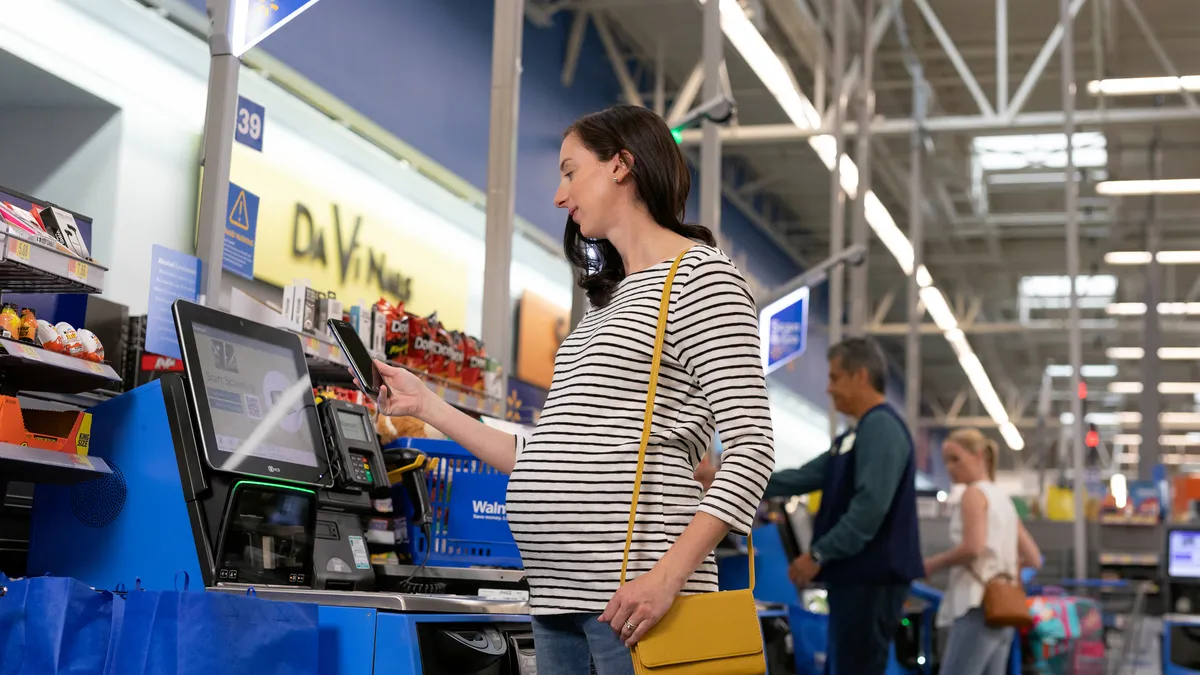
Walmart started accepting tap-to-pay digital wallets, including Apple Pay and Google Pay, at select stores and Sam's Club locations on August 25. The company plans to extend the capability to all of its roughly 4,600 U.S. stores by the end of 2026, with gas stations following in 2027. For a company that spent more than a decade actively resisting exactly this kind of transaction, the announcement closes one of retail technology's longest-running standoffs.
Walmart's history with mobile wallets is the reason this story matters well beyond a routine payments update. Walmart was a founding member of the Merchant Customer Exchange, the retailer consortium that built CurrentC as a direct alternative to Apple Pay, explicitly to keep transaction data and interchange economics inside merchant hands rather than card networks. CurrentC collapsed under its own complexity years ago. Walmart's continued refusal to accept Apple Pay after that collapse was a deliberate strategic choice sustained for years, which is exactly what makes this week's reversal notable rather than routine.
Why Walmart Fought Tap-to-Pay for So Long
The economics were always about interchange fees, the percentage card networks and issuing banks charge merchants on every transaction. When a customer taps an iPhone loaded with a bank-issued card, Walmart pays the same interchange rate it would on a swiped card from that same bank. Walmart's own Walmart Pay app, by contrast, could route transactions through lower-cost rails when linked directly to a customer's bank account, sidestepping card network fees entirely on a meaningful share of volume.
That fee gap is exactly why Walmart spent years pushing Walmart Pay's QR code checkout instead of simply accepting the tap-to-pay standard every other major retailer had already adopted. Holding out kept a sliver of interchange savings on the transactions Walmart could route through its own app, at the cost of friction for the much larger share of shoppers who wanted to tap and go the way they already did at Target, Costco, and nearly every other national chain. Store associates fielded the complaints in the meantime, watching customers fumble with an unfamiliar QR scanner while a line built up behind them, a customer experience cost that never showed up cleanly in the interchange spreadsheet driving the decision.
What Changed the Calculus
Grocery Dive's analysis of the shift put it plainly: Walmart held out for so long that it eventually had no other option. Consumer habits around tap-to-pay have moved past the point where a retailer of Walmart's scale can keep asking shoppers to open a separate app and scan a QR code. Every additional second of friction at checkout is a measurable drag on conversion and a visible contrast with competitors who removed that friction years ago.
The interchange math has also shifted. As tap-to-pay volume grew across the rest of retail, the share of transactions Walmart Pay could realistically capture shrank, while the reputational and operational cost of standing apart kept growing. A holdout strategy only works while the alternative stays inconvenient for customers. Once digital wallets became the default way an entire generation of shoppers pays for everything else, Walmart's own app stopped being a meaningful defense of that interchange advantage, and the marginal savings no longer justified the training burden on store associates or the friction baked into every transaction.
OnePay's Quiet Role in the Timing
The announcement did not happen in isolation. OnePay, the consumer fintech Walmart backs alongside venture firm Ribbit Capital, expanded its own Apple Pay support on the same day, and that timing was almost certainly coordinated rather than coincidental. OnePay issues a Walmart-linked digital card, giving the retailer a financial product it fully controls even as it opens the front door to competing wallets from Apple and Google. That pairing lets Walmart capture the convenience of tap-to-pay for the shopper while still steering as much volume as possible toward a card Walmart has a direct financial stake in, rather than ceding the entire relationship to outside banks and card networks.
That is the more sophisticated read on this move. Walmart is separating two problems it previously tried to solve with one tool, keeping its payments ambitions intact while giving up the losing half of the fight. Checkout friction gets solved by accepting every major wallet. Long-term payments economics get solved by building OnePay into a card shoppers choose to load into those same wallets, capturing the interchange advantage Walmart Pay could never scale on its own. The two efforts now run in parallel instead of competing for the same engineering roadmap, which is arguably what should have happened years earlier.
The Gas Station Gap Is the Tell
Tap-to-pay will not reach Walmart's gas stations until 2027, a full delay behind the in-store rollout. Fuel transactions are lower margin and higher volume than general merchandise, which means the interchange fee sensitivity that drove Walmart's holdout in the first place is sharpest exactly there. The staggered timeline shows a company still managing the fee tradeoff carefully rather than abandoning it, even as it makes peace with tap-to-pay everywhere else.
For enterprise retail technology leaders, the gas station delay is the most useful detail in the whole announcement. It confirms that Walmart's decision was a cost-benefit recalculation carried out store format by store format, weighing fuel margins against checkout convenience separately from general merchandise. Any retailer weighing its own payments roadmap should expect the same kind of segmented rollout, prioritizing the highest-friction, highest-margin formats first and leaving the fee-sensitive tail for last. The lesson for CIOs planning multi-year point-of-sale upgrades is to build the fee analysis into the sequencing decision from day one, rather than treating tap-to-pay as a single all-or-nothing switch to flip.