The Conference Talk Every Grocery CMO Should Have Attended
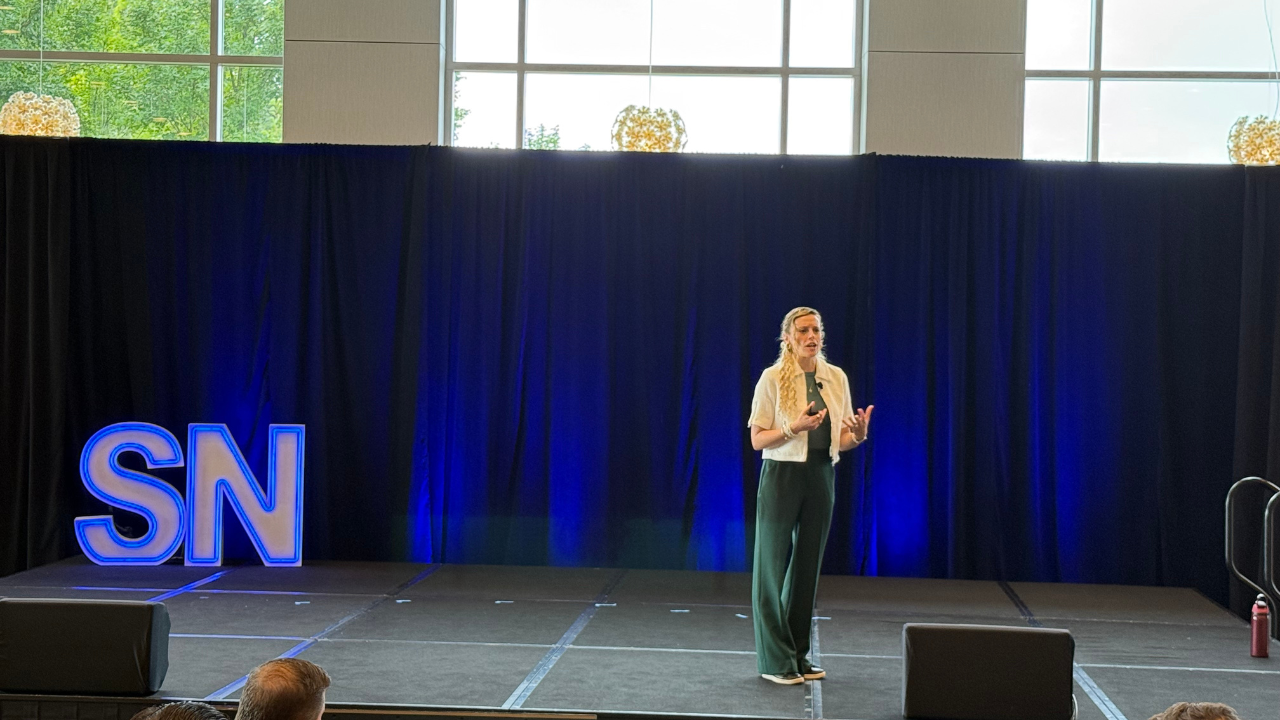
At the final day of the GroceryNEXT conference in Lombard, Illinois, the clearest warning to grocery and CPG executives had nothing to do with tariffs, private label, or store remodels. It was about what happens when an AI agent, not a shopper scrolling a search results page, decides which product gets bought. Lauren Livak Gilbert framed the shift in stark terms: this is a fundamental change in terms of the options the consumer receives and the choice of which retailer they will purchase that product from.
That framing matters because it moves the competitive battleground upstream of the purchase decision entirely. When a human shops Amazon or a grocer's app, they see a results page and make their own comparison. When an AI agent shops on a customer's behalf, the agent has already made most of that comparison before the customer sees anything, collapsing what used to be a browsing decision into a recommendation the agent hands over as close to final. Livak Gilbert's audience of grocery technology and marketing leaders was, by most accounts, still thinking about this primarily as a search ranking problem, when the underlying shift is closer to losing a seat at the table before the negotiation even starts.
Why Retailers, Not Just Brands, Have Skin in This Game
It is tempting to read this as a CPG marketing problem, since the soda and snack examples on stage point at individual brands losing shelf visibility. But retailers carry just as much exposure, because the same agent behavior determines which retailer's storefront gets used to fulfill the purchase in the first place. An agent that finds a better-described, more complete product listing on a competitor's site has no reason to route the transaction back to a retailer whose own product pages are thinner, regardless of how strong that retailer's loyalty program or delivery speed might otherwise be.
That dual exposure, brand visibility and retailer routing both riding on the same underlying content quality, is what makes this a genuinely cross-functional problem rather than a marketing team's isolated headache. Retail technology leaders who assume this is someone else's budget line are likely to discover otherwise once agent-driven purchases make up a measurable share of category volume.
The Numbers Behind the Squeeze
The data presented puts a concrete shape on the problem. AI agents typically consult around 33 different information sources before landing on a recommendation, drawing on product pages, reviews, nutritional data, and retailer feeds simultaneously rather than ranking a single retailer's catalog. That is a fundamentally different discovery mechanism than a search index crawling one site at a time, and it means a product's visibility now depends on how well it is described across a scattered web of sources the brand does not fully control.
The output side of that process is even more unforgiving. An Amazon search results page typically shows a shopper 10 to 60 product options to compare. ChatGPT, by contrast, tends to surface about 5 options for the same kind of query, and a single-answer agent experience narrows that down to exactly one product. In a category like soda, which contains roughly 100,000 distinct products competing for shelf space and search visibility, the gap between appearing in one of 60 options and one of five, or one of exactly one, is the difference between a sale and total invisibility.
Why Most Product Pages Were Never Built for This
Product description pages across grocery and CPG were built for two audiences: a human scanning a webpage, and a search engine crawling for keyword matches. Neither of those design goals produces the kind of comprehensive, structured, machine-readable content an AI agent needs to confidently recommend a product over its 99,999 category competitors. Missing ingredient detail, inconsistent sizing information, or thin nutritional data does not just hurt a page's search ranking anymore, it can remove a product from an agent's consideration set entirely before a human ever sees it.
That is a much higher bar than traditional search engine optimization ever demanded, because an agent is trying to answer a specific question on a customer's behalf with enough confidence to make a recommendation and stand behind it. A product page that is technically indexed but sparse on the details an agent needs to compare options confidently will simply get passed over in favor of a competitor's page that answers those questions more completely.
The New Optimization Discipline
What Livak Gilbert and other GroceryNEXT speakers are effectively describing is a new discipline sitting somewhere between SEO and product information management, sometimes called answer engine optimization. It treats every product description page as an input to a model's reasoning process rather than a page a human will read start to finish. That means richer structured data, more complete attribute fields, and content written to directly answer the comparison questions an agent is likely to ask on a shopper's behalf.
Retailers and CPG brands that have historically treated product content as a compliance checkbox, filled in once at launch and rarely revisited, are the most exposed under this new model. Brands that already invest heavily in complete, structured product data for retail media and marketplace listings have a head start, since much of that same structured content is exactly what an AI agent needs to evaluate and recommend a product with confidence.
What This Means for Retail and CPG Technology Roadmaps
The practical takeaway for retail and CPG technology leaders is that product information management just became a customer acquisition function rather than a back-office data quality task. Budget and engineering attention that used to flow toward search engine optimization and on-site merchandising now needs a parallel track focused specifically on how AI agents parse, compare, and recommend a product across the roughly 33 sources they consult before answering a shopper's question.
The categories most exposed are exactly the ones with the highest product counts and the lowest differentiation, soda being the example on stage but paper towels, snack bars, and private label staples facing the identical math. Retailers and brands that treat this as a one-time content cleanup rather than an ongoing content discipline will find themselves quietly filtered out of agent recommendations long before their sales data shows any obvious sign of a problem.