From pilot to five-state network
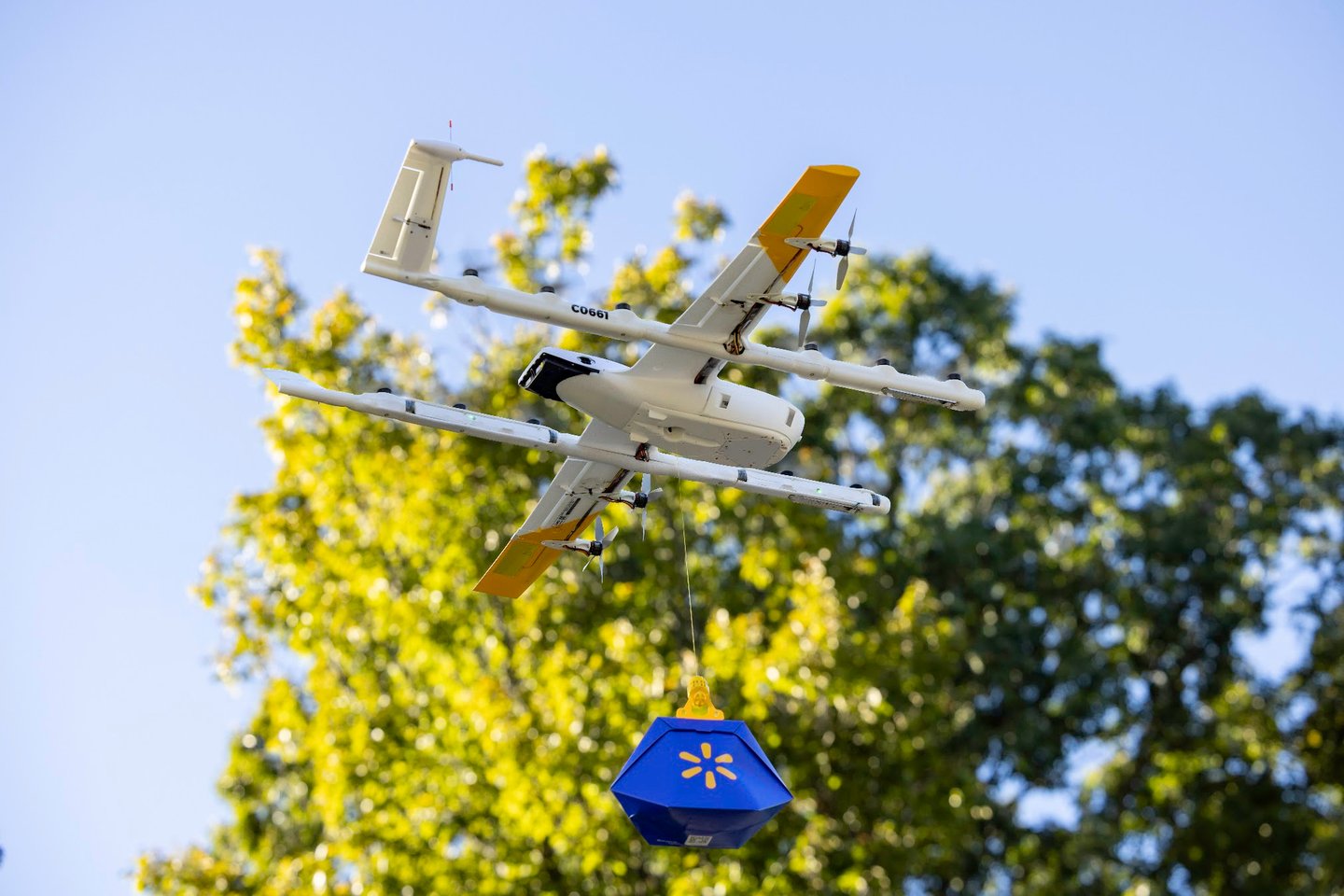
Walmart confirmed on October 21, 2026 that its 30-minute drone delivery service, operated with Alphabet's Wing, is now live in the Charlotte, North Carolina metro area. That addition makes Walmart the first retailer to scale drone delivery across five states at once: Arkansas, Florida, Georgia, North Carolina and Texas. It is worth remembering how recently this was a small experiment. The Walmart-Wing partnership began in Dallas-Fort Worth in 2023, and Walmart only added Orlando and Greater Houston earlier in 2026, which means more than half of its current geographic footprint has been built out in the last year alone.
That acceleration curve matters more than any single market launch. A lot of retail technology pilots stay pilots for years because the unit economics never quite clear the bar for expansion, or because the operational complexity of adding a new market outweighs the marketing value of being first. Walmart's pace here suggests the opposite: that each new metro is getting cheaper and faster to add, which is exactly the signal that separates a real operating capability from a demonstration project kept alive for press coverage.
The 2027 target and what it implies about unit economics
Walmart says it aims to have more than 270 stores offering drone delivery by 2027, which the company frames as reaching over 10 percent of the U.S. population. Hitting that number requires roughly tripling or quadrupling the current store count enrolled in the program within about a year, based on the pace of additions so far. That is an aggressive target for any fulfillment technology, let alone one that still depends on favorable weather, airspace coordination and per-market regulatory approval.
Setting a public numeric target this specific is itself a signal, since retailers rarely publish store-count goals for a delivery mode unless the underlying cost per delivery has already crossed from experimental to defensible at scale. Whether that threshold has fully been crossed, or whether Walmart is using an aspirational marker to pressure competitors and regulators simultaneously, is a question the available facts alone cannot settle. What the specificity does confirm is a level of internal confidence in the program that most companies are unwilling to attach their name to in public this far ahead of the target date.
Geographic strategy: where Walmart is headed next
The next markets on Walmart's list are Memphis, New Orleans, Philadelphia, Phoenix, San Diego, the San Francisco Bay Area, Seattle and Denver. That is a mix of Sun Belt metros similar to the current footprint and a clear push into denser coastal markets on both coasts. Seattle and Denver stand out in particular, since both involve more complex terrain and weather patterns than the flat, warm Southern markets where the service has operated so far.
Expanding into those harder environments will be the real test of whether Wing's drone technology generalizes beyond favorable conditions, rather than remaining a Sun Belt-specific capability that happens to look good in a press release. If Walmart can run reliable 30-minute delivery in Seattle's rain and Denver's elevation changes, that closes off a common competitor argument that drone delivery only works in a narrow band of geography with predictable weather. If those markets slip, launch late, or underperform on reliability, it will tell every competing retailer exactly where the operational ceiling of this technology currently sits, and how much runway remains before the next generation of hardware is needed.
Wing versus Zipline: Walmart is running two delivery models at once
It is easy to miss that Walmart runs more than one drone delivery partnership simultaneously. Alongside the Wing-powered service scaling across five states, Walmart separately operates drone food delivery with Zipline in Rowlett, Texas, a market that sits outside the five-state Wing footprint entirely. Running two different drone delivery vendors in parallel, rather than standardizing on a single provider early, suggests Walmart is treating this as a genuine ongoing technology evaluation rather than a single long-term bet placed years before the category matured.
That dual-vendor posture is a useful model for any retailer nervous about committing to the wrong last-mile technology partner too early in a category that is still evolving quickly. Wing's tethered-lowering mechanism and Zipline's delivery approach differ enough in operating model that running both in separate markets lets Walmart compare real performance data directly before consolidating around one, rather than locking into a single vendor's roadmap and hoping it ages well as the underlying technology and regulatory environment continue shifting over the next several years.
What this means for the last-mile delivery arms race
Drone delivery has spent years as a category that generated more press coverage than actual delivered packages. Walmart scaling to five states and a public 270-store target changes the competitive calculus for every retailer currently relying on gig-economy last-mile partners or traditional courier networks for its fastest delivery tier. If Walmart can make 30-minute delivery a routine, lower-cost option at scale, that pressure flows directly into customer expectations for delivery speed across the category.
The build-versus-partner decision here is instructive. Walmart did not attempt to build its own drone fleet and airspace coordination stack from scratch. It partnered with Wing, an Alphabet subsidiary with years of regulatory and operational experience, and layered a second partnership with Zipline on top. Retail technology leaders evaluating emerging delivery modalities should take that as the template: partner first to learn the operating model and absorb the regulatory risk, and only consider building in-house once the economics and reliability are proven at scale.