What Ask DoorDash actually does
Ask DoorDash, launched in June, replaces the product-by-product search most grocery delivery apps still rely on with a conversational interface. Shoppers describe what they want in plain language, or photograph a handwritten or printed recipe list, and the assistant builds a complete cart from that input rather than requiring the shopper to search and add items one at a time. That shift from search-driven to intent-driven cart building is the core bet: most of the friction in grocery delivery comes from translating a vague intention like 'dinner for four' into a complete, accurate shopping list, far more than from locating any single specific product.
The assistant draws on DoorDash's existing catalog and inventory data to assemble recommendations, and the company has continued iterating on it since the June launch rather than treating it as a finished feature. That iteration shows up directly in the performance numbers DoorDash is now reporting, which have moved meaningfully in the months since launch rather than holding flat, suggesting the underlying model and its product-matching logic are still being actively tuned against real usage data rather than left running on whatever shipped at launch.
The numbers, and how fast they are moving
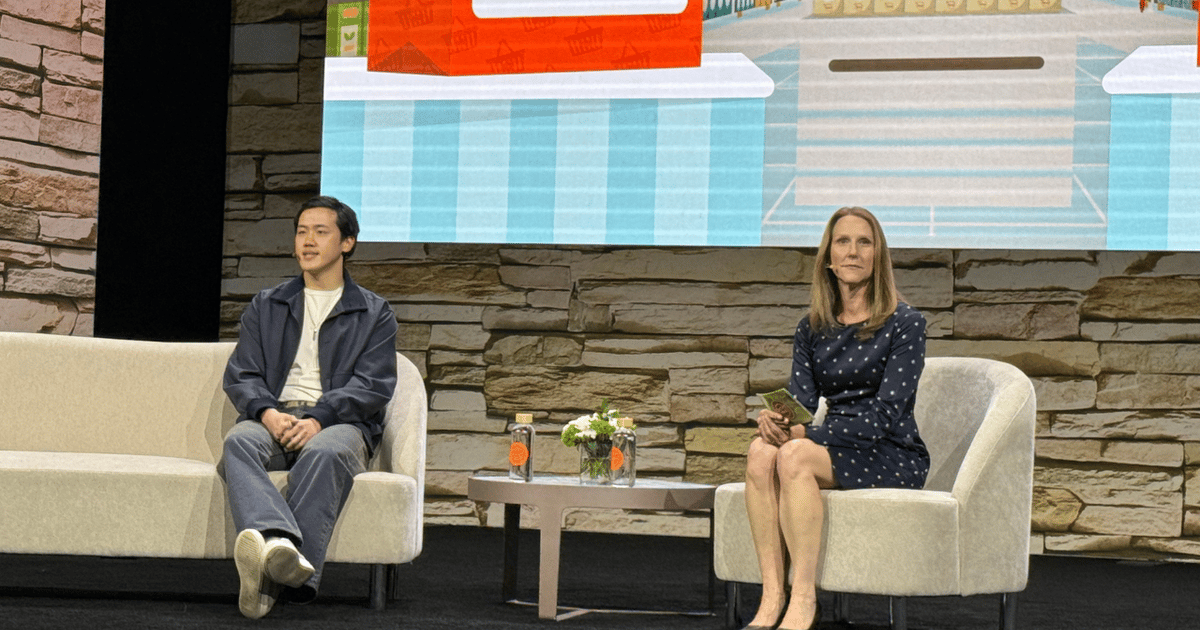
DoorDash co-founder Andy Fang put the current results plainly: 'Now we're seeing 50 percent higher grocery basket sizes versus non-AI orders.' That figure is itself a jump from roughly 35 percent at launch just months earlier, meaning the gap between AI-assisted and manual ordering has widened by 15 percentage points in a short window. Checkout speed shows a similar trajectory, with AI users now completing orders roughly five times faster than non-AI orders, up from about three times faster at launch.
Product variety tells a complementary story: AI-assisted shoppers buy 60 percent more unique SKUs per order than shoppers building carts manually. Larger, faster, more varied baskets are the three metrics every grocery delivery operator wants to move simultaneously, and it is unusual to see a single feature move all three in the same direction rather than trading one off against another, which is typically what happens when a tool optimizes narrowly for speed or narrowly for upsell rather than for the shopper's actual intent.
The data dependency Fang is naming out loud
Fang was unusually direct about where the model's limits actually come from: 'AI is only as good as the data that's being fed to it.' That is a meaningful admission from a company reporting strong basket-size gains, because it locates the ceiling on performance in data quality rather than in model sophistication. DoorDash's specific advantage here is Dasher shelf photos, images gig workers capture while fulfilling orders that get used to verify real-time stock accuracy, some of which DoorDash shares back with retail partners.
That data pipeline is harder for competitors to replicate quickly than the conversational interface itself. A chat-based shopping assistant is a well-understood product pattern at this point, but a continuous stream of shelf-level inventory verification tied to actual fulfillment activity is an operational asset built over years of delivery volume. Fang's closing line, 'at the end of the day, it's ultimately the consumer,' reads as a deliberate check against over-automating the final decision, keeping product substitutions and final approval in the shopper's hands even as the system does more of the upfront work.
From feature to product: white-labeling into grocers' own channels
DoorDash is reportedly discussing bringing Ask DoorDash's underlying technology directly into grocers' own apps and websites, not just keeping it inside DoorDash's own marketplace. If that happens, it turns an internal retention feature into a licensable product DoorDash could sell to grocery chains that want conversational shopping without building the natural-language and inventory-matching stack themselves. That is a meaningfully different business than grocery delivery logistics, and it puts DoorDash in more direct competition with retail AI vendors selling similar capability as standalone software, while giving DoorDash a second revenue line that does not depend on owning the actual delivery.
For grocers evaluating that kind of partnership, the build-versus-buy calculation runs through the same data dependency Fang described. Licensing DoorDash's assistant gets a grocer a proven conversational interface quickly, but it also means depending on DoorDash's Dasher-sourced inventory verification data rather than the grocer's own systems, a dependency that is easy to accept during a pilot and harder to walk back once customer-facing features are built around it. A grocer that later wants to switch vendors or bring the capability in-house would end up rebuilding both the chat interface and the underlying inventory-verification pipeline it had quietly come to rely on.
The decision for grocers watching from outside
DoorDash's parallel expansion into Costco and into SNAP EBT support at more than 75,000 stores is worth reading alongside the basket-size numbers, because it shows the company pushing the same AI assistant into both its highest-volume membership retail partner and its most price-sensitive customer segment at the same time. That is a deliberate stress test: if conversational ordering genuinely drives larger, faster, more varied baskets, it should show measurable gains across very different shopper profiles and price sensitivities, not just in the easiest, highest-margin segment where a retailer might expect any new feature to perform well regardless of its actual merits.
The decision for grocery and retail technology leaders is less about whether conversational shopping assistants work, DoorDash's numbers are a reasonably strong existence proof, and more about where the durable advantage actually sits. If the real asset is DoorDash's shelf-photo inventory pipeline rather than the chat interface itself, grocers considering a build-it-yourself path need a credible answer for how they will match that data quality, not just a comparable conversational front end.