A golf entertainment chain becomes a media seller
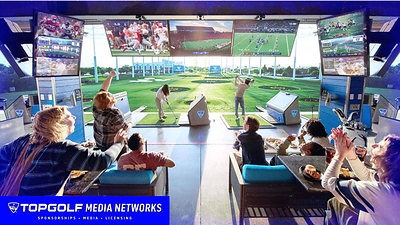
Topgolf announced on July 16 the launch of Topgolf Media Networks, a sponsorship, media, and licensing division that turns its venue footprint into an advertising business. The company positions the unit as a single entry point for brands to reach the more than 42 million guests who visit its 100-plus locations each year. The pitch centers on physical and digital inventory that few pure retailers can match, including over 28,000 digital screens across venues, first-party audience data, in-venue experiences, and original content and licensing. Topgolf claims a presence in 24 of the top 25 U.S. media markets and an average visit approaching two hours, a dwell time most retail environments cannot approach.
CEO David McKillips framed the move as an identity shift, saying Topgolf has become much more than a place to play golf and pointing to the 42 million guests who come to its venues to compete, celebrate, socialize, and connect. We read the launch as a textbook application of the retail media playbook to a non-retail asset. Topgolf holds three ingredients that advertisers pay for, namely a large captive audience, long engaged dwell time, and first-party data on who those guests are. Packaging those into a media network is the logical monetization of attention the company was already generating without selling it.
The audience math that makes it work
The strength of any commerce media network comes down to audience quality, and Topgolf's numbers are unusually favorable for an out-of-home environment. The company argues its annual attendance trails only Major League Baseball among U.S. sporting venues, and that its guests are more valuable to advertisers because they participate actively rather than watch passively. Active participation over a two-hour visit produces sustained, repeated exposure to venue screens and experiences, a profile closer to lean-in engagement than the fleeting impressions of a store aisle. For brands chasing attention that traditional digital channels increasingly fail to deliver, that combination of scale and dwell time is genuinely differentiated.
We would still apply the standard scrutiny that every new media network deserves. Reach and dwell time establish potential, and measurement establishes value. The open question is whether Topgolf can tie in-venue exposure to downstream outcomes with the rigor advertisers now demand, since the retail media networks that command premium budgets do so on the strength of closed-loop attribution to actual purchases. A venue network lacks the direct transaction signal that a retailer's checkout provides. Topgolf will need to invest in measurement partnerships and clean first-party data infrastructure to convert its audience advantage into the accountable performance that sustains advertising spend over time.
Commerce media keeps leaving the retail aisle
Topgolf's launch fits a broader 2026 pattern that enterprise leaders should track. Nearly half of the major media networks launched since 2022 have come from companies outside traditional retail, according to an Axios analysis, and the roster now includes delivery platforms, airlines, financial services firms, and entertainment venues. DoorDash and Uber Eats built advertising businesses on their transaction and logistics data, and now an eatertainment operator is monetizing venue attention. The category once called retail media is more accurately described as commerce media, since the defining ingredient is first-party data on engaged consumers rather than a store or a shopping cart.
This expansion has direct consequences for how brands allocate budget. Every new network fragments the commerce media landscape further, adding another walled garden with its own audience, data definitions, and measurement standard. For CPG and brand advertisers, the proliferation raises a portfolio problem, namely how to evaluate and compare dozens of networks that each claim unique reach and first-party data. We expect the winners to be the networks that offer genuine incremental audience and credible measurement, and we expect a long tail of subscale networks that struggle to justify the operational overhead they impose on advertiser teams. Topgolf will have to prove it belongs in the first group.
The first-party data premium and its limits
The strategic logic behind every one of these launches is the value of first-party data in a market where third-party tracking has eroded. Topgolf knows who books a bay, what they spend, and how often they return, and that identity graph is the asset it is now monetizing. As privacy regulation and platform changes continue to degrade third-party signals through 2026, owned first-party data has become the scarce input that advertisers pay a premium to access. Any business with a large, identifiable, engaged customer base now has a plausible path to a media revenue line, which is precisely why the category keeps expanding beyond retailers.
The limit on that logic is operational maturity. Standing up a media network requires ad-serving technology, sales teams, measurement infrastructure, and brand-safety controls that sit far outside the core competency of a golf venue or a delivery app. Many entrants underestimate this, and the gap between announcing a network and running a credible one is wide. We advise brand-side leaders to judge these networks on execution rather than on the press release, and to reward the ones that invest in real measurement over those that simply repackage inventory. Topgolf's division is new, and its ability to build that operational backbone will determine whether it endures.
The read for brand and retail leaders
For CPG and brand marketers, Topgolf is one more network to evaluate in an increasingly crowded commerce media portfolio, and the right posture is selective experimentation. The venue offers a differentiated audience and dwell time worth testing, particularly for brands whose customers overlap with an active, social, and relatively affluent guest base. The discipline is to insist on measurement that ties exposure to outcomes before committing meaningful budget, the same standard now applied to established retail media networks. Novelty and reach alone no longer justify spend in a market this fragmented, and advertiser teams have finite capacity to manage new partners.
For retailers and other businesses sitting on first-party data, Topgolf is a prompt to assess their own latent media assets. The pattern of 2026 is clear, namely that engaged audiences and owned data can be monetized as advertising revenue across almost any consumer-facing category. That opportunity is real, and it comes with the obligation to build the measurement and operational infrastructure that advertisers require. We expect commerce media to keep expanding well beyond the retail aisle, and the enterprises that succeed will treat it as a serious media business rather than a quick revenue add-on bolted onto an existing operation.