A year of interim leadership ends
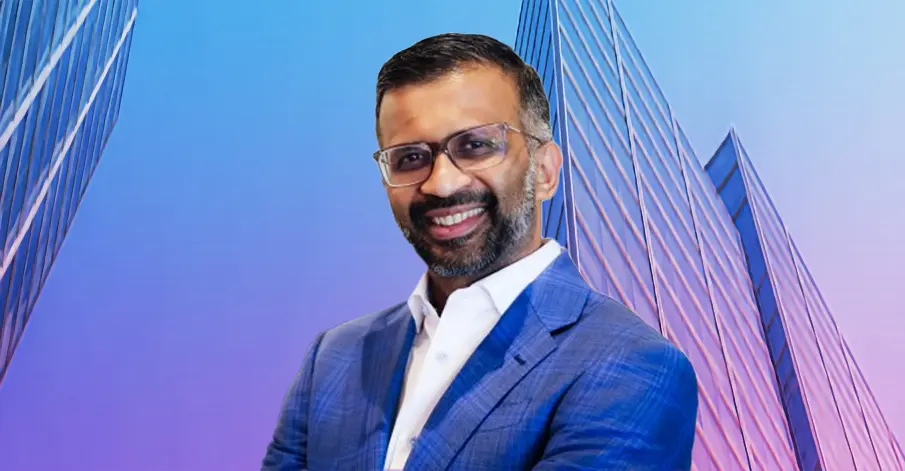
STACK Infrastructure has closed out roughly twelve months of interim leadership in its European and Middle Eastern business by naming Jim Smith as permanent CEO of STACK EMEA. Brian Cox had held the seat on an interim basis while the company weighed its next move, a gap that is longer than most boards would tolerate in a region growing as fast as EMEA data center demand has grown this year. The appointment closes that gap and puts a name against a region that STACK's chairman, Phil Koen, says needs someone who can deliver growth and operational excellence at the same time.
The timing matters as much as the pick. STACK EMEA now runs across seven markets in six countries, a footprint built during the interim period itself. That is the kind of growth that makes an interim arrangement riskier every quarter it continues, because the person running the business day to day has less authority to commit to the multi-year site and power contracts that data center customers now expect before they sign. Naming a permanent CEO removes that friction at exactly the point where EMEA's pipeline needs long-horizon commitments, not placeholder decisions.
The resume STACK wanted
Smith joined STACK in 2025 after serving as an operating partner to Blue Owl Digital Infrastructure, and the company credits him with being integral to delivering STACK's largest EMEA projects since then. Before that, he held senior leadership roles at Equinix, Microsoft, and Digital Realty, three companies that between them have written most of the playbook for scaling international data center platforms. That combination gives him both the operator's view from inside a hyperscaler and the landlord's view from inside a colocation giant, a pairing that is harder to find than either skill alone.
What stands out in STACK's own framing is the word delivery, repeated by both the chairman and by Smith himself. Koen called Smith's record one of delivering growth and operational excellence, and Smith's own comment pointed to strengthening capabilities and delivering the infrastructure clients need rather than talking about pipeline or bookings. For a sector where announced capacity and delivered capacity routinely diverge, hiring the executor rather than the dealmaker is itself a signal about what the board decided EMEA needed most.
Why EMEA specifically
Europe's data center market has spent 2026 absorbing a wave of AI-driven demand that is running into power and planning constraints that do not exist to the same degree in the Americas. Grid connection queues in markets like Ireland and parts of Germany, combined with tighter political scrutiny of data center power draw, mean that an EMEA CEO's job increasingly looks like a utility negotiation and permitting exercise layered on top of a construction business. Smith's background at Equinix and Digital Realty, both of which built extensive European footprints under similar constraints, is the specific experience STACK is betting will shorten that learning curve.
It also reflects how STACK has organized itself globally, with VanderZanden continuing to lead the Americas and Gona continuing to lead APAC. That three-region structure only works if each regional CEO has enough standing internally to negotiate for capital and engineering resources against the other two regions, something an interim leader structurally cannot do as effectively. Filling the seat permanently puts EMEA on equal footing with the other regions inside STACK's capital allocation conversations, not a secondary consideration behind confirmed leadership elsewhere.
What this tells other infrastructure boards
STACK's own description of itself, a digital infrastructure partner to the world's most innovative companies, is the kind of line every data center operator uses now, but the leadership move underneath it is more specific than the marketing. Boards running multi-region infrastructure businesses are increasingly treating regional CEO continuity as a competitive variable in its own right, because customers signing multi-year colocation and power agreements are underwriting the leadership team as much as the physical asset. An interim tag on a regional CEO is now a line item buyers can and do ask about during due diligence.
The broader lesson for enterprise technology leaders evaluating infrastructure partners is to treat leadership stability as a procurement criterion, not a background detail. A region running on interim leadership for a year while growing into seven markets carries execution risk that shows up later as delayed delivery dates or renegotiated terms, not as a line in the contract today. STACK closing that gap before signing its next wave of EMEA deals is as much a signal to its customer base as it is an internal org chart fix.
The near-term test
Smith's immediate mandate is less about announcing new capacity and more about proving that STACK's unified global operating model actually delivers consistent service across regions, the stated goal behind aligning EMEA with the Americas and APAC structures. That means standardizing how STACK negotiates power agreements, manages construction timelines, and reports delivery milestones to customers across six countries with different regulatory regimes, grid operators, and planning authorities. Consistency at that scale is operationally harder than it sounds on a press release.
For CIOs and infrastructure leads evaluating STACK or its competitors for European capacity, the practical question this appointment raises is whether a newly permanent regional CEO can move fast enough to keep pace with AI-driven demand that shows no sign of slowing. Smith inherits a pipeline built under interim leadership, which means his first real test is less about vision-setting and more about whether the projects already underway hit their committed delivery dates under his direct accountability rather than someone else's temporary watch.