A Continental-Scale Commitment
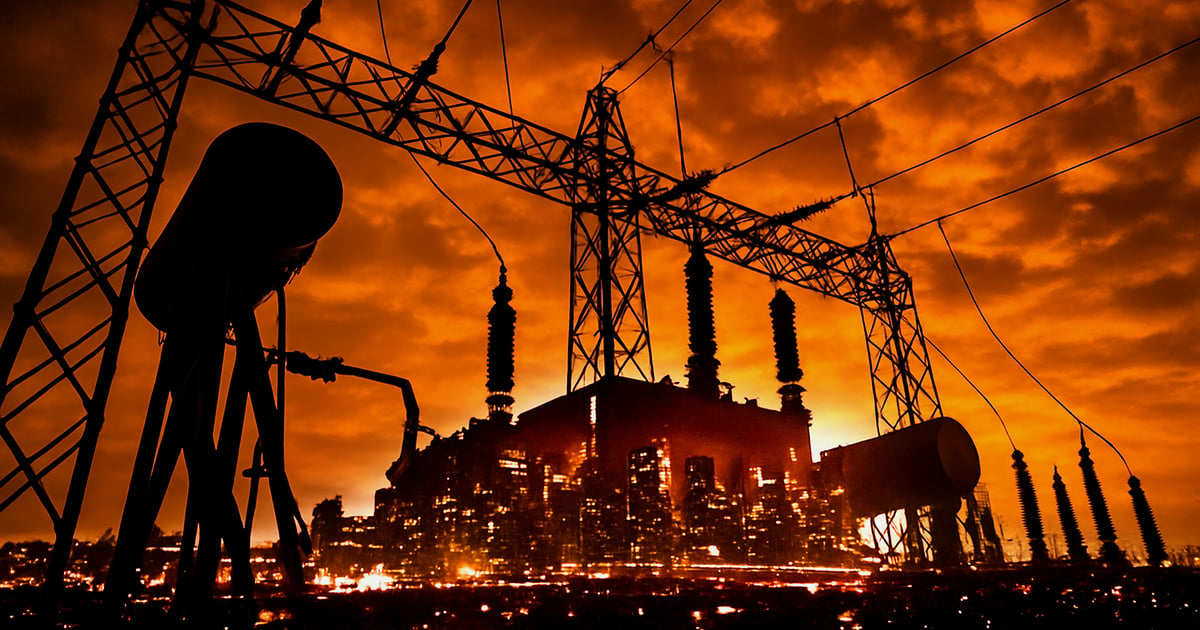
SoftBank has put a very large number on the table. The group announced it will develop and operate up to 5 gigawatts of AI data center capacity in France, representing an investment of up to 75 billion euros. To grasp the scale, 5 gigawatts is comparable to the output of several large power stations, and it is being dedicated not to a city or a region but to the singular purpose of training and running artificial intelligence. This is SoftBank's largest AI infrastructure commitment in Europe, and it reframes what a national AI ambition can look like.
The first phase is concrete rather than aspirational. SoftBank plans an initial 45 billion euro investment to deliver 3.1 gigawatts of capacity in the Hauts-de-France region, with data centers slated for Dunkirk at Loon-Plage, Bosquel, and Bouchain, targeted for delivery by 2031. The commitment was unveiled at the 2026 Choose France summit hosted by President Emmanuel Macron, a venue that makes the political dimension explicit: this is as much an industrial policy milestone as a corporate press release.
France's Nuclear Grid Becomes an AI Asset
The choice of France is not incidental, and it turns on electricity. France derives a large majority of its power from nuclear generation, which gives it something increasingly precious in the AI era: abundant, low-carbon baseload power that runs day and night regardless of weather. As data center operators everywhere collide with grid constraints and carbon scrutiny, France's nuclear fleet transforms from a legacy of past energy policy into a forward-looking competitive advantage for hosting compute at scale.
This is a theme we expect to define the next phase of the infrastructure race. The regions that win large AI investments will be those that can offer firm, clean power at the gigawatt scale, and that list is short. France, with its nuclear baseload and a government eager to attract the capital, has positioned itself near the top of it. SoftBank's commitment validates that thesis with money, and it puts pressure on other European nations to articulate how they intend to supply the power that AI demands.
Sovereign Compute as Industrial Policy
The Choose France framing points to a deeper shift in how governments think about AI infrastructure. Compute capacity is coming to be seen the way earlier generations viewed steel, energy, or telecommunications: as strategic national infrastructure whose location carries economic and security weight. A country that hosts frontier-scale AI data centers on its soil gains not only construction jobs and tax base but a measure of control over where its citizens' and companies' most sensitive workloads physically run.
For Europe specifically, the sovereignty dimension is acute. The continent has watched much of its cloud consumption flow to infrastructure owned and operated by American firms, and the policy conversation has increasingly turned to reducing that dependence. A 5 gigawatt buildout on French soil, even one financed by a Japanese investor, advances the goal of keeping European AI workloads within European jurisdiction, subject to European law. It is a partial answer to a question the continent has been asking with growing urgency.
What It Means for European Enterprises
For the CIOs and CTOs of European enterprises, large-scale domestic AI capacity is more than a headline. It promises genuine data residency options for organizations bound by GDPR and sector-specific rules that make sending sensitive workloads to distant regions legally fraught. Regulated industries such as banking, healthcare, and government have often struggled to reconcile their appetite for advanced AI with their obligations to keep data within specific borders. Capacity of this magnitude, located in France, materially eases that tension.
There is a practical caveat worth keeping in view. The first phase targets delivery by 2031, and the AI landscape will change many times before then. Enterprises cannot pause their AI strategies waiting for capacity that is years out, and the near-term supply picture remains tight. But the trajectory matters for long-range planning. Organizations designing multi-year AI roadmaps can now factor in a credible path to substantial, sovereign, low-carbon compute on the continent, which changes the calculus for where durable investments should point.
The Bet Beneath the Buildout
SoftBank is wagering that demand for AI compute will remain voracious well into the next decade, enough to fill 5 gigawatts of purpose-built capacity and reward a 75 billion euro commitment. That is a bold read on an industry still discovering the limits of its own appetite, and it is not without risk. If model efficiency improves faster than expected, or if the economics of frontier AI disappoint, capacity built on today's assumptions could arrive into a softer market than the one that justified it.
Yet the direction of travel is hard to argue with. Every serious projection of AI adoption points to more compute, not less, and the constraints are increasingly physical rather than algorithmic: power, land, cooling, and time to build. By committing early and at scale in a jurisdiction with the power to back it, SoftBank is positioning to be a landlord of the AI economy in Europe. For a continent anxious about its technological autonomy, that the landlord is building on French nuclear power is a development worth watching closely.