Arcus Adds a London Colo to Its Platform
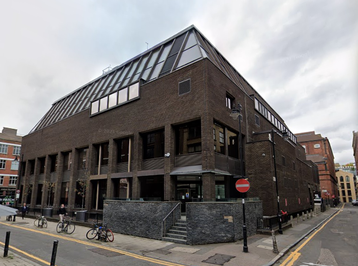
Arcus Infrastructure Partners, through its European Infrastructure Fund 4, has agreed to acquire Volta Data Centres, the central London facility owned by Verne. Announced with the deal set to close in July 2026, the acquisition hands Arcus a 91,000-square-foot, carrier-neutral colocation site delivering around 6 megawatts of capacity in the heart of the City. It is a modest facility by the gigawatt standards now dominating data center headlines, but its value lies less in raw megawatts than in its location and connectivity, and in what it says about where infrastructure investors see durable returns.
The transaction is a reminder that not all data center value is measured in gigawatts. While hyperscalers chase enormous greenfield campuses in the American interior and the Indian countryside, a parallel market prizes small, dense, exceptionally well-connected facilities in the cores of major financial cities. Volta is one of those. Sitting in central London with more than 40 carriers on-net, it offers the kind of low-latency, multi-network connectivity that financial services, telecoms, and enterprise customers pay a premium for and cannot easily replicate. For Arcus, that scarcity is the investment thesis.
A Small Site With Outsized Connectivity
Volta's 6 megawatts would be a rounding error at a hyperscale campus, but its 91,000 square feet host over 40 carriers and serve financial services, telecoms, IT, and broader enterprise sectors. In the colocation business, that carrier density is the product. A trading firm or a network operator does not choose a central London facility for cheap power; it chooses it for proximity to counterparties, exchanges, and a rich ecosystem of interconnection. Those network effects compound over time, making an established, carrier-neutral site in a prime location genuinely difficult to displace.
This is why constrained urban colocation has become such a coveted asset class. New capacity of this kind is almost impossible to build in central London, where power, land, and planning permission are all scarce and contested. An incumbent facility with 40 carriers already connected is effectively irreplaceable, which gives it pricing power and predictable, sticky revenue. Arcus is buying a moat, not just a building. In a market where supply cannot easily grow, owning existing well-connected capacity is often a better bet than trying to develop new sites from scratch.
Verne's Strategic Refocus
For Verne, selling Volta is a deliberate reallocation rather than a sign of distress. 'This transaction allows us to focus our investment and expertise on low-carbon, high-density data center infrastructure' in Northern Europe, said Verne chief executive Dominic Ward. Verne has built its identity around large, power-hungry, sustainability-focused campuses in the Nordics, where abundant renewable and geothermal energy and a cold climate suit high-density AI and high-performance computing. A small, legacy colocation site in central London does not fit that strategy, and divesting it frees capital and management attention for the workloads Verne actually wants.
The move captures a broader bifurcation in the market. Operators are increasingly choosing between two very different games: massive, power-optimized campuses built where energy is cheap and plentiful, or dense, connectivity-optimized sites in expensive urban cores. Trying to do both stretches capital and focus. Verne is doubling down on the former and handing the latter to a buyer whose strategy is built around it. We read the deal as a rational sorting, with each party ending up with the assets that match its thesis.
Building a European Colocation Platform
Arcus is assembling Volta into a wider European colocation platform operated through its Portus subsidiary. The firm evaluated the market for roughly 18 months before acting, a diligence period that reflects both the scarcity of quality urban assets and the competition to acquire them. 'This acquisition provides critical digital infrastructure at the heart of one of Europe's premier colocation markets,' said Charlie Scott, Arcus senior investment director, framing the deal as combining stable existing revenues with room to grow. For an infrastructure fund, that blend of contracted cash flow and upside is precisely the profile it seeks.
The platform logic is important. A single London site is an asset; a network of well-connected urban colocation facilities across Europe is a business with scale, cross-selling opportunities, and negotiating leverage with carriers and customers. By building Portus deliberately, Arcus is positioning itself as a consolidator in a fragmented but strategically vital corner of the market. Expect more such acquisitions as infrastructure capital, flush with money and convinced of the durability of digital infrastructure, hunts for the scarce, defensible assets that hyperscale campuses cannot replace.
The UK Supply Squeeze
Underlying the deal is a structural squeeze in UK data center supply. Arcus's own evaluation highlighted constrained supply alongside continued demand growth, a combination that makes existing capacity more valuable by the month. Britain's grid connection queues are notoriously long, planning permission for new data centers is contentious, and central London in particular has almost no room to add capacity. That scarcity is what turns a modest 6 megawatt site into a strategic asset, and it is why the UK has become a magnet for infrastructure investors chasing constrained, high-demand markets.
For enterprises, the squeeze has real consequences. Colocation space in prime UK locations is getting scarcer and pricier, and the connectivity-rich sites that latency-sensitive workloads depend on are increasingly owned by a handful of well-capitalized infrastructure funds. Companies that rely on central London colocation for trading, networking, or regulatory reasons should expect rising costs and should secure capacity early. The consolidation of these assets into professional platforms may improve service and reliability, but it also concentrates pricing power in the hands of the owners.
What It Means for Enterprises
The Arcus-Verne deal is small in dollar terms but instructive in what it reveals. The data center market is splitting into two distinct investment logics: the gigawatt land grab that dominates the headlines, and the quiet accumulation of scarce, connectivity-rich urban sites that will never be built again. Both are bets on the durability of digital demand, but they serve very different workloads and customers. Enterprises should understand which category their own infrastructure needs fall into, because the availability and pricing dynamics of the two markets are diverging sharply.
More broadly, the transaction underscores how thoroughly institutional capital has embraced data centers as core infrastructure. A specialist fund spending 18 months to acquire a single London facility, then folding it into a purpose-built platform, is a picture of an asset class that has matured well beyond speculation. For technology leaders, the practical takeaway is that the landlords behind their critical facilities are increasingly sophisticated, long-term financial owners, and that the scarcity those owners are betting on is the same scarcity enterprises will be negotiating against.