A Fivefold Bet on Fuel Cells
Brookfield and Bloom Energy have expanded their partnership to 25 billion dollars, a fivefold increase from the roughly 5 billion dollar agreement the two struck in October 2025. The deal, announced at the end of June 2026 and detailed in early July, commits Brookfield's capital to financing the deployment of Bloom's solid oxide fuel cells for AI data center infrastructure worldwide. It sits inside Brookfield's AI Infrastructure Fund, launched in November 2025 with a target of deploying 100 billion dollars into AI-related infrastructure. In a single announcement, on-site fuel cells went from a niche resilience product to a mainstream financing category for the AI buildout.
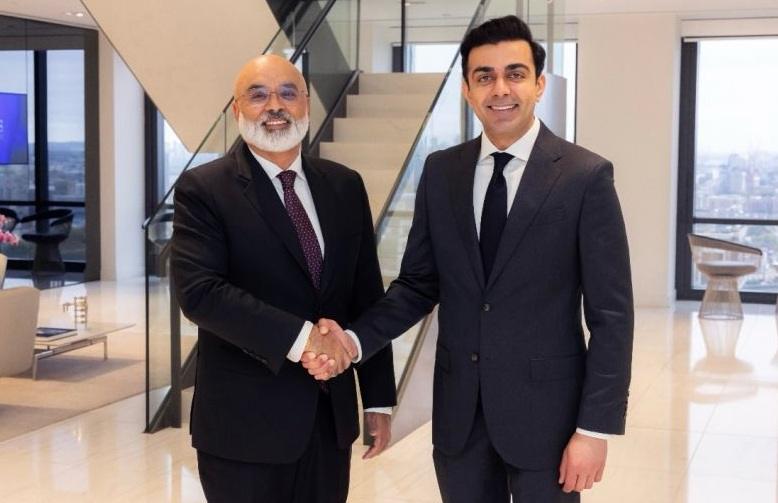
'Bloom is uniquely positioned to address the urgent need for clean, reliable power to support' AI expansion, said Aman Joshi, Bloom Energy's chief commercial officer. Sikander Rashid, head of AI infrastructure at Brookfield Asset Management, framed the scale-up as conviction: 'Scaling our commitment with Bloom Energy reflects both the strength of this partnership' and the firm's broader infrastructure strategy. The market agreed, sending Bloom's stock sharply higher. We read the move as the clearest sign yet that the industry has stopped waiting for the grid and started building its own power at the point of consumption.
Why Fuel Cells, Why Now
Bloom's pitch is speed. The company says its Energy Server systems can be installed within months rather than the years it takes to secure new transmission infrastructure and clear an interconnection queue. For hyperscalers and colocation operators staring at multi-year waits for grid power, that time advantage is worth a substantial premium. Bloom has already deployed hundreds of megawatts of fuel cells to data centers through partnerships with American Electric Power, Equinix, and Oracle, so the technology is proven at meaningful scale rather than being a laboratory curiosity.
The appeal is not just speed but control. On-site fuel cells let an operator size power to a specific campus, avoid the politics of competing with residential ratepayers, and sidestep the reliability risk of a strained regional grid. Solid oxide fuel cells run on natural gas or hydrogen and generate electricity through an electrochemical reaction rather than combustion, which yields lower local emissions than a gas turbine and no combustion-related air pollutants. For a data center that needs firm, always-on power in a location where the grid cannot deliver it quickly, that combination is increasingly compelling.
Routing Around the Grid
The Brookfield-Bloom deal is best understood alongside the wave of behind-the-meter power arrangements now sweeping the industry. Chevron is building a dedicated gas plant for Microsoft in West Texas, SoftBank is planning nuclear-adjacent capacity in France, and dozens of operators are signing on-site generation deals to escape interconnection paralysis. Fuel cells are the modular, deployable end of that same spectrum: where a gas plant takes years and a nuclear reactor takes a decade, a fuel-cell array can be energizing a campus in months. That makes it the fastest available answer to the single most acute constraint in AI infrastructure.
We have written repeatedly that electricity, not GPUs, is the real bottleneck, with tens of gigawatts of US data center demand stuck waiting on the grid. The Brookfield commitment puts a very large number behind that thesis. When one of the world's largest infrastructure investors decides to deploy 25 billion dollars specifically to put power generation next to the compute, it is a market vote that the grid problem is structural and durable, not a temporary hiccup that new transmission lines will soon resolve.
Inside Brookfield's AI Infrastructure Fund
The deal reflects a deliberate strategy at Brookfield, which has positioned its AI Infrastructure Fund as a vehicle to capture the full stack of AI's physical needs: land, data centers, power, and now on-site generation. By financing Bloom's deployments rather than simply buying fuel cells for its own assets, Brookfield turns a hardware purchase into a repeatable financing platform that can serve hyperscalers and colocation operators across its portfolio and beyond. The 100 billion dollar target for the fund gives a sense of the ambition, and the Bloom expansion is one of its largest single commitments so far.
For Bloom, the arrangement solves a chronic problem for capital-intensive hardware companies: how to finance large deployments without straining the balance sheet. Brookfield supplies the capital, Bloom supplies the technology, and the customer gets power without a massive upfront outlay. It is a classic infrastructure-finance structure applied to a novel asset class, and it is likely to become a template. We expect more pairings of deep-pocketed infrastructure funds with power-technology vendors as the industry scrambles to finance the electricity layer of the AI boom.
The Catch: Cost and Carbon
Fuel cells are not a free lunch. Electricity from solid oxide fuel cells running on natural gas is generally more expensive per kilowatt-hour than grid power or utility-scale gas generation, and the economics only work because the alternative, waiting years for grid capacity, carries its own enormous opportunity cost. Operators are effectively paying a premium for speed and certainty. As grid interconnection eventually catches up in some markets, the question will be whether fuel cells remain competitive or revert to a resilience and bridging role rather than primary power.
There is also a carbon caveat. Fuel cells running on natural gas still emit carbon dioxide, even if they avoid the local air pollutants and efficiency losses of combustion. Bloom markets a path to hydrogen, which would be genuinely low-carbon if the hydrogen is green, but affordable green hydrogen remains scarce. For now, the Brookfield-Bloom buildout is another example of AI's power hunger leaning on natural gas in a lower-emitting but still fossil form. It is cleaner than a turbine, but it is not zero.
What It Means for Buyers
For enterprise technology leaders, the significance is what the deal reveals about capacity and pricing. When 25 billion dollars is committed to on-site generation, it confirms that firm power is the scarce input in AI infrastructure, and scarcity flows into the cost of compute. Buyers negotiating large AI or cloud commitments should assume that power-constrained capacity will command premium pricing, and that operators with secured, deployable power, whether from fuel cells, gas, or nuclear, will be the ones able to guarantee delivery.
The deal also reframes how to evaluate an operator's roadmap. A colocation or cloud partner that has locked in fast-deploy power has a real competitive edge over one still waiting in a grid queue. As enterprises increasingly ask where their AI workloads will actually run and when capacity will be available, the answer will hinge on the power strategy behind the campus. Brookfield and Bloom have just made a very large bet that the winning strategy, for the next several years at least, is to generate the electricity yourself.