The Deal
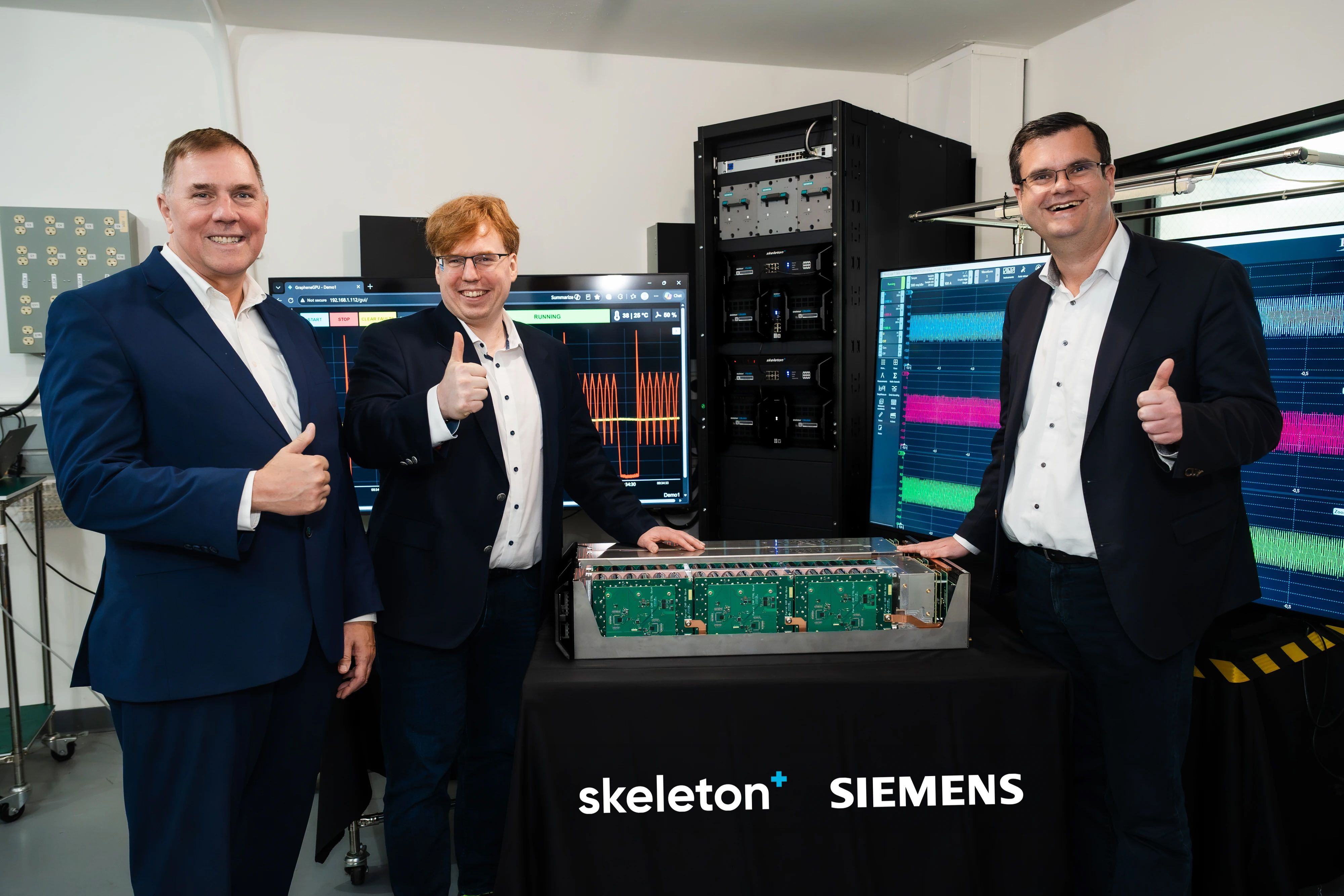
Siemens has taken a strategic stake in Skeleton Technologies and signed an exclusive partnership agreement with the Estonian energy infrastructure firm, pushing Skeleton's valuation above 1 billion dollars. Neither company disclosed the investment amount, which is typical for this kind of strategic stake, where the partnership terms often matter more to both sides than the headline check size. Skeleton, founded in Tartu in 2009 with the European Space Agency as its first customer, builds supercapacitor-based energy storage systems designed to absorb sharp, repeated swings in electricity demand, the kind AI training and inference workloads generate on a data center's power infrastructure.
Peter Koerte, a Siemens AG managing board member and president of the company's smart infrastructure business, framed the deal as combining Siemens' electrical infrastructure expertise with Skeleton's breakthrough supercapacitor technology to help customers add AI capacity without compromising resilience. Skeleton CEO and co-founder Taavi Madiberk was more direct about ambition, saying the company intends to become the world's largest provider of white-space power systems for AI data centers, a goal that only makes sense if Siemens' distribution and customer relationships are now behind it.
Why Power Swings Are the Real Bottleneck
Most conversations about data center power constraints focus on total capacity: how many megawatts a site can draw, and whether the local grid can deliver it. That framing misses a second, harder problem. AI workloads do not draw power smoothly. Training runs and inference bursts create rapid load swings that stress transformers, switchgear, and the grid connection itself, even when a site's average draw sits comfortably within its contracted capacity. Smoothing those swings is increasingly the binding constraint on how much compute density a site can safely run, regardless of how generous the interconnection agreement looks on paper.
Siemens describes Skeleton's technology as an electrical shock absorber, a supercapacitor system that reacts to demand spikes in under a millisecond, far faster than battery chemistry typically allows. That speed matters because the alternative, oversizing electrical infrastructure to tolerate worst case swings, is expensive and slow to build, exactly the kind of cost that shows up in the per-rack economics enterprise buyers are already squeezed by, and exactly the kind of cost a faster-reacting storage layer is designed to avoid passing through to the customer.
Skeleton's Track Record and Siemens' Bet
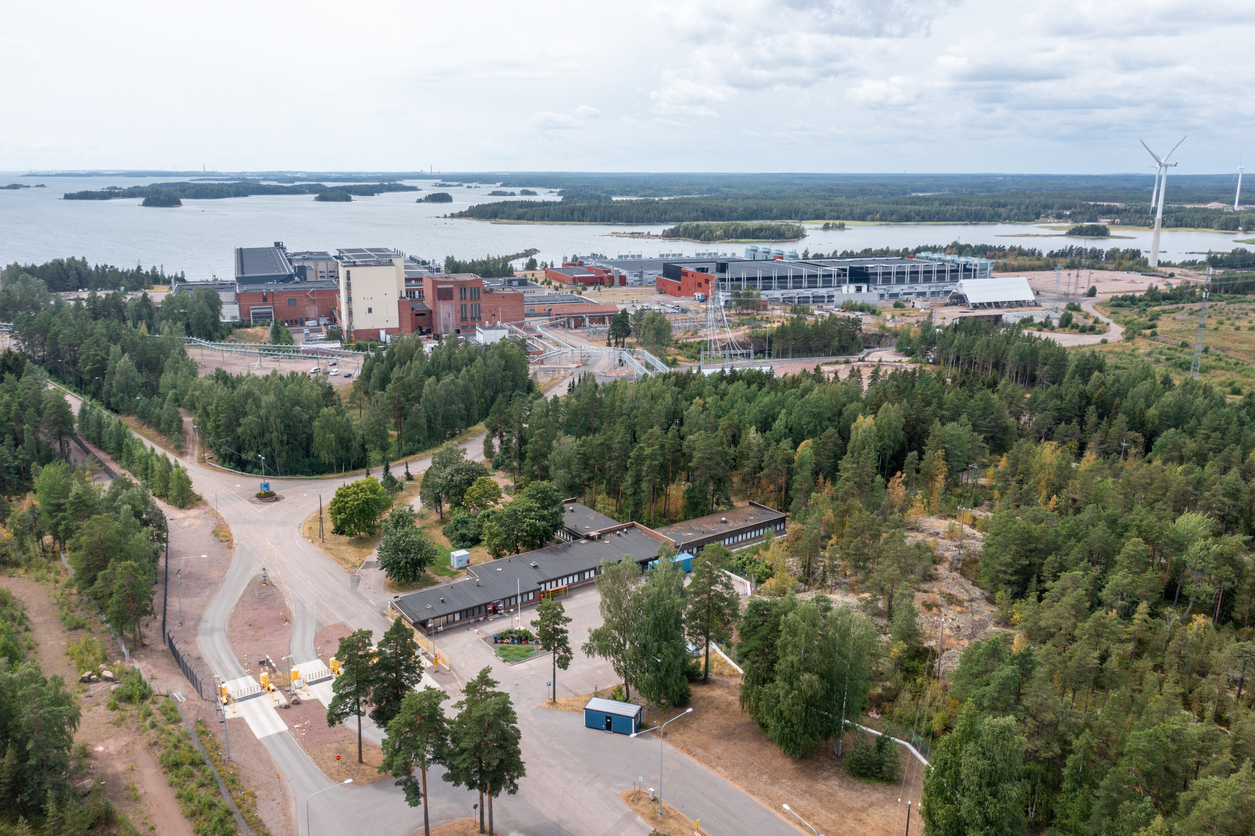
Skeleton has moved into AI infrastructure before this deal. The company opened its first US factory in Houston earlier this year, adding to two European plants that launched in late 2025: a 270 million dollar facility in Germany and a 60 million dollar facility in Finland. It has also struck partnerships with DG Matrix on 800VDC power systems and with Infineon on high-efficiency data center power solutions, and recently launched a UPS product aimed specifically at AI data centers, rounding out a product line built almost entirely around the power quality problem Siemens is now backing.
Siemens buying into that trajectory is itself a signal. A company with Siemens' scale and existing relationships across utilities and data center operators chose to invest in and exclusively partner with a smaller specialist, rather than building a competing supercapacitor line in-house over several years. That choice usually means the underlying technology has cleared a bar that in-house development could not match on timeline, and it tells competitors watching from the sidelines that the window to build an equivalent capability organically may already be closing.
Where This Fits in the Broader Power Buildout
Grid-side storage and power electronics have quietly become one of the busiest corners of the AI infrastructure market, even as most headlines stay fixed on GPUs and gigawatt announcements. Utilities and hyperscalers alike have spent the past two years signing gas, nuclear, and renewable power deals to secure raw capacity, but raw capacity was never the whole problem. A site can have a fully contracted, grid-approved connection and still struggle to run dense AI workloads reliably if nothing in the electrical chain can absorb a sudden, repeated spike in draw.
Skeleton's pitch, and now Siemens' money behind it, is that the next constraint operators hit will not be megawatts on paper but milliseconds in practice. That is a harder problem to market than a new power purchase agreement, because it does not come with a single, quotable gigawatt figure, but it is arguably the more urgent one for any operator already sitting on contracted capacity that keeps tripping breakers or triggering utility penalties for erratic draw.
What It Means for Operators
For technology leaders negotiating new capacity, power quality deserves the same scrutiny currently reserved for raw megawatt availability. A site with contracted capacity that cannot handle a workload's actual demand profile creates real operational risk, regardless of what the interconnection agreement says on paper. Ask providers directly what they use to manage load transients, how it has performed under real training workloads rather than lab conditions, and treat a vague answer the same way you would treat a vague answer about cooling.
The Siemens-Skeleton deal also suggests where vendor consolidation in this space is heading: established infrastructure players buying into specialist power electronics firms rather than building the capability themselves from scratch. Expect more deals shaped like this one over the next year, and expect the winners to be the specialists who can prove their technology works at hyperscale before a Siemens-sized partner comes calling with a check and an exclusivity clause attached.